XX: The Female Gender in XXth Century Italian Art

XX: THE FEMALE GENDER IN XXth CENTURY ITALIAN ART


is the latest in a series of meaningful exhibitions by curator Monica Cardarelli to be brought to Laocoon Gallery of London following its successful inauguration in Italy.


Preview: 29th November 2019

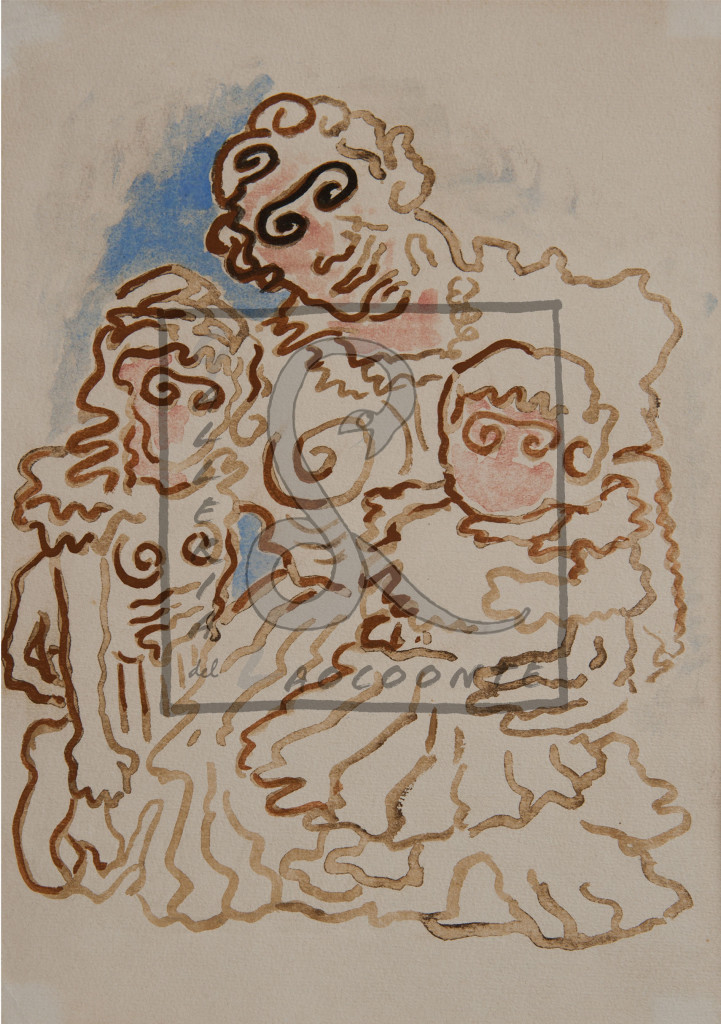
The exhibition comprises around one hundred works, with techniques ranging between paintings, drawings, pastels, bronzes, terracotta and ceramics, of Italian artists from the 20th Century who represented as many female figures. Wives or lovers, virgins or prostitutes, holy mothers like the Madonna or man-eating she-devils.


Chaste teenagers or mature Magdalenes, but also goddesses, nymphs, legendary personifications of Spring or Italy, imposing and shapely figures wearing crowns of turreted walls. The title of the exhibition uses “XX” as both chromosomes and Roman numerals in order to represent not only the genes that determine a woman’s sex but also the 20th Century, an era which saw unprecedented change in the role, status, appearance and condition of women.


Exhibition curator, gallery director and strong advocate of women’s rights Monica Cardarelli, who has researched and brought together this astonishing selection of art portraying the female gender in its many representations and transfigurations, says of the exhibition, “In a single image we can find a myriad of stories and destinies that intertwine and overlap, and this is also the case for each of the other images that make up this exhibition. Each contains stories that oscillate between past and present, leading to a series of reflections, to which are added those generated by their being together, by the dialogue that inevitably they entertain while standing side by side.”


The exhibition runs from 1st December to 30th January, inviting visitors to explore and share their responses to the vast array of inspiration adorning the gallery walls.


For enquiries and further information
E: info@laocoongallery.co.uk
T: 020 8075 3903
www.laocoongallery.co.uk

Fortunato Depero

Fortunato Depero was born on 30th March, 1892, in Fondo, Italy. His education began at Scuola Reale Elisabettina in Rovereto, Italy, where he learned fine art techniques alongside those for the applied arts. In 1910 he began a job as a marble worker’s apprentice to further his artistic development before discovering the Italian journal Lacerba in 1913, which inspired his movement towards futurism. Although Depero’s career began as a fine artist he was to find significant success following his development into the commercial art scene, ultimately becoming one of the most successful futurist graphic designers.

Futurism was marked by a hatred for anything representative of the past and as such people like Depero showed little fondness for museums and galleries, viewing them as aristocratic and ancient. Futurists supported machine-driven technology and garnered a strong desire to rebuild anew. Speed and power were inspirations for the artists, and futurist works were created with geometric elements and great intensity, direction and colour. Advertising was seen as an important medium which allowed futurists to extend these ideas to a wider audience. Some of his most important work was with futurist painter Giacomo Balla, and the pair signed The Futurist Reconstruction of the Universe together, which proposed “sound and kinetic three-dimensional advertisements,” heretofore completely unheard of in the world of art.

In his 1927 masterpiece of graphic design Depero Futurista, Depero speaks of new futurist advertising design styles. The pages were fastened with nuts and bolts and filled with geometric shapes in a black and white paper cut-out style, this created a unique, modern and thereby futurist design. Also, the simplicity of the design made the images easy to reproduce by line block in newspapers and in colour by lithography for posters. Following the release of this book Depero moved on to New York, where he continued to paint, design for the theatre and work as a freelance advertising designer. He designed covers for magazines such as Vanity Fair, but the majority of his work was used to promote futurism as well as himself. In 1929, Depero wrote the outline for Il Futurismo e l’arte pubblicitaria (Futurism and the Art of Advertising), which spoke of the inevitable impact that advertising would make on art in the future.

Depero eventually began working on a series of advertisements for Campari aperitif, including a wood sculpture and several posters. His work was compiled into a book called Numero unico futurista Campari 1931. In addition, Depero created a distinctive bottle design for Campari Soda in 1932, which is still used in production today.

Another of Depero’s most successful advertisements was a poster for S. Pellegrino magnesia. The poster was composed of key futurist design elements, such as geometric shapes; large areas of flat, bright colour; and the illusion of movement.

On November 29, 1960, Fortunato Depero died at the age of 68.

Aleardo Terzi

Aleardo Terzi

Pittore, illustratore, cartellonista, decoratore, ceramista, scenografo, costumista, incisore, disegnatore di mobili e vestiti. Nasce a Palermo il 6 novembre 1970 da Andrea (1848-1928), acquarellista e litografo, e Rose Engel, di origine svizzera. Suo fratello minore Amedeo (1872-1955) fu un noto disegnatore scientifico. Cresciuto in un ambiente colto e liberale, apprese molto più in seno alla famiglia che nell’Accademia di Palermo, dove pure si era iscritto, abbandonandola però prima di terminare gli studi.

Inizia molto presto a collaborare con il padre come illustratore, imparando l’arte della riproduzione litografica e solo più tardi, nel 1898, si trasferisce a Milano.
Di particolare importanza per la sua carriera di cartellonista fu la collaborazione con le Officine Ricordi, dove era stato chiamato per intercessione dell’amico Giovanni Maria Mataloni (1869-1944).

Per la Ricordi oltre ai manifesti, Terzi, disegna libretti musicali e cartoline illustrate, iniziando la fase più feconda della sua produzione come illustratore, realizzando manifesti che rimasero indelebilmente impressi nell’immaginario collettivo, come quelli per i Magazzini Mele e più tardi quelli notissimi del Dentol, con la scimmia appesa ad un ramo che si lava i denti, e quello per il colorificio Max Meyer, con il cucciolo che tiene il pennello in bocca. Nel contempo l’artista si occupa di illustrazione per riviste e libri, si ricordano le illustrazioni per «Il Giornalino della Domenica», le copertine a colori per la rivista «Ars et Labor» della Ricordi, quelle per «La Lettura», mensile del «Corriere della Sera» e le tavole illustrate per il libro per ragazzi Cantilene dei bambini, stampato dalla casa editrice «Novissima» e le illustrazioni per «Il Corriere dei Piccoli». Nel 1904 è nominato direttore e disegnatore della casa editrice romana Danesi, ma continua la sua collaborazione con la Ricordi.

Nel 1925 dirige la Scuola del libro di Urbino appena istituita, dove orienta la didattica verso la formazione pratica, insegnando disegno illustrazione, xilografia e calligrafia, incarico che mantenne fino al 1930. Nel contempo, nel 1928, cura la parte grafica e illustrativa dell’Enciclopedia Italiana. Nel 1930 torna a Milano dove prosegue la sua attività di illustratore di libri per ragazzi, in particolare per la collana La Scala d’Oro e di grafica pubblicitaria per la casa farmaceutica Wander di cui fu direttore artistico.

Essendosi inoltre misurato con molte discipline artistiche, come la ceramica, la moda e persino la progettazione di mobili, Terzi può correttamente esser definito l’artista artigiano alla maniera di William Morris, del quale per altro condivideva l’ideale socialista della necessità di diffondere a tutti l’arte, la cultura e la bellezza. Molto vicino a Duilio Cambellotti che aveva conosciuto a Roma nel 1903 e dietro consiglio del quale decise di cimentarsi con la ceramica, Terzi aveva partecipato nel 1923, proprio insieme al gruppo di Cambellotti, alla I Biennale di Arti Decorative di Monza, presentando un servizio di piatti che ottiene la medaglia d’argento.

Muore il 15 luglio del 1943 presso l’ultima sua dimora a Castelletto sopra Ticino.

Sébastien Bourdon

Sébastien Bourdon

Sébastien Bourdon was born in Montpellier on 2nd February 1616 – his family were craftsmen of modest means. His father, Marin, was a painter and glazier, and his mother, Jeanne Gaultière, was the daughter of a master goldsmith. Sébastien was baptised on 10th February in Montpellier church. When he was six, Montpellier suffered a difficult time because it refused to recognise Louis XIII: under the leadership of the Prince of Condé, it resisted a siege by royal troops Although the town managed to hold out for three months, it finally surrendered and the king’s army took control in 1622. Sébastien, still only a child, was sent to Paris as an apprentice artist and around 1630 he went to Bordeaux and Toulouse, later moving back to the capital.


He continued his training in Rome which, although a dangerous place for a protestant like Bourdon, was considered to be the ideal place for an artist at that time. Whilst there he became a close friend of painter Louis de Boullogne (senior), who put pressure on him to renounce his faith, but without success. In 1636 he had to return to Paris because a painter with whom he had quarrelled threatened to denounce him as a heretic to the Inquisition in Rome.


On his arrival in Paris, he became very friendly with Louis du Guernier, a Protestant painter, and actually married his sister Suzanne, through this marriage he came into close contact with the Protestant circle of artists, goldsmiths and jewellers. In 1643, the corporation of goldsmiths chose him to paint their altarpiece, an annual gift to Notre Dame in Paris. The painting, called The Crucifixion of Saint Peter, can still be seen in Notre Dame today.


Sébastien’s son, Abraham, born in 1648, was baptised in the church at Charenton – his godfather was Abraham Bosse. In the same year, Sébastien Bourdon took an active part in the founding of the Academy and was one of the twelve “Elders”. From the very beginning he was a key member of a dynamic group of artists working for this institution – among them were his brother-in-law du Guernier, the two Testelins, Ferdinand Elle, Samuel Bernard, Thomas Pinagier and Abraham Bosse.


After moving to Stockholm in 1652, Queen Christine of Sweden, who considered him to be an outstanding artist, made him her first court painter. Following two successful years in this position Bourdon returned to Paris and completed some major commissions before returning to his hometown of Montpellier in 1957 where he had been asked to paint The Fall of Simon the Magician. This picture was to be hung above the main altar in the Saint Pierre cathedral and it can still be seen there today. While he was in Montpellier he also painted many portraits.


He died in Paris on 8th May 1671. 

Pietro Benvenuti

Pietro Benvenuti

Born on 8th January 1769 in Arezzo, Tuscany, Pietro Benvenuti took his first influences from the style of Jacques-Louis David. He was a student of the Academy of Fine Arts of Florence, and then went on to study in Rome, 1792–1803, where he created an informal academy with long standing friend Vincenzo Cammuccini as well as Luigi Sabatelli. He returned to practice in Arezzo. 


In 1807 he was recruited as court painter to Elisa Bonaparte Baciocchi and to direct the Florentine Academy of Fine Arts. Alongside a group of collaborators and students Benvenuti was commissioned by Baciocchi in 1811 to decorate the new rooms of the Palazzo Pitti, where he painted an ambitious cycle of works dedicated to The stories and endeavours of Hercules. The decoration is subdivided into four large framed paintings on the walls – with Hercules at the crossroads, Hercules strangles the serpents, Hercules leading Alcesti to Admeto and The Battle of Hercules and the Centaurs – as well as ten monochrome frescoes below the vault featuring a depiction of the Marriage of Hercules and Hebe. Another prestigious commission, from the restored Grand Duke of Tuscany, Leopold II, was to fresco the dome of the Capella Medicea at San Lorenzo, where he depicted eight grand subjects taken from the Old and the New Testament, the four Prophets and the four Evangelists. Under Benvenuto’s guidance, Carlo Lasinio also engraved the Luca Giordano frescoes in Palazzo Medici-Riccardi. As well as this he was an associate of the Accademia di Brera in Milan, and in 1829 was elected into the National Academy of Design as an honorary member.


He died on 3rd February 1844 in Florence, still holding the position of Director of the Florentine Academy of Fine Arts. Whilst in the position he had taught many who would go on to become important names in the art world, including Giuseppe Bezzuoli, Gaspero Martellini, Tomasso Gazzarini, Niccola Cianfanelli, Luigi Mussini, and Giorgio Berti. 

Niccolò Boldrini

Niccolò Boldrini

Niccolò Boldrini was born c1500 in Vicenza, in northern Italy.


There is little documented of his personal life or upbringing, but what we do know is that he was an engraver on wood, that he worked with Titian in 1566 and that he is responsible for the following works: John Baron de Schwarzenburg (after Dürer), The Wise Men’s Offering, St. Jerome praying in landscape, Six Saints including Catharine & Sebastian, Mountainous landscape with woman milking cow and Venus seated on a bank holding Cupid, Squirrel on a branch (all after Titian).


Many discussions have been held as to why Titian chose to depict the Caricature of the Laocoön Group scene, which Boldrini went on to make on woodcut. Some argue that it was an attempt to free his inventive mind from the influence of this sculpture for all future works whilst others suggest it was a response to a substandard work by an Italian sculptor of around that time. It is rumoured that Titian was actually his master and that he worked under him for a number of years before he died in Venice in c1566.

Luigi Ademollo

Luigi Ademollo

Luigi Ademollo was born in Milan on 30th April 1764. He learned his craft at the Academy of Fine Arts of Brera in Milan, where he was taught by Giuliano Traballesi, Giocondo Albertolli and Giuseppe Piermarini. In 1783 he left Milan and spent a period of time travelling and working between Rome and Florence before, in 1789, being appointed as professor at the Academy of Fine Arts in Florence in the same year as he had completed the decorations of the Teatro della Pergola. He would go on to spend the major part of his life between Florence and Rome, where he married Margaret Cimballi Ferrara in 1792 and started what was to become a large family.


In Florence he worked in the chapel of the Palazzo Pitti and in various rooms of the same palace, as well as in the Basilica della Santissima Annunziata, and in the Pucci and Capponi palaces. He also worked for churches in Bergamo, Brescia, Lucca, Livorno, Pisa and Siena. Although Ademollo primarily painted frescoes with biblical scenes from the Old and New Testaments, his abilities as a decorator were accompanied by considerable literary culture, and his son Agostino Ademollo (1799–1841) would go on to be a writer of romances, including Marietta di’ Ricci.


He died in Florence on 11th February 1849 

Jean Baptiste Wicar

Jean Baptiste Wicar

The son of a carpenter, Jean Baptiste Wicar was born in Lille on 22nd January 1762. He studied drawing at the free school in Lille before further honing his talents at the studio of Jacques-Louis David. The drawings Wicar created of tableaux, paintings, statues, bas-reliefs and cameos in the Gallery of Florence and at the Pitti Palace were published in four volumes at the Lacombe publishing house of Paris between 1789 and 1807.


During the French Revolution Wicar headed the Commission des Sciences et des Arts, which had been set up to loot artworks from the Austrian Netherlands in order to enrich museums in France. An initial convoy from the commission left Antwerp on 11th August 1794, notably with paintings by Rubens, for the Louvre. Abbeys and castles were targeted and then systematically emptied of their contents, furniture and works of art. Wicar was also a member of the commission during their Italian campaign, in the entourage of Napoleon Bonaparte. This commission was similarly charged with seizing artworks that could enrich French national museum collections.


He finally permanently settled in Rome in 1800 and became a portraitist of European renown as well as teaching Italian illustrator and engraver Francesco Giangiacomo, who documented many of the works there.


Having remained in Rome until his death in 1834, Wicar left an extensive collection of 1,300 drawings he had accumulated over his lifetime to the Société des Sciences, de l’Agriculture et des Arts de Lille. Most of these were from the Italian school, but also in some small measure from the northern schools, it held drawings by artists like Raphael, Albrecht Dürer, Lucas Cranach, Nicolas Poussin and Jacques-Louis David. This legacy initially formed the public Musée Wicar, which in 1866 merged into the Palais des beaux-arts de Lille.

Giovanni De Min

Giovanni De Min

Giovanni De Min was born in Belluno in the Veneto region of northern Italy on 24th October 1786.


As the son of a domestic servant he was born into humble beginnings, and therefore without the patronage of the Falier family of San Vitale he would not have been able to attend the Academy of Fine Arts in Venice following his discovery by Paolo de Filippi whilst completing an apprenticeship in Padua. Whilst there he studied alongside Francesco Hayez, with whom he would go onto work, and was a pupil of Teodoro Matteini and Pietro Tantini.


In 1808, De Min was awarded a stipend from the Academy to study in Rome, where he fell under the influence of neoclassical artists such as Antonio Canova. Upon returning to Venice De Min mainly dedicated himself to fresco or panel decoration of houses and salons, regularly working with Hayez and using predominantly mythological figures for his works. In 1817 he completed the now lost decorations in Palazzo Cicognara using the designs of Hayez, before in 1819 collaborating with him again to help decorate the palace of Count Giovanni Papadopoli in San Marina, where he depicted Leda, Diana and Actaeon, Salmacis and Hermaphrodite, Callisto, Venus and the Graces. He also painted The Four Elements and The Dream of Love for Casa Comello near San Canciano in Venice. In 1819, following the death of Angelo Pizzi and with the support of Count Cicognara, De Min was named as professor of sculpture at Accademia di Belle Arti di Venezia.


It is not clear how active he was as a professor since by 1818 De Min had already relocated to Padua where he was very active as an artist, working on the decoration of Palazzo Pesaro-Papafava with subjects from the Iliad before painting A Triumph of Rossini (1822) in Palazzo Treves de’ Bonfili. In a further collaboration with Hayez he also painted a series of mythologic subjects: Convito degli Dei, Triumph and Marriage of Bacchus and Ariadne, Mars and Venus, and Venus and Ascanius (1821–24) in Palazzo Rusconi Sacerdoti. In 1824-25, he painted the Story of Psyche, and episodes from Tasso’s work in Palazzo Gaudio. In 1825, in the Palazzo Rossi, now Moschini, he painted mythologic subjects. In 1828, in Palazzo Revedin, he painted La Fortuna, Laocoön, Ulysses kills Procedus. In this same decade he also painted the Education of Achilles and Apotheosis of Canova inside Palazzo Crescini, Trieste. For the Fasolo house he painted Erminia saves Tancred, Jove and Juno and Leda, then between 1829 and 1831 he frescoed the Story of Psyche for Palazzo Treves de’ Bonfili in Venice, a palace where Ludovico Lipparini, Borsato, Cicognara and others were employed. He also painted a large historic canvas of the Massacre of Alberico da Romano and his family, which only is now known through an 1839 lithography by Francesco Locatello.


In his later years De Min moved to Ceneda, near present-day Vittorio Veneto, Treviso, and painted frescoes in churches and Villas including La Lotta delle Spartane in Villa dei Patt near Belluno. He also painted the Council Hall of Palazzo Rosso in Belluno and in 1837 a salon of Villa Gera in Conegliano. 


He died in Tarzo on November 23rd 1859.

Gian Lorenzo Bernini

Gian Lorenzo Bernini

Gian Lorenzo Bernini was born in Naples on 7th December 1598, beginning his career under the direction of his father, Pietro Bernini, a Florentine sculptor. At a young age, his remarkable talent earned him the patronage of Pope Paul V. His work was inspired by his in-depth study of Michelangelo and of the ancient Greek and Roman marbles at the Vatican. He established himself as an independent sculptor, with his first life-size sculptures commissioned by Scipione Cardinal Borghese, a member of the papal group. The series included Aeneas, Anchises, and Ascanius Fleeing Troy, Pluto and Proserpina, Apollo and Daphne, and David (not to be confused with the well-known Michelangelo sculpture) and demonstrates the development of Bernini’s unique style that would be later termed as the Baroque Style. His sculptures enacted movement and true-to-life physical features of the mythological figures, while remaining grand and exquisite.


After being knighted in 1621 at the age of 23, Bernini literally began to take over Rome, not only with his sculptures, but also with important architectural commissions and his other occupations as painter, playwright, composer, theatre designer, and caricaturist. Rome was to remain his home for many successful years, which included architectural works for St. Peter’s Basilica and Palazzo Barberini as well as a number of commissions under the influence and patronage of pontificate Urban VIII, who had encouraged him to paint and practice architecture as well as continuing his prolific accomplishments as a sculptor


In 1665 Bernini finally left Rome and travelled to France on the invitation of King Louis XIV. His primary task was to design a royal residence but whilst there he sculpted a bust of King Louis XIV, creating a portrait that was so pristine it became the standard for royal portraits for nearly 100 years.


The number of important works he created in his 81 years, under eight different popes, is almost too vast to name, including: The Rapture of Proserpina, 1621-1622; Ecstasy of Santa Teresa, 1647-1651, (Church of Santa María de la Victoria, Rome); Fountain of the Four Rivers, 1651, (Piazza Navona, Rome); Ecstasy of Blessed Ludovica Albertoni, 1671-1674, (Church of San Francesco a Ripa, Rome); Apollo and Daphne, 1622-1625, (Borghese Gallery, Rome); David, 1623-1624, San Longino, 1629-1638 (Basilica of San Pedro, The Vatican); Baldachin of San Pedro, 1624-1632 (Basilica of San Pedro, The Vatican); Fountain of the Triton, 1642-1643 (Piazza Barberini, Rome).


He died on 28th November 1680 in Rome.

Francesco Coghetti

Francesco Coghetti

Francesco Coghetti was born on 12th July 1801 in Bergamo, which lies close to Milan in the north of Italy. He was fortunate enough to be born into wealthy family and as such was able to be educated at prestigious private schools. After completing his primary studies, he enrolled at Accademia Carrara, where he studied with Giuseppe Diotti. In 1818, he won the Accademia’s drawing competition.


In 1820 he moved to Milan, and he following year he won an award for drawing and design from the Accademia di Belle Arti di Brera. This encouraged him to move to Rome and, thanks to his father’s financial support, he was able to study with Vincenzo Camuccini. He also enjoyed the patronage of Cardinal Angelo Mai, who was a fellow ‘Bergamaschi’. In 1825, he was married. The 1830s were a very successful time for him, during which he won several awards and received a continual flow of commissions from all over Europe.


In 1844, he was offered the position of Director at the Academy of San Carlos in Mexico City, but declined to accept. Fourteen years later, faced with declining commissions, he accepted a position as President of the Accademia di San Luca. In the late 1860s, he became involved in politics as well as art, when preparations were being made for the Papal States to be annexed to the Kingdom of Italy. The Accademia was considered to be part of the Pope’s temporal domain and was transformed into the “Royal Academy”.


It was a difficult process and, because he had already come under criticism for his performance in office, he was relieved of his teaching duties in 1873 and suspended as President. Two years later, on 20th April 1875 in Rome, he died of apoplexy after a sudden loss of consciousness.

Gustav Klimt

Gustav Klimt

Gustav Klimt was born on 14th July 1862 in Vienna into a lower middle-class family of Moravian origin. His father, Ernst Klimt, worked as an engraver and goldsmith, earning very little, meaning that as well as spending his childhood in relative poverty the artist would have to support his family financially throughout his life.

In 1876, Klimt was awarded a scholarship to the Vienna School of Arts and Crafts, where he studied until 1883, and received training as an architectural painter. He revered the foremost history painter of the time, Hans Makart and readily accepted the principles of his conservative training. In 1877 his brother Ernst, who, like his father, would become an engraver, also enrolled in the school. The two brothers began working together alongside friend Franz Matsch and by 1880 they had received numerous commissions as a team which they called the Company of Artists as well as helping their teacher to paint murals in the Kunsthistorisches Museum in Vienna.

After finishing his studies, Klimt opened a studio together with Matsch and Ernst Klimt. The trio specialized in interior decoration, particularly theatres. Already by the 1880s, they were renowned for their skill and decorated theatres throughout the Austro-Hungarian Empire, where much of their work can still be seen. In 1885, they were commissioned to decorate the Empress Elizabeth’s country retreat, the Villa Hermes near Vienna (Midsummer Night’s Dream). In 1886, the painters were asked to decorate the Viennese Burgtheater, effectively recognizing them as the foremost of decorators of Austria. Works that Klimt painted for this project include The Cart of Thespis, The Altars of Dionysos and Apollo and The Theater at Taormina, as well as scenes from the Shakespearean Globe Theater. At the completion of the work in 1888, the painters were awarded the Golden Service Cross (Verdienstkreuz), and Klimt was commissioned to paint the Auditorium of the Old Burgtheater, the work that would bring him to the height of his fame. This painting, with its almost photographic accuracy is considered one of the greatest achievements in Naturalist painting. As a result, Klimt was awarded the Emperor’s Prize and became a fashionable portraitist, as well as the leading artist of his day. Paradoxically, it was at this point, with a fabulous career as a classicist painter unfolding before him, that Klimt began turning towards the radical new styles of Art Noveau.

In the coming few years, the artistic trio fell apart. Franz Matsch wanted to branch out into portrait painting, which he did with some success. Meanwhile, Gustav Klimt’s changing style made it impossible for them to work together on any project. Furthermore his brother died in 1892, shortly after the death of their father. Struck by this double tragedy, Gustav retreated from public life, focusing on experimentation and the study of contemporary styles of art, as well as historical styles that were overlooked within the establishment, such as Japanese, Chinese, Ancient Egyptian and Mycenaean art. In 1893, he began work on his last public commission: the paintings Philosophy, Medicine and Jurisprudence, for the University of Vienna. The three would only be completed in the early 1900s, and they would be criticized severely for their radical style and what was, according to the mores of the time, lewdness. Unfortunately, the paintings were destroyed during the Second World War and only black-and-white reproductions of them remain.

The painter was not alone in his opposition to the Austrian artistic establishment of the time. In 1897, he, together with forty other notable Viennese artists, resigned from the Academy of Arts and founded the Union of Austrian Painters, more commonly known as the Secession. Klimt was immediately elected president. While the Union had no clearly defined goals or support for particular styles, it was against the classicist establishment, which it found to be oppressive.

In 1902, Klimt finished the Beethoven Frieze for XIV Vienna Secessionist Exhibition, which was intended to be a celebration of the composer and featured a monumental, polychromed sculpture by Max Klinger. Meant for the exhibition only, the frieze was painted directly on the walls with light materials. After the exhibition the painting was preserved, although it did not go on display until 1986.

During this period Klimt did not confine himself to public commissions. Beginning in the late 1890s he took annual summer holidays with the Flöge family on the shores of Attersee and painted many of his landscapes there. Klimt was largely interested in painting figures; these works constitute the only genre aside from figure-painting which seriously interested Klimt. Klimt’s Attersee paintings are of a number and quality so as to merit a separate appreciation. Formally, the landscapes are characterized by the same refinement of design and emphatic patterning as the figural pieces. Deep space in the Attersee works is so efficiently flattened to a single plane, it is believed that Klimt painted them while looking through a telescope.

Klimt’s ‘Golden Phase’ was marked by positive critical reaction and success. Many of his paintings from this period used gold leaf; the prominent use of gold can first be traced back to Pallas Athene, (1898) and Judith I (1901), although the works most popularly associated with this period are Portrait of Adele Bloch-Bauer I (1907) and The Kiss (1907-1908). Klimt travelled little but trips to Venice and Ravenna, both famous for their beautiful mosaics, most likely inspired his gold technique and his Byzantine imagery. In 1904, he collaborated with other artists on the lavish Palais Stoclet, the home of a wealthy Belgian industrialist, which was one of the grandest monuments of the Art Nouveau age. Klimt’s contributions to the dining room, including both Fulfillment and Expectation, were some of his finest decorative work, and as he publicly stated, “probably the ultimate stage of my development of ornament.” Between 1907 and 1909, Klimt painted five canvases of society women wrapped in fur. His apparent love of costume is expressed in the many photographs of Flöge modelling clothing he designed.

As he worked and relaxed in his home, Klimt normally wore sandals and a long robe with no undergarments. His simple life was somewhat cloistered, devoted to his art and family and little else except the Secessionist Movement, and he avoided café society and other artists socially. Klimt’s fame usually brought patrons to his door, and he could afford to be highly selective. His painting method was very deliberate and painstaking at times and he required lengthy sittings by his subjects.

By 1910, Klimt had moved past his Golden Style. One of his last pictures in that style was Death and Life (1908-1910). In 1911, the painting was shown at the International Exhibition in Rome, where it won first place. However, the artist was dissatisfied with the work, and in 1912, he changed the background from gold to blue.

In 1915 his mother Anna died. Klimt died three years later in Vienna on February 6, 1918, having suffered a stroke and pneumonia. He was buried at the Hietzing Cemetery in Vienna, leaving numerous works unfinished.

Klimt’s paintings have brought some of the highest prices recorded for individual works of art. In 2006, the 1907 portrait, Adele Bloch-Bauer I, was purchased for the Neue Galerie in New York by Ronald Lauder for a reported USD $135 million, surpassing Picasso’s 1905 Boy With a Pipe (sold May 5, 2004 for $104 million), as the highest reported price ever paid for a painting.

Klimt’s work is often distinguished by elegant gold or coloured decoration, spirals and swirls, and phallic shapes used to conceal the more erotic positions of the drawings upon which many of his paintings are based. This can be seen in Judith I (1901), and in The Kiss (1907-1908), and especially in Danaë (1907). One of the most common themes Klimt used was that of the dominant woman, the femme fatale.

Art historians note an eclectic range of influences contributing to Klimt’s distinct style, including Egyptian, Minoan, Classical Greek, and Byzantine inspirations. Klimt was also inspired by the engravings of Albrecht Dürer, late medieval European painting, and Japanese Rimpa school. His mature works are characterized by a rejection of earlier naturalistic styles, and make use of symbols or symbolic elements to convey psychological ideas and emphasize the freedom of art from traditional culture.

Giulio Aristide Sartorio

Giulio Aristide Sartorio

Giulio Aristide Sartorio was born in Rome in 1860. He was a painter and film director. He studied at the Rome Institute of Fine Arts. In 1883, he presented a Symbolist work at the International Exposition of Rome and later that year he won a gold medal at the Paris Universal Exhibition. In 1893 he travelled to England, where he met key members of the Pre-Raphaelite group.

In 1895, he participated in the Venice Biennale at the 1st International Exposition of Art of Venice. From 1896 to 1898, he taught at the Weimar Academy of Fine Arts. The beginning of the century marked the height of Sartorio’s artistic fame.

He produced decorative friezes for the 5th Esposizione Internazionale d’Arte of Venice (1903), the Mostra Nazionale of Fine Arts (Milan, Parco Sempione, 1906) and Palazzo Montecitorio in Rome (1908–12). He was wounded while serving in the First World War. In 1919, he directed a motion picture entitled Il mistero di Galatea, which starred his wife – Marga Sevilla. The following year, he directed a silent historical film along with Enrico Guazzoni called Il Sacco di Roma.

During the 1920s, he travelled extensively in the Middle East, Japan and Latin America and also became a member of the Italian Royal Academy. He died in 1932.

Manuel Ángeles Ortiz

Manuel Ángeles Ortiz

Manuel Ángeles Ortiz was born on 13th January 1895 in the southern Spanish town of Jaen. At just three years of age his family moved to Granada, where he would study painting with Juan Larrocha and at The Superior School of Industrial Arts as well as becoming close friends with Federico Garcia Lorca, arguably the most important Spanish writer of the 20th century, whilst he and his milieu of young artists El Rinconcillo met in the Café Alameda.

In 1919 he married Francisca Alarcon and would later have a daughter, Isabel Clara. During this period he also visited Madrid where he came into contact with Salvador Dalí, Moreno Villa and Luis Buñuel and in 1922 he moved to Paris where met and became friends with Pablo Picasso. During his time in Paris Ortiz became close with a group of artists in the School of Paris and began to participate in their exhibitions, he also collaborated with Spanish filmmaker Luis Buñuel on his 1930 surrealist masterpiece Le edad de oro, on which Salvador Dali also worked.

From 1932 he returned to Spain where he met artist Joaquín Torres-García and poet Pablo Neruda and collaborated with the anti-fascist intellectual league to exhibit at the Pavilion of the Spanish Republic. At the end of the Spanish Civil War Ortiz exiled to Buenos Aires, where he created his wood series and was involved in the third exhibition at Galeria Muller (1947) before returning to Europe in 1949 where he reconnected with Picasso. In 1957 Ortiz was allowed to go back to Granada where he was reunited with family and friends, after which he began his notes series which included, among many others, Albaycines, Paseos de Cipreses and Cabezas.

In 1981 he received the Gold Medal of the city of Jaén, which also made him Hijo Predilecto for his exceptional contribution to the arts, as well as the National Prize for Plastic Arts. Three years later, on 4th April 1984, Manuel Angeles Ortiz died in Paris. Today his work is represented in numerous national and international museums, including the Museo Nacional Centro de Arte Reina Sofía in Madrid, the MoMA in New York and the Musée de Grenoble.

Edita Walterowna Broglio

Edita Walterowna Broglio

Edita Walterowna von Zur Muehlen (Edita Walterowna Broglio) was born in Riga, Latvia, in 1886. She was a painter of magic realism. From 1908 to 1910 she studied at Konigsberg Art Academy in East Prussia. In 1910, she left Latvia and moved to Rome, where she immediately began to exhibit alongside Roman secessionists (1913-1914). She married the painter and art collector Mario Broglio, and together they founded the Italian art magazine Valori Plastici in 1918. The magazine was focused on aesthetic ideals and metaphysical artwork. It supported the art movement Return to Order, seeking to create a change of direction from extreme avant-garde art to a revival of classicism and realism. The Return to Order, was a reaction against the War and its associated art movement Futurism, which praised machinery, violence and war. The magazine promoted national and Italic values, associated with the cultural policies of fascism, but equally it had a broader outlook towards Europe and artistic discourse in general. Her pictorial activity, interrupted by the war, resumed again in the fifties. Some of her works were included in the historical exhibition curated by Carlo Ludovico Ragghianti’s Arte Italiana 1915-1935, which was held in Florence at Palazzo Strozzi in 1967. In 1971, she had her most important solo-exhibition at the age of eighty-five. Her painting, sober, composed and enchanted, testifies to her immense artistic talent.

She died in Rome in 1977.

David Breuer-Weil

Laocoon Gallery opens in London 

Exciting new gallery opens in the heart of the historic art district of London.


As the art scene in London continues to be a pole of attraction for a variety of cultural offerings, Galleria del Laocoonte has gone into partnership with W. Apolloni, one of the most experienced and highly distinguished art dealers in Rome, to open the Laocoon Gallery. Set in the heart of the historic art and antiques district of St James’ the gallery will not only present an exceptional selection of works from the most seminal figures in Western art history, but also brings to London previously unseen pieces from a number of early 20th century Italian artists. Monica Cardarelli, director of Laocoon Gallery in London, says, “Italian 20th century art is not only Futurism, or De Chirico, or the few other artists who are well known outside Italy. There is a real crowd of exceptional artists that need to be revealed to the world of English-speaking art lovers.”


Following a successful exhibition of works by renowned Italian sculptor Leoncillo Leonardi which opened as part of London Art Week, the gallery’s next offering will be based on the myth of Laocoön, featuring a large bronze by English born David Breuer-Weil, who has emerged as one of the leading contemporary British sculptors with iconic works such as Brothers, Flight and Alien, displayed to great public and critical acclaim in major public spaces in London and around the world. The artist has been commissioned by renowned art dealer Marco Fabio Apolloni to create and cast for the Laocoon Gallery a striking new work inspired by the ancient statue of Laocoön that was excavated in Rome in 1506 under Michelangelo’s very eyes. The piece shows a cyclopean head of Laocoön composed with shattered rubble, which emerges from the soil as if it were coming up from the deep to take a breath. In a number of smaller scale explorations and preparations also set to be exhibited, the iconic original in its entirety is handled using wax, engulfing Laocoön and his sons with snake coils that become tentacles or strands of DNA.


Breuer-Weil comments, “Laocoön is a great sculpture that has inspired generations of artists because of its sheer expressive force and as an emblem of martyrdom. I have not tried to copy it but to explore its themes in a relevant contemporary manner making the works speak to today’s generation.  In some of my works, the Laocoön and his sons are not attacked by snakes as in the Greek myth that inspired the original ancient sculpture but by their own DNA, because that is usually the biggest threat we have to face in our lives, our own makeup.”


The exhibition opens on 12th September 2019 at the Laocoon Gallery, 2a-4 Ryder Street, London, SW1Y 6QB.

Leoncillo, Drawings and Sculptures

Leoncillo. drawings and Sculptures

27 June – 7 September 2019

GALLERIA DEL LAOCOONTE & W. APOLLONI AT THE LAOCOON GALLERY
2a-4 Ryder Street.
www.laocoongallery.co.uk
info@laocoongallery.co.uk

CONTACT
Eleonora Falovo, +447908 380390

Following a successful exhibition at London Art Week in the summer of 2018, Galleria del Laocoonte has again gone into partnership with W. Apolloni, one of Rome’s oldest and most illustrious antique dealer shops, to exhibit at London Art Week 2019.

Founded in 1926, Galleria W. Apolloni has been in business for three generations and is now directed by Marco Fabio Apolloni, a writer, journalist and art historian trained at the Courtauld Institute in London. During its successful history the gallery has sold many masterpieces to museums in Italy and abroad, examples include the Coaci inkstand to the Minneapolis Institute of Art and the Petiet’s family portraits by Andrea Appiani to the Villa Reale in Milan.

In 2012, together with his wife Monica Cardarelli he founded Galleria del Laocoonte, which has specialised in presenting the works of 20th century Italian artists including Sironi, Savinio, Severini, Balla and many others with exhibitions at their gallery in Rome, fairs across Europe and even in public museums. Seven years later they are embarking on a new exciting project here in London, opening Laocoon Gallery which presents not only the best examples of Italian old master paintings and drawings, sculptures, works of art and high quality pieces of furniture, but also works by early 20th century Italian artists, many of them totally unknown by the international market.

One highlight of this year’s London Art Week exhibition at the Laocoon Gallery is a collection of works by Leoncillo Leonardi – known for his work with ceramics and glazed terracotta. Leoncillo (1915 – 1968) has become more recognised in recent years, with his large abstract works from the later part of his career gaining interest on a global scale. The exhibitors are just as passionate about his early works though, Monica Cardarelli, director of Laocoon Gallery says, “… the rest of his [Leoncillo’s] works, beginning in the thirties’ with astounding figurative ceramic sculptures, have never been shown as they should. It is our belief that the unveiling of these pieces will be a revelation that will set him in his proper place as one of Europe’s major sculptors.”

Marisa Mori

Marisa Mori

Marisa Mori (Maria Luisa Lurini) was born in Florence in 1900. In the signing of her works she used the surname of her husband Mario Mori – who was a topographer, journalist and poet who she married in the early twenties.

In 1918 she moved with her family to Turin, where she made the journey into the world of painting alone, with the exception of the advice and encouragement afforded to her by a family friend – the sculptor Leonardo Bistolfi. Later she enrolled at the private school founded and directed by Felice Casorati, at which she attended classes between 1925 and 1931 before she eventually began working there. In 1926 she participated in ‘Esposizione delle vedute di Torino’ at Palazzo Bricherasio along with a group of students of the Casorati School. The group included: Nella Marchesini, Daphne Maugham, Paola Levi Montalcini and Lalla Romano. While in Turin, she also took part in various exhibitions organised by the ‘Promotrice di belle arti del Valentino’ (1927, 1928, 1930). Mori also participated in the IV Turin Quadriennale (1927), the Annual Exhibition of Casorati (1928); and also in the ‘Sindacali’ of 1929, 1930, 1931 and 1932. In November 1931, in Chiavari, she participated in an exhibition of Futurist painting, sculpture and decorative arts by designing a series of ceramics which were subsequently produced by the company Mazzotti in Albissola. In 1932, Mori’s commitment to Futurism was confirmed by the intense exhibition activity that she was involved in with the second generation of Futurists from the regions of Liguria and Piemonte. In 1933 she was invited to the first National Futurist Exhibition in Rome. That same year, she moved to Florence with her husband, with whom she became part of the Futurist group led by Antonio Marasco. Again in 1933, she won a prize at ‘I Mostra futurista di scenotecnica cinematografica’ at the Bardi Gallery in Rome for a plaster model she made for the film ‘Sintesi dell’isola d’Elba’. Mori’s interest in theatre and cinema led her in the mid-thirties to enrol at the acting school of the Academy of Fidenti in Florence, where, after the war, she taught the history of costume. Mori also contributed to the drafting of ‘Cucina futurista di Marinetti e Fillia’. In April of 1934 she set up her first solo exhibition in ‘Spazio Bragaglia’ in Rome. Her Futurist work was also exhibited at the Rome Quadriennale in 1931, 1935 (Ritorno dalle colonie marine) and 1939 (Concerto di fabbrica sulle Apuane). In the late thirties, in staunch disagreement with the current racial laws, she showed hospitality to Rita and Gino Levi Montalcini which put her relationship with Futurism into question. After her husband’s death in 1943, she finally abandoned the Marinetti movement. In doing so, she returned to a representation of classical and naturalistic themes such as portraits, still life’s, masks and nudes. In 1951 she presented a painting, ‘Studio per il ritratto di Vera Zalla’, at the VI Rome Quadriennale. Following this, Mori led a secluded life, exhibiting rarely and almost exclusively in women’s art exhibitions sponsored by the cultural circle Florentine Lyceum. In this last phase of her career she painted mostly figures, landscapes and still life’s – participating in numerous painting competitions. She died in Florence on 6th March, 1985.

Mario Sironi

Mario Sironi

Mario Sironi was born in Sassari on 12th May 1885. He was the second of six children. Following the untimely death of his father, who left him orphaned at the age of thirteen, he moved to Rome where he later studied. His adolescence was spent in a house on via di Porta Salaria, not far from Villa Borghese. It was an adolescence marked not only by the charm of the Eternal City but also by a great passion for reading (Schopenhauer, Nietzsche, Heine, Leopardi, the French novelists) and the study of music, especially Wagner who played the piano with his older sister Cristina. In 1902 he began to study engineering but a year later, encouraged by the positive opinion of the old sculptor Ximenes, he left and devoted himself to painting. It was whilst attending Scuola Libera del Nudo in via Ripetta that he met and studied with Giacomo Balla as well and becoming close friends with Umberto Boccioni and Gino Severini.

In 1914 he moved to Milan, where he fought alongside Filippo Tommaso Marinetti in the First World War. The post-war period saw Sironi work as an illustrator for the magazine Popolo d’Italia, during which time he met Margherita Sarfatti, a journalist and art patron who would share a long and mutually influential association with the artist. In 1920 he signed il manifesto futurista along with Leonardo Dudreville, Achille Funi and Luigi Russolo and in 1922 he joined the group of artists called Novecento. From the beginning of the thirties the artistic interests of Sironi diversified, ranging from graphics to stage design, from architecture to mural painting and from mosaics to frescoes. In 1932 Sironi contributed to Mostra della Rivoluzione Fascista, held at Palazzo delle Esposizioni in Rome. His taste for the monumental and spectacular can be seen in many of his works, especially those created for the state (the Palace of Justice in Milan, buildings in Rome’s EUR district, etc.). It was with the same flare that Sironi prepared the hall of honour at the Festival of Sport in Milan (1935), the Fiat pavilion at the Trade Fair of Milan (1936) and the Italian section at the Universal Exhibition in Paris (1937).

After World War II, isolated and weathered by the death of his daughter, he returned to easel painting, creating works of intense expressiveness. These works were dark and dramatic, abandoning the monumental character and great eloquence of prior years in favour of a different, more resigned spatial conception.

He died in Milan on 13th March, 1961 .

Leoncillo Leonardi

Leoncillo Leonardi

LIFE OF LEONCILLO

Leoncillo was born on the 18th of November 1915 in Spoleto, an Etruscan, Roman and Medieval town in the heart of Umbria, a region famous for its ancient traditional ceramic workshops. His father, who died when the child was three, taught drawing in the local technical school “G. Spagna”, where Leoncillo signed up in 1926. Confined at home during a summer for punishment, he discovers clay at the age of 14: his first preserved work, a funny monkey.

Encouraged by the Calabrian sculptor Domenico Diano, author of Spoleto’s WW1 memorial, he attends the Art School in Perugia from 1931 to 1935, his first works are portraits in Medardo Rosso’s style. He soon moves to Rome where Lionello, his much elder brother,  teaches Italian at a Catholic school,  where Leoncillo  will teach drawing while attending art classes at the Art Academy of via Ripetta. In 1936 he came into contact with the Galleria della Cometa, a centre of attraction for the so called Scuola Romana: Mario Mafai, Antonietta Raphael, Corrado Cagli and the younger Mirko and Afro Basaldella, and Marino Mazzacurati who will work in the same workshop at Villa Massimo with Leoncillo after the war.

In 1939 he marries Maria Zampa,  a fellow art student of Perugia’s time, daughter of a notary in Umbertide, a small town in which is the Rometti’s factory of modern artistic ceramics where he will work and produce I Mostri:  the Harpy, the Mermaid, the Hermaphrodite. These are his first masterpieces, influenced by the grotesque expressionism of the painter Scipione. They were exhibited in 1940 in Milan, for the VII Triennale, where the artist was invited by the famous architect decorator Giò Ponti, obtaining a gold medal for his work. Enlisted in the Army while working on two monumental Roman Trophies for E42 (Mussolini’s World Fair that never took place) he will join the Resistance after Italy’s Surrender in 1943. The Roman Mother killed by the Germans, exhibited in liberated Rome while the war still went on, is an example of the dramatic style attained by Leoncillo as an artist engaged as he was in the Italian Communist Party. In the years after the war Leoncillo develops a neo-cubist style in which he transforms miners, or typists or switchboard operators, into small colorful monuments in Picasso’s style. Apart from his works exhibited in Italy and abroad and in Venice’s Biennale, Leoncillo is also very active producing ceramic decorations for bars, restaurants, cinemas and theatres which created a new style identifiable with Italy’s renewal and economic postwar “Miracle”.

In 1956, following the USSR invasion of Hungary, Leoncillo resigns from the Italian Communist Party. A crisis that will bring a radical change of style, culminating in an exhibition in the Roman gallery La Tartaruga, where tormented simple forms are shown. Simple subjects, such as a bunch of flowers, a tree, a bush, a cactus, are transformed into barely recognizable semi-abstract sculptures.

Here begins the non naturalistic final development of Leoncillo’s art, which will produce works of increasingly monumental size in which ceramics shaped like mineral  forms are given suggestive titles – Taglio (Cut), Frattura (Fracture), Corpo dolente (Body in pain) – that well convey the tragic and suffering appearance of matter as if human senses have been blown into it. Leoncillo dies suddenly, in Rome, of a brain stroke, on the 9th of September, soon after the opening of the Venice Biennale of 1968, an edition marked by the younger artists’ protest, that forced Leoncillo to cover his works with plastic sheeting.

Gino Severini

Gino Severini

Gino Severini was born in Cortona, a hilltop town positioned within the famous landscapes of Tuscany, on 7th April, 1883.

He moved to Rome in 1899, where he met Giacomo Balla who introduced him to pointillist painting, for which his interest deepened during his stay in Paris in 1906. Whilst in Paris he came into contact with Pablo Picasso, Georges Braque, Juan Gris, and Guillaume Apollinaire, and participated in the birth and development of Cubism. Despite this stay in Paris, he did not interrupt his contact with Italy. In fact, after having joined the Futurist movement at the invitation of Filippo Tommaso Marinetti, he was one of the signatories of the 1910 Manifesto of Futurist Painting with Giacomo Balla, Umberto Boccioni, Carlo Carra and Luigi Russolo.

In 1912 he convinced Boccioni and Carra to join him in Paris, where he would organise the first Futurist exhibition at the Bernheim-Jeune gallery. Later he participated in other Futurist exhibitions across Europe and the United States. In 1913 in London, at the Marlborough Gallery, came his first individual exhibition, which was later presented at the Der Sturm gallery in Berlin. From 1921 Severini changed from a Cubo-Futurist aesthetic to a painting style that can be described as neoclassical with metaphysical influences. This evolution falls squarely in the trend which is defined as return to order, or in French Rappel à l’ordre, similar to The Return to Craft introduced in a famous article by Giorgio De Chirico published in 1919 in the journal Valori Plastici. From 1924 to 1934 he devoted himself almost exclusively to sacred art, in the form of large frescoes and mosaics, especially for the Swiss churches of Semsales and La Roche.

In 1926 and 1929 he participated at two exhibitions of the artistic movement Novecento in Milan and one in Geneva (also in 1929). In 1930 he was selected for the Venice Biennale. He then moved to Rome, where he participated in the Quadriennale of 1931 and again in 1935, when he won the Grand Prize for painting, with an entire room dedicated to his work. After this he moved permanently to Paris, where he would teach mosaics with Riccardo Licata working as his assistant. He died there on 26th February 1966 in his home at 11 rue Schoelcher. On April 15 of that year his remains were transferred to Cortona, his hometown.

Giacomo Balla

Giacomo Balla

Giacomo Balla was born in Turin on July 18th 1871.

Initially he was interested in music and took violin lessons as a teenager, but soon afterwards he discovered a fondness for painting and drawing. Thanks to the passion imbued in him by his photographer father, Balla decided to attend Accademia Albertina, where he studied perspective, anatomy and geometric composition. In 1895 Balla left Turin and moved to Rome, where he joined the divisionist movement and began to exhibit regularly at the renowned Amatori e Cultori exhibitions. Here he found a following of students, such as Gino Severini and Umberto Boccioni, and become a leading figure in the Roman artistic world. In 1897 he became engaged to Elisa Marcucci, the sister of Duilio Cambellotti’s friend Alessandro, whom he went on to marry.

After the death of Boccioni in 1916, to whom he dedicated il pugno di Boccioni he became the undisputed star of the movement. His ideas are expressed in the Manifesto of Futurist painting as follows, “We Futurists, Balla and Depero, seek to realise this total fusion to reconstruct the universe making it more joyful, namely completely recreating it”. In addition to painting he also began to design furniture, fittings and furnishings as well as sets for Feu D’artifice, a show based on orchestral music written by Igor Stravinsky in 1917. He also participated in the film Vita Futurista (1916) where he filmed alongside Filippo Marinetti. In October 1918 he published Manifesto del colore, where he analyzed the role of colour in avant-garde painting. As part of his relentless adherence to futurism, in 1926, he carved a statue with the inscription at the base ‘I came to give Italy a government.’ The work was delivered directly to Mussolini, who looked upon it with favour. In the nineteen thirties, Balla became the artist par excellence of fascism, earning great critical acclaim. In 1933 he created Marcia su Roma, it seems that this work was commissioned by Mussolini himself. In 1937 Balla wrote a letter to the newspaper Perseo in which he dissociated himself from Futuristic activities. From that moment Balla was shelved by official culture, until the re-evaluation after the war of his works and those of Futurism in general.

He died in Rome on March 1st, 1958 at the age of 87 and is buried there at The Verano Monumental Cemetery.

Duilio Cambellotti

Duilio Cambellotti

Duilio Cambellotti was born in Rome in 1876 and although he learned his first artistic skills in the workshop of his father Antonio from an early age his initial training was in accountancy, from which he graduated while studying art independently.

Between 1893 and 1897 he enrolled in some courses at the Academy of Fine Arts in Rome, but without ever attaining his diploma. Upon leaving the academy he received his first commission, for the construction of the support poles of the Roman tramways. Initially his artistic career followed the path of designer, creating lamps, mirrors, boxes and furniture. A key step in his career was when he met with Alessandro Marcucci, an official at the Ministry of Education in Rome, who brought him into the world of theatre as a set designer. Also in Rome he collaborated with the INDA (Istituto Nazionale del Dramma Antico) for whom he created the set for their production of Agamemnon of Aeschylus, which represented the inauguration of the institute in 1914.

Alongside his work in theatre Cambellotti was also a talented illustrator, and in 1901 he won il Concorso Alinari for his illustration of the Divine Comedy. Following on from this achievement he began working with several magazines, such as la Lettura, Rapiditas, La Casa, Fantasio and l’Avanti della Domenica as well as illustrating literary texts. Cambellotti was also very sensitive to socio-political issues, and together with fellow artist Giacomo Balla, writer Cena and Marcucci was dedicated to the redevelopment of the Pontine Marshes, creating in 1905 the first Scuola per Contadini.

He died in Rome on 31st January 1960.

Duilio Cambellotti La Legnara, 1945 Matita su carta

Alberto Savinio

Alberto Savinio

Alberto Savinio (Andrea Francesco Alberto de Chirico) was born in 1891 in Athens. Savinio’s talents took many forms – he was a musician, composer, writer, painter, journalist, essayist, playwright and set designer. Savinio was the third child of Italian expatriates Evaristo de Chirico and Emma Cervetto de Chirico, who was a Genoese noblewoman. His elder brother was the renowned painter Giorgio de Chirico. At the age of twelve Savinio graduated from the Athens Conservatoire, where he specialised in piano and music composition. After his father’s death in 1905, the family returned briefly to Italy and then moved to Munich. Here Andrea began to be tutored in piano and composition by renowned musician Max Reger – under whose tutelage Savinio composed his first piece to receive critical acclaim, a three-act opera, Carmela. By 1911, at the age of 20, Savinio’s music began to be performed in Munich. Later that year he moved to Paris where he befriended Guillaume Apollinaire, one of the foremost poets, critics, and artists at large in the avant-garde movement. While living in Paris, Andrea also became acquainted with a range of writers and artists such as Pablo Picasso, Jean Cocteau, Max Jacob, and Fernand Léger – who would remain a constant form of inspiration to him throughout his career. In 1914 Savinio founded the musical movement Sincerismo, which largely abandoned harmony in favour of dissonance and rhythm. Shortly after the outbreak of World War I, Savinio returned to Italy to enlist with his brother. At a military hospital in Ferrara, the brothers met Carlo Carrà and it was here – under the influence of Giovanni Papini – that the three founded the Scuola Metafisica. Scuola Metafisica became one of the most significant and influential artistic movements of twentieth-century Italy. In 1918, Savinio published his first novel Hermaphrodite, which was a multilingual piece that intertwined different languages as well as prose and poetry. Savinio would go on to write four more operas and publish a total of forty-seven books in his lifetime. In 1926, Savinio returned to Paris, where he began to pursue painting. In 1927, he gave his first one-man show as a painter, at the Bernheim Gallery in Paris. His contributions to the Avant-Garde movement during this period where in sharp contrast to the provincialism favoured by the National Fascist Party. Savinio died in Rome on 5th May 1952. In 1954, the Venice Biennale dedicated a room solely to Savinio’s artistic legacy. The works of Savinio and his brother Giorgio de Chirico are often cited as the basis of both the Surrealist movement and Magic Realism.

Alberto Martini

Alberto Martini

Alberto Martini (Alberto Giacomo Spiridione) was born in 1876 in Oderzo. In 1879 he moved with his family to Treviso, where his father taught design at the Riccati Technical Institute. Between 1890 and 1895 he began to paint and draw under the guidance of his father (who was described by Vittorio Pica as a unique and caring teacher). During his training Martini produced countless drawings, immediately revealing a predilection for graphics. In 1895 he started his first series of illustrations in pen in ink for ‘Morgante Maggiore’ by Luigi Pulci. He quickly grew tired of this project and instead turned his attentions to illustrating ‘Secchia Rapita’ by Alessandro Tassoni, which he devoted himself to until 1903. In 1896 he began illustrating a graphic cycle for ‘Il Poema Del Lavoro’, which consisted of 9 pen drawings in ink. In 1897 he exhibited 14 drawings at the second Venice Biennale for ‘La Corte Dei Miracoli’, which were presented the following year in Monaco and at the International Exhibition of Turin alongside his drawings for ‘Il Poema Del Lavoro’. In 1898 Martini stayed in Monaco and worked as an illustrator for the magazines Dekorative Kunst and Jugend. A pivotal moment in Martini’s career came when he met the artist Vittorio Pica at the International Exhibition of Turin. Pica would go on to support the works of Martini both in Italy and throughout Europe. In 1901 he executed his first cycle of 19 watercolour and pen drawings for the illustrated edition of ‘La Divina Commedia’, commissioned by Alinari of Florence with the intercession of Pica. Following this he participated in the IV Venice Biennale, presenting drawings from ‘La Secchia Rapita’ – 38 of these drawings were subsequently bought by the Gallery of Modern Art in Rome. In the summer of 1905 Martini started to execute display boards for the stories of Edgar Allan Poe, which he worked on until 1909. In 1912, encouraged by Pica, Martini began to paint and became particularly fond of the medium of pastel. Examples of such works are, ‘Le Sinfonie Del Sole (L ‘Aurora, La Notte, I Fiumi’) and the pastel ‘Farfalla Gialla’. At the outbreak of World War I, he made 54 lithographs entitled, ‘Danza Macabra’, through which he revealed his anti-German sentiments. These lithographs were then printed in postcard size and distributed among the allies as propaganda against the German empire. Martini also showed great interest in theatre, creating 84 colour drawings in pen and watercolour and six panels in tempera for the costumes of the ballet ‘Il Cuore Di Cera’. In 1923, Martini envisioned the idea for a theatre on water named ‘Tetiteatro’, which as its name suggests, was dedicated to the sea goddess Thetis. Disappointed and saddened by the hostility of the Italian critics, who in the late twenties seemed to completely ignore his work, Martini moved to Paris where he found friends in high places and many admirers of his art. Whilst in the French capital Martini immersed himself in the environment of critics and writers, befriending Solito de Solis, a musician and art lover who introduced him to the aristocratic salons of Paris. In 1940 Martini was forced to return to Milan due to his precarious financial situation. Here, at the Milan Triennale, he executed the sketch for the triptych ‘Battaglia d’uomini e demoni.’ Between 1935 and 1936 Martini revealed his anti-novecentism through his publication in the journal ‘Perseus’, which displayed his bitingly satirical drawings, captions and cartoons. He died on 8th November 1954 in Milan, requesting in his Last Will and Testament the establishment of a museum to guard the memories and documents of Italian Surrealism.

David Breuer-Weil

David Breuer-Weil

David Breuer-Weil was born in London in 1965 and studied at Central Saint Martin’s School of Art under Henry Moore’s assistant Shelley Fausset and at Clare College, Cambridge. Breuer-Weil is famed for his monumental solo shows of vast painted canvases referred to as the Projects. ‘The Project’ was held in 2001 at the Roundhouse, Camden; ‘Project 2’ was held at the Bargehouse, OXO Tower in 2003; ‘Project 3’ was then held in conjunction with the Ben Uri Gallery and Museum in 2007 and at the beginning of 2013 ‘Project 4’ was staged in The Vaults, Waterloo.

Alongside the Projects Breuer-Weil continues to produce paintings, sculpture and smaller scale works on paper. Breuer-Weil has emerged as one of the leading contemporary British sculptors with iconic works such as Brothers and Alien displayed to great public and critical acclaim. These powerful works have been installed in major public spaces in London including Hampstead Heath, Hanover Square, Grosvenor Gardens, Marble Arch and around the world.

Visitor, Visitor 2 and Alien were included in Sotheby’s 2010, 2011 and 2013 Beyond Limits exhibitions at Chatsworth House. His sculptures and two-dimensional works have been exhibited with the National Trust more recently. In 2016-2017 Breuer-Weil exhibited alongside Edmund de Waal and Hans Coper at the Jewish Museum, London. In June-July 2017 Christie’s held a solo show of monumental Breuer-Weil sculpture that was held at various locations across London;
Cavendish Square, St Pancras, Portman Square and the Economist Plaza. In the summer of 2018 a new monumental work, Flight, was installed into Marble Arch.
A film about the artist, The King of Nerac, directed by Annie Sulzberger, was premiered in 2015 at the Institute of Contemporary Arts (ICA), London and in New York at the Lincoln Center. Variety describes the film as delivering “a remarkably detailed study of one man’s artistic process … his huge statues and canvases invites bigscreen play”.

Skira published the monograph David Breuer-Weil: Radical Visionary in 2011. Breuer-Weil lives and works in London.

Selected exhibitions, works in Collections, Public Spaces and Film

David Breuer-Weil at Christie’s: Flight at Marble Arch,
London, June 2018-May 2019

Airborne at E & R Cyzer Gallery, London, an exhibition of
new works, October-November 2018

David Breuer-Weil at Christie’s: an exhibition of
monumental sculptures across London, June-July 2017

Animal Farm, Beastly Muses and Metaphors, 2016, Sotheby’s S
| 2, London

Out of Chaos, Laing Art Gallery, Newcastle, UK, 2016-2017

Shaping Ceramics: From Lucie Rie to Edmund de Waal, Jewish
Museum, London, 2016-2017

Museo Berardo Collection, Lisbon, Portugal, Permanent
Collection, Monumental Sculpture, Alien (David Breuer-
Weil)

Brothers (David Breuer-Weil), Monumental Sculpture,
installed at Marble Arch, London, UK, 2016

Alien (David Breuer-Weil), Monumental Sculpture, installed
at Mottisfont (National Trust House), Hampshire, UK,
(September 2015-November 2016)

Cafesjian Museum of Art, Armenia, Permanent Collection,
Monumental Sculpture, Visitor 1 (David Breuer-Weil)

Emergence (David Breuer-Weil), Monumental Sculpture,
installed in Portman Square, London, UK, 2013-current

Alien (David Breuer-Weil), Monumental Sculpture, installed
in Grosvenor Gardens, London, UK, 2013-2015

Centenary Exhibition: Out of Chaos – Ben Uri: 100 Years in
London, Somerset House, London, UK, 2015

ICA (Institute of Contemporary Arts), London, UK,
Screening of Breuer-Weil film, The King of Nerac (directed
by Annie Sulzberger) and attendant discussion, January 2015

The Film Society of the Lincoln Centre in association with
the New York Jewish Film Festival, at the Walter Reade
Theatre, Screening of Breuer-Weil Film, The King of Nerac
(directed by Annie Sulzberger) and attendant discussion,
January 2015

Emergence (David Breuer-Weil), Monumental Sculpture,
installed in Hanover Square, London, UK, 2012

Visitor 1 (David Breuer-Weil), Monumental Sculpture,
installed in Golders Hill Park Lily Pond, Hampstead Heath,
London, UK, 2012

Teddy Kollek Park, Jerusalem, Israel, Monumental Public
Sculpture, Permanent Installation, Jerusalem, Centre of the
World (David Breuer-Weil)

Children’s Wing of Shaare Zedek Hospital, Jerusalem, Israel,
Monumental Public Sculpture, Permanent Installation, Soul
(David Breuer-Weil)

David Breuer-Weil, Project 3, Solo Exhibition, Ben Uri
Gallery and Museum, The London Jewish Museum of Art,
Covent Garden, London, 2007

Closing the Door? Immigrants to Britain 1905-2005, The
Jewish Museum, London (also featured Chris Ofili, Qu Lei
Lei, Amal Ghosh and others), 2005

Select Bibliography

David Breuer-Weil: an exhibition of monumental sculptures,
2017, exhibition catalogue, Christie’s, London

Animal Farm, Beastly Muses and Metaphors, 2016, exhibition
catalogue, Sotheby’s S | 2, London

The Economist, “Q & A with David Breuer-Weil”, 2016

David Breuer-Weil: Soul, 2016, Shaare Zedek (ed. C. Craig, J.
Bernstein), Jerusalem

Highlights from the Ben Uri Collection, 2015, The Ben Uri
Gallery and Museum, London

Out of Chaos, Ben Uri: 100 Years in London, 2015, exhibition
catalogue, The Ben Uri Gallery and Museum, London

Review of The King of Nerac, “Variety”, London, 2015

Beyond Limits, Sotheby’s at Chatsworth, 2013, exhibition
catalogue, Sotheby’s

David Breuer-Weil: Jerusalem Centre of the World, ed. C.
Craig, 2013, commissioned by the Jerusalem Foundation

David Breuer-Weil: Project 4, 2013, exhibition catalogue
(sponsored by Artnet), London

David Breuer-Weil, Radical Visionary, 2011, A Monograph on
David Breuer-Weil, Published by Skira, Milan

Beyond Limits, Sotheby’s at Chatsworth, 2011, exhibition
catalogue, Sotheby’s

Beyond Limits, Sotheby’s at Chatsworth, 2010, exhibition
catalogue, Sotheby’s

David Breuer-Weil: Project 3, 2007, exhibition catalogue,
Ben Uri Gallery and Museum, supported by European

Association for Jewish Culture, Seven Dials WC2, NCP and
Brado Group

Afro Basaldella

Afro Basaldella

Afro Basaldella was born in Udine on 4th March 1912.

Following the death of his father he studied in both Florence and Venice, from where he graduated in painting in 1931.

In 1928, aged only 16, he exhibited with his brothers Mirko and Dino at the first and only  Mostra della scuola friulana d’avanguardia in Udine, and the following year at XX Esposizione dell’Opera Bevilacqua La Masa in Venice. Subsequently, thanks to a scholarship from the Marangoni Foundation of Udine, he went to Rome, where he came into contact with the artistic environment of the capital, spending time with artists such as Scipione, Mario Mafai and Corrado Cagli.

Following his move to Milan in 1932 he exhibited the next year at Galleria del Milione, subsequently in 1935 he first participated at the Quadrennial of Rome, and then in 1936 at the Venice Biennale, at which he also exhibited in 1940 and 1942.

In 1938 Afro moved to Paris where he was able to see first-hand the paintings of Picasso, an artist of great influence in his artistic maturity. After a short-lived phase of neocubism and various works of mural painting, in 1950 Afro went to the United States and began a twenty-year collaboration with the Catherine Viviano Gallery. The different cultural environment here further influenced Afro, and his work moved away from modern iconography such as still life, portraits and landscapes and towards abstraction.

In 1952 he joined Gruppo Degli Otto, with whom he took part in XXVI Biennale in Venice; the following year Lionello Venturi composed a critical essay in which he highlighted Afro’s passion for his work, technical skill and precision as well as the natural elegance and poetry of the artist. Moving onto 1955 he was present at the first edition of Documenta in Kassel (Germany), the Rome Quadriennale and once more alongside his brother Mirko as well as Francis Bacon at The New Decade: 22 European Painters and Sculptors, which travelled across the United States.

Afro’s art was now beginning to receive international acclaim, and in 1956 he won the award for best artist at the Venice Biennale as well as joining (in 1955) the commission for invitations to the Seventh Quadrennial of Rome. In 1958 he was commissioned to create a mural at the UNESCO headquarters in Paris. The mural, entitled ‘The Garden of Hope’, was included in a series of works, which also contained pieces by Karel Appel, Arp, Calder, Matta, Miro, Picasso and Rufino Tamayo.

The continuation of his work saw Afro invited to the second Documenta in Kassel as well as winning first prize at the Carnegie Triennial in Pittsburgh and the Italian prize at the Solomon R. Guggenheim Museum in New York. Afro’s final painting shows significant changes between 1960 and 1975 in his approach, with his later works characterized by an increased focus on graphic work rather than painting.

He died in Zurich 1976.

Exhibition: Laocoon Gallery Opening

David Breuer-Weil, 1965 – Present, Laocoön, 2019, Bronze, 102x76x51cm, signed 

LAOCOON GALLERY OPENS IN LONDON

Exciting new gallery opens in the heart of the historic art district of London

As the art scene in London continues to be a pole of attraction for a variety of cultural offerings, Galleria del Laocoonte has gone into partnership with W. Apolloni, one of the most experienced and highly distinguished art dealers in Rome, to open the Laocoon Gallery. Set in the heart of the historic art and antiques district of St James’ the gallery will not only present an exceptional selection of works from the most seminal figures in Western art history, but also brings to London previously unseen pieces from a number of early 20th century Italian artists. Monica Cardarelli, director of Laocoon Gallery in London, says, “Italian 20th century art is not only Futurism, or De Chirico, or the few other artists who are well known outside Italy. There is a real crowd of exceptional artists that need to be revealed to the world of English-speaking art lovers.”

The first sculptor exhibiting in the gallery will be English born David Breuer-Weil, who has emerged as one of the leading contemporary British sculptors with iconic works such as Brothers and Alien, displayed to great public and critical acclaim in major public spaces in London and around the world. The artist has been commissioned by renowned art dealer Marco Fabio Apolloni to create and cast for the Laocoon Gallery a striking new bronze work inspired by the ancient statue of Laocoön that was excavated in Rome in 1506 under Michelangelo’s very eyes. The piece shows a cyclopean head of Laocoön composed with shattered rubble, which emerges from the soil as if it were coming up from the deep to take a breath. In a number of smaller scale explorations and preparations also set to be exhibited, the iconic original in its entirety is handled using wax, engulfing Laocoön and his sons with snake coils that become tentacles or strands of DNA.

Breuer-Weil comments, “Laocoön is a great sculpture that has inspired generations of artists because of its sheer expressive force and as an emblem of martyrdom. I have not tried to copy it but to explore its themes in a relevant contemporary manner making the works speak to today’s generation.  In some of my works, the Laocoön and his sons are not attacked by snakes as in the Greek myth that inspired the original ancient sculpture but by their own DNA, because that is usually the biggest threat we have to face in our lives, our own makeup.”

The exhibition opens on 12th September 2019 at the Laocoon Gallery, 2a-4 Ryder Street, London, SW1Y 6QB.

Flashback, Torino. Dal 31 Ottobre al 4 Novembre

La Galleria W. Apolloni e la Galleria del Laocoonte vi invitano a partecipare, dal 31/10/2018 al 4/11/2018, alla fiera di Torino

Flashback | l’arte è tutta contemporanea
GALLERIA DEL LAOCOONTE / GALLERIA W. APOLLONI
STAND 33

Torino, Pala Alpitour / 31 Ottobre – 4 Novembre 2018
visita il sito della fiera
http://www.flashback.to.it

Mostra Leoncillo Roma Galleria del Laocoonte

Leoncillo, Ina Casa. Rondini (dettaglio), 1947-1948. Tempera e acquerello su carta, cm 39×30


Francesco Albani, Inverno (dettaglio), 1640-1645. Olio su tela, cm 175×230

Leoncillo, le carte e le ceramiche

Leoncillo Leonardi in mostra a Roma fino al 28 Febbraio 2019

Leoncillo, le carte e le ceramiche

Dal 29 Ottobre. Mostra prorogata al 28 Febbraio 2019

Una grande mostra in tre sedi per celebrare Leoncillo (1915-1968), il più originale scultore italiano del dopoguerra

L’itinerario della mostra:

Sculture

GALLERIA W. APOLLONI
Via Margutta 53/B, Roma

ORARIO
10:00-13:00 | 16:00-19:00
dal Lunedì pomeriggio al Sabato mattina

Arti applicate

SPAZIO BABUINO
Via del Babuino 136, Roma

ORARIO
10:00-13:00 | 16:00-19:00
dal Lunedì pomeriggio al Sabato mattina

Disegni

GALLERIA DEL LAOCOONTE
Via Monterone 13 – 13A, Roma

ORARIO
10:00-13:00 | 16:00-19:00
dal Mercoledì al Venerdì

La mostra

Dal 29 ottobre si aprono i battenti della mostra Leoncillo. Le carte e le Ceramiche. La mostra, che resterà aperta fino alla fine di Dicembre 2018 (prorogata al 28 Febbraio 2019), è stata organizzata dalla Galleria del Laocoonte di Roma, a cura di Marco Fabio Apolloni e Monica Cardarelli, valendosi della consulenza scientifica di Enrico Mascelloni, il principale esperto dell’opera di Leoncillo.

Leoncillo Leonardi (Spoleto 1915-Roma 1968) è tra i massimi scultori italiani del ‘900 e certamente il principale innovatore nell’ambito della ceramica, avendola elevata a materiale esclusivo della sua arte, quindi estraendola dagli scaffali dei negozi dell’artigianato, per porla sui piedistalli e nelle vetrine dei più importanti musei d’arte contemporanea.

Sarà un’esposizione divisa in tre sedi: presso la Galleria W. Apolloni di Via Margutta 53B sono collocate le sculture in ceramica, appartenenti alla fase che si chiude con la fine della II guerra mondiale (1939-1945) e successivamente a quella neocubista (1946-1957), affiancate da un nucleo di disegni che illustrano tali fasi dell’attività di Leoncillo. Nella nuova sede espositiva Spazio Babuino 136, che si inaugura per l’occasione come sede comune della Galleria del Laocoonte e della Galleria W. Apolloni, per piccole e meditate esposizioni, è raccolto un nucleo inedito d’oggetti d’uso: un servizio da thè ed uno da caffè modellato in forme ad un tempo attraenti e mostruose, calici sbilenchi e multicolori, piatti da parete con bassorilievi d’animali, un modello per camino e una cornice per specchio, quest’ultima al contempo metafisica e cubista. Anche qui un nucleo di disegni illustra l’opera del Leoncillo decoratore, che seppe  applicare la propria plastica a interni di cinematografi, bar, ristoranti e locali nella Roma del dopoguerra e del miracolo economico. L’ultima sezione della mostra è ospitata nella Galleria del Laocoonte di via Monterone 13-13A e comprende solo disegni dell’ultimo decennio dell’artista, morto nel 1968 a 53 anni, in cui egli abbandonò ogni motivo iconico per dar forma a corpi di materia – sempre terracotta – dall’aspetto minerale, in cui il taglio, la frattura, l’apparenza della combustione, la suggestione di sangue o di lava restituita dagli smalti, danno ad essi una vitalità drammatica.

La mostra è illustrata da un catalogo in due volumi rilegati, uno dedicato a Le Carte ed uno a Le Ceramiche, quindi ai disegni e alle sculture, entrambi a cura di Marco Fabio Apolloni e Monica Cardarelli, con i testi critici di Enrico Mascelloni e con la prima ricostruzione storica e antologica, mai tentata sinora, del Leoncillo disegnatore. Il doppio catalogo è edito da De Luca Editori d’Arte.

Molte sculture in mostra sono inedite, come un grande Copricamino smaltato in nero blu e turchese che restituisce i colori di una grotta marina, già appartenuto all’attore Raf Vallone, oppure tre rilievi di paesaggio pressochè astratti che ornavano l’Hotel Universo di Roma. Due elementi solidi gemelli, sono probabilmente la prima opera compiutamente aniconica di Leoncillo. Una monumentale transenna di balaustra, inedita anch’essa, è esposta accanto al suo disegno preparatorio.

Protagonista della mostra è però la Sirena, uno dei tre “mostri” (insieme all’Arpia e all’Ermafrodito ora alla GNAM) a cui Leoncillo diede vita nel 1939. Essa è l’ultima ancora in mani private e va ritenuta uno dei capolavori più perturbanti della scultura italiana della prima metà del novecento. Accanto a essa, con un corteggio di acquarelli a soggetto muliebre – Canefore, Ritratto di Elsa de’ Giorgi – è esposto il “Ritratto di Mary” del 1953, da cui l’artista non si separò mai in vita, poiché in esso ritrasse Mary Jochemnse, Miss Olanda nel 1948, bellissima donna da lui amata. Inediti sono pure due piccoli rilievi, La Volpe e il Corvo e Il Lupo e l’Agnello – prestati dagli eredi e tra le opere più antiche di un artista che, come Trilussa, nascondeva forse nelle favole di Fedro il suo precoce sentimento antifascista.

Un altro capolavoro è Il Corso del Tevere, esposto nello Spazio Babuino 136 accanto al suo disegno preparatorio, piccola sinfonia sul tratto urbano del fiume di Roma, scandito dalle sagome scomposte di familiari monumenti come Ponte Milvio, Castel Sant’Angelo, Ponte Rotto, l’Isola Tiberina, brillanti e colorati come in altrettante cartoline cubiste.

La scelta dei numerosi disegni è una prima campionatura per la ricostruzione della carriera dell’artista, e può ritenersi il primo atto di una catalogazione più vasta, in attesa di un futuro catalogo generale di tutta l’opera grafica e non solo di quella plastica

Notizie utili:

Indirizzi e orari

Via Margutta 53/B. Dal lunedì pomeriggio al sabato mattina, dalle 10:00 alle 13:00 e dalle 16:00 alle 19:00

Via del Babuino 136. Dal lunedì pomeriggio al sabato mattina, dalle 10:00 alle 13:00 e dalle 16:00 alle 19:00

Via Monterone 13, 13/A. Dal mercoledì al venerdì, dalle 10:00 alle 13:00 e dalle 16:00 alle 19:00. www.laocoongallery.co.uk

Catalogo: Leoncillo – Le carte e le Ceramiche in due volumi (a cura di Marco Fabio Apolloni e Monica Cardarelli. Testi di Enrico Mascelloni – Casa editrice: De Luca Editori d’Arte, www.delucaeditori.com)

WOPART 2018: Clerici, omaggio a Savinio

“WOPART 2018”

“WORK ON PAPER ART FAIR LUGANO”

Dal 20 al 23 Settembre la Galleria del Laocoonte vi invita a visitare il suo stand numero 7 nel padiglione A

Saranno esposte opere di:

Afro Basaldella, Duilio Cambellotti, Fabrizio Clerici, Fortunato Depero, Marisa Mori, Alberto Savinio, Gino Severini, Mario Sironi, Aleardo Terzi

INFO

Indirizzo:
Centro Esposizioni Lugano
Via Campo Marzio, 6900 Lugano, Svizzera

Orari:
Preview giovedì 20 settembre – esclusivamente ad invito
18.00-21.00
Venerdì 21, sabato 22 e domenica 23 settembre
11.00-19.00

Biglietti:

Giornaliero – 15 CHF
Giornaliero ridotto – 10 CHF (studenti, over 65, persone diversamente abili con accompagnatore, titolari card Visarte)

Ingresso gratuito per minori di 16 anni se accompagnati da un adulto

Dal Secessionismo al Futurismo, Dal 20 al 31 Luglio

“Dal Secessionismo al Futurismo”

Dal 20 al 31 Luglio la Galleria del Laocoonte vi invita a visitare la mostra “Dal Secessionismo al Futurismo”.

Saranno esposte opere di
Giacomo Balla, Afro Basaldella, Duilio Cambellotti, Gustav Klimt, Marino Marini, Marisa Mori, Giulio Aristide Sartorio, Alberto Savinio, Arthur Segal, Gino Severini, Mario Sironi.

Informazioni

Apertura al pubblico: da Mercoledì a Venerdì
dalle ore 10.00 alle 13.00 e dalle 15.00 alle 19.00

From Secessionism to Futurism, London Art Week

London Art Week

From Secessionism to Futurism

Il 28 giugno 2018 la Galleria del Laocoonte di Roma inaugurerà a Londra, (6, Ryder street, London – SW1Y6QB), la mostra “From Secessionism to Futurism” dove sarà possibile ammirare opere di Balla, Savinio, Klimt , Marino Marini, Sironi, Cambellotti, Severini, Alberto Martini, insieme ad un magnetico autoritratto dell’artista rumeno Arthur Segal (1875-1944), e ad un enigmatico ritratto di donna dell’artista spagnolo, intimo amico di Picasso, Manuel Angeles Ortiz (1895-1984).

I disegni e i dipinti di Marisa Mori

Infine sarà in mostra un piccolo nucleo di inediti disegni e olii dell’artista fiorentina Marisa Mori (1900-1985), allieva di Casorati e più tardi futurista, che dal 2 maggio fino al 20 giugno è possibile ammirare nella Galleria in Via Monterone 13, 13/A

From Secessionism to Futurism

Marisa Mori, Disegni e Dipinti

Marisa Mori 1900 – 1985. Disegni e Dipinti

Una trentina tra disegni e dipinti chiariscono l’iter artistico della pittrice fiorentina allieva
di Casorati e poi futurista, Maria Luisa Lurini, in arte Marisa Mori

Dal 24 Maggio al 25 Giugno 2018

Maria Luisa Lurini, in arte Marisa Mori – nata a Firenze il 9 marzo del 1900 da Mario Lurini, ispettore de La Fondiaria e Edmea Bernini, discendente di Gian Lorenzo Bernini – possiede in realtà un ben più vasto repertorio artistico, che vede in prima posizione la sua innata attitudine al disegno, testimoniata da un inesplorato e vasto nucleo di opere, soprattutto a carboncino, portato alla luce grazie al lavoro di archiviazione condotto dalla Galleria del Laocoonte, che ne pubblicherà il catalogo generale (a cura di Monica Cardarelli, edizione Polistampa). In mostra l’intenso Ritratto Luciferino del 1926 nelle sue due versioni, quella che ne ritrae il solo volto e quella che la vede davanti al cavalletto, testimoni entrambi della prima maniera dell’artista.

Dal 1925 allieva di Felice Casorati, Marisa Mori apprende velocemente la lezione del maestro, tanto che nello stesso anno del suo ingresso nella casa-studio di Via Mazzini, Casorati la farà partecipare al suo fianco alla mostra “Vedute di Torino” indetta dalla Società di Belle Arti Antonio Fontanesi. Marisa Mori presenterà due versioni di Via Lanfranchi, la via dove abitava con i genitori e il figlioletto di tre anni dopo il breve e burrascoso matrimonio con suo cugino Mario Mori (1890-1943), tecnico minerario e agronomo. In mostra è la prima versione di Via Lanfranchi, una metafisica istantanea poeticamente solitaria.

Al verso della tavoletta dipinta, come tante altre opere della Mori, è raffigurata un’altra opera, la Natura morta metafisica, realizzata ben due anni più tardi. Di medesima ispirazione casoratiana sono le opere Pompelmo e uova, Le scale del mio studio, il bozzetto per La lettura, e lo Studio di due maschere.

Negli anni a seguire Marisa Mori prosegue la sua attività espositiva accanto al maestro e agli allievi della scuola trasferita al numero 33 di via Bernardino Galliari. La nuova sede si trovava proprio di fronte alla casa di Riccardo Gualino (1879-1964), imprenditore amante delle arti, grande amico del critico d’arte Lionello Venturi e la cui collezione includeva oltre a moltissime opere di Casorati, di cui fu il munifico mecenate, anche quelle di Marisa Mori. Insieme agli allievi e allieve della scuola, fra cui Carlo Levi, Nella Marchesini e Daphne Maugham, poi moglie di Casorati, Marisa Mori espose oltre che a Torino, a Milano, Parigi e Londra. Particolarmente apprezzate dalla critica le sue vedute con “il mare che sconfina verso la luce del cielo” di cui in mostra la Marina di Andora, Venezia, Marina di Massa.

Fino al marzo del 1931 esporrà con il gruppo di Casorati e alla galleria Milano di Torino, nella mostra recensita nella Gazzetta del Popolo, l’artista fiorentina viene elogiata tra l’altro per la “sensibilità acuta del colore”, in mostra Il tendone da circo, Il convento, il Vaso di amarilli, l’Autoritratto e Donna che legge, tutte opere datate tra il 1929-31.
Pur non rinnegando nessuno dei suoi periodi creativi, come essa stessa aveva dichiarato in un’intervista del 1978, che non fece mai pubblicare, Marisa Mori è consapevole di non avere il “temperamento ragionatore, geometrizzante e sintetico di Casorati” e che urgeva in lei un altro tipo di espressione, che il Futurismo contribuì a liberare. A partire dal 1931, nonostante gli ammonimenti del maestro Casorati, Marisa Mori si accosta ai futuristi piemontesi: Prampolini, Rosso, Dottori, Tullio Mazzotti, grazie all’amico Fillia (Luigi Colombo, 1904-1936), e naturalmente a Filippo Tommaso Marinetti che scherzosamente chiamava “il rinoceronte” e che la spronò a fare l’esperienza del volo acrobatico.

Tornata a Firenze e riallacciati, solo per breve tempo, i rapporti con il marito, l’1 gennaio del 1933 firma il Manifesto di Antonio Marasco (1896-1975) entrando ufficialmente a far parte del movimento futurista. Sono di questo periodo La scomposizione meccanica della folla, Maternità futurista, Figure e forme luminose, Ascolto Radiofonico e Composizione.

Quando nel 1938 furono emanate le leggi razziali Marisa Mori si dissociò dal movimento futurista e coerentemente a questa scelta nel 1943 offrirà rifugio ai suoi amici ebrei, tra cui Paola, Rita e Gino Levi Montalcini. Inizia così la quarta fase della sua vita artistica da cui ebbero origine alcune notevoli nature morte e ritratti, in mostra lo Studio per argenteria e il Paesaggio con pino. Dopo la guerra si occuperà anche di teatro continuando a dipingere solitaria fino al sopraggiungere della sua morte il 6 Febbraio del 1985.

SCHEDA INFO

Titolo mostra: MARISA MORI 1900-1985 DISEGNI E DIPINTI

Luogo: VIA MONTERONE 13, 13/A

Apertura al pubblico: 24 MAGGIO – 25 GIUGNO 2018

Inaugurazione: 23 MAGGIO 2018 ore 18.00

Orario: da Mercoledì a Venerdì dalle ore 10.00 alle 13.00 e dalle 15.00 alle 19.00

A cura di Monica Cardarelli

Info Mostra: 06 68308994 | 348 1234707 (tutti i giorni 9.00 – 19.00)

Disegni smisurati del ‘900 italiano

Adolfo De Carolis, Studio per La Primavera, 1903, tecnica mista su carta applicata su tavoletta, 145x167cm
Ottone Rosai – Giovinotto crocifisso, 1950, carboncino su carta applicato su tela, cm 180×140

Disegni smisurati del ’900 Italiano

Una trentina di cartoni di maestri del ’900 italiano mostrano l’alto livello dell’esercizio del disegnare nella prima metà del secolo scorso

Villa Torlonia, Casino dei Principi

24 novembre 2017 – 18 marzo 2018

Inaugurazione 23 novembre ore 18.00

Smisurato rispetto agli schizzi, agli studi preparatori, ai bozzetti, il cartone, è un disegno grande quanto l’opera o la parte di opera che l’artista intende realizzare. Debba essere questa un quadro, un affresco, una vetrata, un mosaico o un arazzo, il cartone è una realizzazione necessaria affinché l’opera sia portata a termine dall’artista stesso o dalle maestranze specializzate che devono materialmente compierla.

Non deve stupire dunque che nel primo ’900 italiano, legato al ritorno alle tecniche di decorazione antiche e tradizionali, sopravvivano questi grandi fogli su cui l’ispirazione dell’artista, già spesa in studi più piccoli, ha saputo trovare finalmente la vera misura e le linee definitive della forma del proprio lavoro.

Se imperturbabile nella sua durevolezza è il buon fresco, brillante il mosaico, splendente la vetrata, il cartone invece non mostra solo gli accidenti occorsi durante la lavorazione, ma è reso fragile dal tempo come un antico documento autografo. Da qui la sua preziosità, la reverenza con cui esso va trattato e mostrato.

La mostra Disegni smisurati del ’900 Italiano, al Casino dei Principi di Villa Torlonia dal 24 novembre 2017 al 18 marzo 2018 – promossa da Roma Capitale, Assessorato alla Crescita culturale – Sovrintendenza Capitolina ai Beni Culturali, con i servizi museali Zètema Progetto Cultura – espone una ventina di cartoni di maestri del ’900 italiano che i curatori, Marco Fabio Apolloni e Monica Cardarelli, direttrice della Galleria del Laocoonte di Roma, hanno adunato e restaurato, rastrellandoli dal mercato dell’arte o direttamente dagli eredi degli artisti, per costituire una sorta di pinacoteca di “disegni smisurati” per dimostrare l’alto livello dell’esercizio del disegnare nella prima metà del secolo scorso.

Del dannunziano Adolfo De Carolis si espone il grande foglio preparatorio del dipinto Primavera (1903). Due maestosi cartoni per gli affreschi dello scalone del palazzo dell’INA a Roma – ora proprietà dell’Ambasciata Americana – sono opera del quasi dimenticato Giulio Bargellini (Firenze 1875 – Roma 1936), frescante instancabile di terme, banche e ministeri.

Di Achille Funi (Ferrara 1890 – Appiano Gentile, Como 1972), formidabile frescante, ma anche restauratore in chiave moderna dell’arte di Giotto e Piero della Francesca, si mostrano qui due schiere di soldati romani disegnati per il Martirio di S. Giorgio per la chiesa omonima a Milano, Didone e sua sorella per la sala dell’Eneide, affresco effimero eseguito per la Triennale di Monza del 1930, una Zuffa di Cavalieri per il Municipio di Bergamo e infine la Vergine annunciata, cartone colorato a pastello per la chiesa di San Francesco a Tripoli, in cui ha raffigurato la propria allieva e amante Felicita Frei.

Di Gino Severini è una Madonna con Bambino per la Cattedrale di Losanna.

Publio Morbiducci (1889-1963), l’autore del Monumento al Bersagliere a Porta Pia, è l’autore di una serie di disegni con trionfi di spoglie militari in cui le armi dell’antichità classica sono commiste con quelle moderne dell’ultima guerra.

Infine di Ottone Rosai è un Giovinetto Crocifisso sospeso quasi a grandezza naturale su un vasto foglio, in cui il rovello del disegno si traduce in un’apparenza espressionista di grande pathos, dove la sua tormentata omosessualità eleva il proprio oggetto d’amore a sofferente divinità.

Un altro nucleo di cartoni colorati a pastello, opera di Pietro Gaudenzi (Genova 1880 – Anticoli Corrado 1955) costituiscono una mostra nella mostra, illustrando, assieme a bozzetti e foto d’epoca, un intero ciclo di affreschi, eseguiti in due sale del Castello dei Cavalieri di Rodi nell’estate del 1938, oggi completamente perduti.

Esposti al Museo di Anticoli Corrado nel 2014, proprio dove furono eseguiti dall’artista, e nel 2015 alla Mostra “Piero della Francesca. Indagine su un mito” ai Musei di San Domenico a Forlì, dove apparvero come una rivelazione, i cartoni sono esposti per la prima volta in uno spazio pubblico a Roma assieme ai bozzetti, a un dipinto preparatorio de Lo Sposalizio e a un ritrovato inedito ritratto monumentale a olio di Cesare Maria De Vecchi, il quadrunviro che fu ultimo Governatore civile di Rodi, ispiratore e committente del restauro del Castello e delle pitture che Gaudenzi vi eseguì.

I cartoni, straordinari per delicatezza di tocco, rappresentano scene di genere o figure femminili ritratte dall’artista nello svolgimento di umili occupazioni quotidiane nelle strade e nelle campagne di Anticoli Corrado. Guardando gli studi e le figure per la “Sala del Pane”, non si può non ricordare la retorica della “Battaglia del Grano” mussoliniana, ma le figure di Gaudenzi – che pure sul tema vincerà anche, con un suo trittico dipinto, il premio Cremona nel 1940 – sembrano, nella fissità delle loro consuetudini millenarie e immutabili, lontane all’enfasi trionfalistica del regime.

In mostra anche un bozzetto a olio, ciò che resta di un grande quadro in cui era rappresentato Lo Sposalizio, un banchetto di nozze umile e severo trasfigurato in cenacolo sacro che rappresenta le nozze dell’artista con la modella anticolana Candida Toppi, che l’epidemia di spagnola portò via nel 1918. Appena in tempo per metterla in posa, per il grande quadro, due metri e mezzo per sette, che costò lunghi anni di lavoro e fu esposto alla Biennale di Venezia del 1932 e oggi è smarrito.

Schivo, taciturno creatore di un mondo e di un umanità incantata in cui i modelli contadini, da lui ritratti dal vero nel paese di Anticoli Corrado, che egli elesse ad Arcadia personale, sono trasfigurati per grazia poetica, in modo che l’umano e il divino si confondano: così in Gaudenzi una Sacra Famiglia diventa una famiglia, una Visitazione una visita tra comari, uno Sposalizio un semplice banchetto di nozze, senza che il senso del sacro venga meno, ma senza che questo tradisca il senso del vero. È la bellezza dell’umiltà della leggenda cristiana, tante volte meravigliosamente vestita in pittura, che Gaudenzi ha saputo riportare come declinazione purista del Novecento italiano. Con semplicità e finezza sincere.

Il progetto delle pitture nacque per il più ridente angolo del nostro effimero Impero coloniale, l’incantevole isola di Rodi, che fu sede del Governatorato italiano del Dodecaneso dal 1912 al 1943, vetrina turistica e paragone d’eccellenza architettonica e urbanistica. Nel 1936 Mussolini nominò Governatore di Rodi Cesare Maria De Vecchi (Casal Monferrato 1884 – Roma 1959), conte di Val Cismon per meriti militari, già Ras di Torino e Governatore della Somalia.

Il nuovo governatore elesse sua maggiore impresa la ricostruzione del Castello dei Cavalieri di Rodi. Costruito dall’Ordine dei Cavalieri di S. Giovanni che dovettero abbandonare l’isola ai Turchi nel 1522. Nel 1856 era stato distrutto dall’esplosione accidentale di una polveriera e adattato a carcere. De Vecchi volle ricostruirlo completamente, ottenendo un castello “nuovo”, quasi un fondale operistico o una scenografia cinematografica. L’ambiziosa opera, portata a termine in soli tre anni, costò 30 milioni di lire d’allora. Cinquecento tagliapietra e scalpellini furono fatti venire dalla Puglia, squadre di mosaicisti da Firenze e da Venezia per restaurare e mettere in opera nei pavimenti gli antichi mosaici trovati negli scavi archeologici della vicina isola di Coo. L’effetto è maestoso e straniante, gli inglesi che occuparono l’isola fino al ’47 lo descrissero come “a fascist Folly”, e oggi è il monumento più visitato di tutta Rodi.

SCHEDA INFO

Titolo mostra Disegni smisurati del ’900 Italiano

Luogo Musei di Villa Torlonia, Casino dei Principi, via Nomentana 70

Apertura al pubblico 24 novembre 2017 – 18 marzo 2018

Inaugurazione 23 novembre ore 18.00

Orario Da martedì a domenica ore 9.00 – 19.00

24 e 31 dicembre ore 9.00 – 14.00

La biglietteria chiude 45 minuti prima

Giorni di chiusura: lunedì, 25 dicembre, 1° gennaio, 1 maggio,

La biglietteria è presso il Casino Nobile

Biglietti Biglietto cumulativo con Museo del Casino Nobile: euro 7,50 ridotto 5,50 – 6,50

Promossa da Promossa da Roma Capitale, Assessorato alla Crescita culturale –

Sovrintendenza Capitolina ai Beni Culturali

A cura di Marco Fabio Apolloni e Monica Cardarelli

Info Mostra 060608 (tutti i giorni ore 9.00 – 19.00)

www.museivillatorlonia.it; www.museiincomune.it

Servizi museali Zètema Progetto Cultura

Pubblicazioni Cartoni. Disegni smisurati del ’900 italiano. A cura di Marco Fabio Apolloni e Monica Cardarelli. De Luca Editori D’arte, Roma.

Pietro Gaudenzi. Gli affreschi perduti del Castello dei Cavalieri di Rodi. A cura di Marco Fabio Apolloni e Monica Cardarelli. Edizione Polistampa, Firenze

SPONSOR SISTEMA MUSEI CIVICI

Con il contributo tecnico di Ferrovie dello Stato Italiane

Media Partner Il Messaggero

SPONSOR MOSTRA Galleria del Laocoonte, Roma

IO SONO CAMBELLOTTI – Via Margutta 53b

IO SONO CAMBELLOTTI

A Roma nei nuovi spazi espositivo della Galleria W. Apolloni

Via Margutta 53b

Lunedì ore 15,30 – 19,00
Martedì – Venerdì ore 10,00 – 13,00 / 15,30 – 19,00
Catalogo: a cura di Marco Fabio Apolloni e Monica Cardarelli, (De Luca Editori d’Arte), introdotto da uno scritto di Antonio Pennacchi, l’epico romanziere di “Canale Mussolini”, e si avvale della collaborazione di Anna Maria Damigella, Francesco Parisi, e di Francesco Tetro, Direttore del Museo Cambellotti di Latina.

La Galleria W. Apolloni è davvero orgogliosa, e non per modo di dire, di presentare a Roma il suo nuovo spazio di esposizione in via Margutta 53B, nel più grande degli studi d’artista del Palazzo Patrizi, sede a suo tempo dell’Accademia Britannica fino al 1911, e per tanti anni negozio dell’antiquario romano Massimo Tuena. Per rendere memorabile questa apertura la galleria antiquaria ospita la Galleria del Laocoonte, impresa partner per l’arte moderna italiana, che per l’occasione ha organizzato un’esposizione dedicata al grande artista romano Duilio Cambellotti (1876-1960), già presentata al Museo Emilio Greco di Sabaudia l’estate scorsa con grande successo di pubblico e di critica, ma accresciuta per l’occasione da numerosi prestiti di privati collezionisti e colleghi galleristi, da risultarne, con una trentina di opere – alcune inedite – quasi raddoppiata in estensione. Per l’occasione infatti, oltre al catalogo già esistente “Io sono Cambellotti”, pubblicato da De Luca editori d’Arte (a cura di Marco Fabio Apolloni e Monica Cardarelli, con presentazione di Antonio Pennacchi) verrà pubblicato con lo stesso editore un secondo fascicolo.
Cambellotti, artista di schietta e programmatica romanità, che padroneggiò ogni tecnica e materiali, e fu poliedrico ed eclettico creatore di sculture di bronzo, legno, pietra e terracotta, cesellatore di medaglie, realizzatore formidabile di pitture murali, di vetrate, di maioliche, di incisioni e xilografie, di mobili e arredi. Fu anche scenografo, costumista, e “metteur en scène”, soprattutto per il teatro classico a Siracusa e ad Ostia, ma anche per il cinematografo, dagli inizi del muto fino al neorealismo del dopoguerra.
Il suo primo trionfo artistico, del resto, fu l’allestimento della prima rappresentazione de “La Nave” di Gabriele d’Annunzio, nel 1908. Fu anche creatore di manifesti come quello per l’Esposizione Internazionale di Roma del 1911, ed illustratore di numerosissimi libri. In mostra sarà la lussuosa edizione delle favole di Trilussa dalla copertina figurata in tessuto colorato, ricca come un piccolo arazzo. L’arte che invece non praticò mai fu la pittura da cavalletto destinata agli amatori privati. Infatti fu un fedele seguace dell’ideologia umanitaria di William Morris, e concepì sempre la sua arte come opera di divulgazione popolare, come educazione al bello per le masse, e all’inverso,impose al gusto contemporaneo eleganti idealizzazioni di oggetti rustici – mobili, maioliche – che potessero
rendere consapevole il pubblico borghese dell’atavica bellezza degli strumenti del lavoro contadino.
In mostra due prestigiosi mobili dimostrano la sua unicità strepitosa di artista-artigiano. Il suo amore quasi religioso, ma laico, per Roma, la Roma antica svelata dalle scoperte archeologiche a lui contemporanee si riversò soprattutto nella creazione delle “Leggende Romane”, prima tempere e poi xilografie a cui lavorò tutta la vita, Cambellotti creò un neoclassicismo – ma sarebbe meglio dire neo-arcaismo – tutto suo, espressionista e rustico. Socialista umanitario, moderato e pacifista sempre, resuscitò in senso popolare e repubblicano la simbologia romana del fascio, dell’aquila e della lupa molto prima dell’avvento del fascismo, che quando arrivò al potere se ne impadronì trovando in Cambellotti un repertorio simbolico già bello e fatto. Delle “Leggende Romane”, vi sono diverse tavole originali e numerosi studi relativi, nonché le rare tirature originali di alcune xilografie della serie che rimase inedita finché l’artista fu in vita. Oltre che per Roma, Il suo amore per l’Agro Romano e Pontino lo portarono a studiare gli alberi e le piante, gli animali, i paesaggi, le abitazioni, le genti ed i costumi della campagna attorno a Roma, per conservarne il ricordo in forme artisticamente stilizzate e inconfondibili, diffondendone le immagini al fine di sensibilizzare la società sulle condizioni di arretratezza, fatica, miseria e malattia in cui vivevano i contadini dei latifondi malarici.
Con Giovanni Cena, Giacomo Balla, Sibilla Aleramo e Alessandro Marcucci e altri intellettuali umanitari del tempo fu attivo per promuovere le scuole per i figli dei contadini a cui prestò la propria opera di decoratore in edifici in cui il rustico artistico delle cose familiari accogliesse i bambini in ambienti pratici e salubri. L’osservazione degli usi atavici lo portò a studiare la Roma
antica delle origini, in un tempo in cui gli scavi al Foro e al Palatino ne portavano alla luce resti e memorie.
Illustratore di propaganda nella Prima Guerra Mondiale, creatore di singolari monumenti ai caduti nel primo dopoguerra – Terracina, Priverno – Cambellotti fu anche coinvolto nell’opera delle nuove città di fondazione della Bonifica Pontina. Sua la smisurata pittura murale con la “Conquista della Terra” che orna il palazzo della prefettura di Latina.
Terracina era infatti la sua residenza estiva, dove abitava la pittoresca Torre Frangipane, dall’alto della quale- come si vede in mostra – ha immortalato un volo di rondini in uno splendido disegno in cui le volanti messaggere della primavera si librano alte e grandissime al di sopra dei tetti del paese minuscoli e lontani.
In mostra i gessi originali di due delle tre Dolenti del Monumento ai Caduti di Terracina, uno splendido bronzo de “La Corazza” celebrazione dell’antico guerriero contadino italico, un gesso di leonessa, un commovente presepe di terracotta magistralmente dipinto. Delle “Leggende Romane” la tempera più antica del Ponte Sublicio e tre altre leggende, Marte, Orazio Coclite e l’Origine del Campidoglio, stampate da Cambellotti in vita. Acquarelli e disegni preparatori per la casa dei Mutilati di Siracusa, dove i soldati feriti sono tramutati in dolorosi tronchi potati carichi d’armi. La xilografia di Terracina bombardata e il suo disegno preparatorio, “La Legnara” che fa parte di un poema iconografico dedicato al Circeo e alla navigazione antica. Manifesti e tempere preparatorie per le tragedie greche messe in scena a Siracusa. Una serie di medaglie di bronzo con le relative preparazioni in gesso e cera mostrano a qual punto alta fosse la maestria di Cambellotti in quest’arte nella quale egli fu davvero un Cellini del XX secolo. Un cartone di vetrata, disegno smisurato per l’oculo della facciata del Duomo di Teramo, mostra una Vergine tra gli angeli circondata di fiori come una donna Liberty.
Numerose le piccole illustrazioni per libri che mostrano la sapienza grafica di Cambellotti disegnatore, non solo di tavole, ma anche di vignette testate e finalini, una maniera di adornare il libro in ogni sua parte affinché la parte dell’artista fosse pari a quella dell’autore del libro. E in ciò fu superiore, di molti libri avremmo perduto la memoria se non vi fossero le figure di Cambellotti a
renderli preziosi. Tra le opere presentate a Roma rammentiamo, un “Buttero” insieme rustico e futurista appartenuto a Bruno Mussolini, le bronzee conche “dei Cavalli” e “dei Bufali” prodigio di naturalismo e sinteticità formale, e un vaso di bucchero, resurrezione dell’antica tecnica etrusca, ornato dai segni dello Zodiaco. Si segnalano anche le meravigliose illustrazioni per il Prometeo e i Sette contro Tebe di Eschilo, e i modellini di scenografie, come quello per “L’Aiace” e per “L’Ecuba”, dove le linee del modernismo si sposano con l’evocazione dell’antichità remota, tanto da rendere contemporaneo lo stile dell’Ellade primitiva.
NOTIZIE UTILI
Dove: Roma, nuova sede della Galleria W.Apolloni, Via Margutta 53B
Vernissage: venerdì 27 ore 18.00
Quando: dal Venerdì 27 ottobre, ore 18.00 al 23 dicembre 2017

CATALOGO: Io sono Cambellotti

Catelloni e Copertine – Catalogo mostra

Pietro Gaudenzi – Catalogo mostra

Disegni di Afro – 1944-1957

Io sono Cambellotti

Cartoni! Disegni smisurati

Mario Sironi – Disegni e tempere

Il Laocoonte di Vincenzo de’ Rossi

Alberto Martini – Il poema delle ombre

Il concorso per la porta della Basilica Vaticana

Marisa Mori – Pittrice futurista lirica volante

Marisa Mori

Pittrice futurista lirica volante

A torino in occasione della fiera d’arte Flash Back

Pala Alpitour|Isozaki – Torino

Ingresso unico Piazza d’armi

Da Giovedì 2 Novembre a Domenica 5 Novembre 2017

Orario: 11.00 – 20.00

Marisa Mori.

Autoritratto, 1930

Olio su tavola, c/c 44×51