


Palazzo corsini (via del parione 11, firenze) – stand 13
Dal 24 settembre al 2 ottobre 2022
È l’ultima occasione, prima che riparta irrimediabilmente per l’estero, di far restare a Firenze, acquisendolo, il capolavoro dell’inquieto allievo di Baccio Bandinelli, quel Vincenzo de’ Rossi (Fiesole, 1525 – Firenze, 1587), che fu l’ultimo degli scultori manieristi e al tempo stesso un precursore dell’estremismo espressivo barocco.
A Firenze i suoi sei gruppi monumentali delle Fatiche d’Ercole ornano, in compagnia di Michelangelo, il gran Salone dei Cinquecento a Palazzo Vecchio. Il marmo di Teseo ed Elena fu posto assieme ai non finiti Prigioni del Buonarroti nella Grotta del Buontalenti a Boboli, e infine il suo Adone morente – per secoli a torto, ma non senza ragione, attribuito proprio a Michelangelo – è tra i capolavori di scultura più drammatici conservati al Museo del Bargello.
Il Laocoonte, a grandezza naturale, pesante due tonnellate, iniziato da Vincenzo de’ Rossi nel 1584 per la nobile famiglia fiorentina Della Sommaja, fu celebrato a suo tempo da versi italiani, latini e greci, proprio come il Laocoonte antico quando fu ritrovato nel 1506 e riconosciuto come l’opera di Agesandro, Atenodoro e Polidoro che Plinio il Vecchio aveva visto nella residenza dell’imperatore Tito, e di cui scrisse che era per bellezza da anteporre a tutte le altre opere sia di scultura che di pittura del suo tempo.
L’eccezionale scoperta del Laocoonte ebbe un’enorme influenza sullo sviluppo dello stile di Michelangelo, nell’acme dell’arte del Rinascimento che presto si mutò in Manierismo. Nel 1520, Baccio Bandinelli intraprese l’esecuzione di una copia, dapprima destinata in dono al re di Francia, ma poi tenuta per sé dal committente, il cardinal Giulio de’ Medici, poi papa Clemente VII. È il marmo che oggi è posto al termine del corridoio di ponente degli Uffizi: lungo tutta la base è incisa a caratteri cubitali la firma di Baccio, quasi che l’opera l’avesse inventata lui e non copiata. «Io di lunga mano l’ò superato», si gloriava infatti il vanitoso scultore scrivendo, molti anni più tardi, a Cosimo I, convinto d’aver fatto meglio dell’originale greco lodato da Plinio.
Vincenzo de’ Rossi invece, non vuole copiare l’antico marmo ellenistico, ma ne vuole accentuare fino all’estremo la carica drammatica cambiando la posa di Laocoonte e dei suoi figli e aizzando a maggior cattiveria i rettili orrendi che li stritolano. Laocoonte torce per il dolore il busto verso destra fino all’impossibile, i figli mutano il contrapposto delle braccia e delle gambe secondo un’armonica asimmetria che conchiude l’intero gruppo entro un ideale schema di curve che intersecandosi formano una mandorla. Il serpente che nell’originale greco morde il fianco di Laocoonte, a destar maggior senso d’orrore morde il disgraziato sacerdote troiano sulla testa, un culmine di drammaticità che coincide col sommo del gruppo, un’idea che de’ Rossi forse mutua dalla vela Sistina di Michelangelo, quella del “Serpente di bronzo”, dove compare all’estrema destra una testa barbuta azzannata in maniera egualmente drammatica.
Se nel Laocoonte ellenistico l’istante è fermo al culmine del dramma in un momento in cui l’uomo ancora resiste con tutte le sue forze all’attacco bestiale, in quello di Vincenzo de’ Rossi è come se l’azione fosse rappresentata qualche fotogramma più in là, più vicina al tragico esito finale della lotta. Se quello greco è un momento di perfezione dell’arte classica, e quello di Bandinelli rappresenta l’illusione di aver superato il modello antico, il Laocoonte di Vincenzo de’ Rossi esprime chiaramente la volontà di andare oltre il modello, alla ricerca di una maniera d’esprimersi più espressiva, anche a spese della bellezza.
Scomparso per quattro secoli, questo capolavoro manierista riaffiora misconosciuto in un’asta giudiziaria del 1987, tra gli arredi disparati che ornavano un bizzarro castello moderno in stile, mai finito, frutto della bizzarra passione di una coppia di fratelli, Raymond e Alphonse Réthoré, di creare una piccola Versailles a La Mercerie, a 17 Km da Angoulême, nella Charente. Acquistato da Fabrizio Apolloni, il gruppo venne subito identificato come perduta opera di Vincenzo de’ Rossi, nominata da Raffaello Borghini nel trattato d’arte Il Riposo (1586) dallo studioso Detlef Heikamp, benemerito specialista del tardo Cinquecento fiorentino, che pubblica la scultura nel 1990, in un corposo articolo nella rivista dell’Istituto tedesco di storia dell’arte di Firenze. Nel 2006, in coincidenza con il centenario del ritrovamento del Laocoonte antico, Marco Fabio Apolloni importa in Italia il gruppo di Vincenzo de’ Rossi esponendolo nella galleria W. Apolloni di via del Babuino 133-134. Dal 2014 la scultura viene sposta nei locali di via Monterone 13-13a, dove inizia la sua attività la Galleria del Laocoonte, fondata da Monica Cardarelli e Marco Fabio Apolloni, che dalla scultura ha preso il nome e la vocazione di occuparsi degli aspetti figurativi dell’arte del primo ‘900 italiano. Nel 2017 il saggio di Detlef Heikamp, riveduto e ampliato, intitolato Il Laocoonte di Vincenzo de’ Rossi, viene pubblicato in volume per le Edizioni Polistampa di Firenze.
Nel 2018 la scultura è esposta al Museo d’Arte Occidentale di Oueno a Tokyo, al centro della mostra Michelangelo and the Ideal Body.
La Laocoon Gallery di Londra partecipa alla XXXII edizione di BIAF – Biennale Internazionale dell’Antiquariato di Firenze, la più antica mostra mercato al mondo, punto di riferimento per la grande arte italiana, in programma dal 24 settembre al 2 ottobre a Palazzo Corsini.
Laocoon Gallery, che unisce a Londra il meglio di due gallerie romane: la W. Apolloni, specializzata in arte antica, e la Galleria del Laocoonte specializzata in arte del primo Novecento italiano, sarà presente allo stand n.13 con un’accurata selezione di capolavori dell’arte italiana.
A dialogare con il Laocoonte è una splendida opera ispirata alla scultura e all’antichità classica di Achille Funi, intitolata Venere latina, ovvero il Nudo e le Sculture. Protagonista del dipinto è l’immagine di Venere, la dea romana dell’Amore. Come la famosa statua di Pigmalione essa non è più di marmo, ma non è ancora fatta di carne, come se l’artista volesse, letteralmente, far rivivere, resuscitare, la dea della bellezza nel tempo presente. Si tratta di un’opera che rinnova l’iconografia antica, mettendo la dea al centro di un paesaggio mediterraneo ideale occupato da templi e frammenti di sculture classiche. Il “ritorno all’ordine” per Funi è tornare nel sognato tempo antico come nel grembo di una dea amante e madre.
Esposto alla XVII Biennale di Venezia del 1930, rappresenta il culmine dello stile di Funi e coincide con l’inizio della sua grande epica stagione di muralista, capace di rievocare, a fresco, l’antichità, il medioevo, il rinascimento in un’unica mitologia di memorie figurative italiane.
In tono con la precedente, è un’opera del grande scultore Libero Andreotti. Si tratta della scultura in bronzo della Venere Fortuna datata 1928-1931. La classica iconografia della nascita di Venere, raffigurata in piedi sulla conchiglia che solca le dolci onde marine, si confonde con la personificazione della Fortuna, in bilico sulle acque, che tiene spiegata una vela che il vento favorevole gonfierà conducendo la dea verso l’orizzonte di un destino benigno.
A Firenze saranno inoltre esposti diversi piatti in ceramica di Leoncillo Leonardi, artista molto rivalutato in questi ultimi anni dal collezionismo e dal mercato internazionale.
Ufficio Stampa Laocoon Gallery
Edoardo Caprino e.caprino@bovindo.it
Giulia Fabbri g.fabbri@bovindo.it 345 6156164
Maria Cira Vitiello mc.vitiello@bovindo.it 331 4193814
Torna a Roma la grande arte moderna e contemporanea. Lo fa in modo autorevole con “Roma Arte in Nuvola”, una mostra-mercato di ampio respiro, inizialmente prevista per metà maggio 2020 e successivamente annullata a causa del Covid-19.
La nuova data individuata è novembre 2021 e precisamente dal 18 al 21 nella prestigiosa cornice della Nuvola progettata da Massimiliano Fuksas. Un’iniziativa che mira a colmare un vuoto di proposta nella Capitale e ha l’ambizione di diventare il polo di riferimento del collezionismo dell’Italia del Centro e del Sud, avvalendosi della curatela della storica dell’arte Adriana Polveroni e della direzione generale di Alessandro Nicosia, esperto da oltre 30 anni nell’organizzazione di eventi culturali e di comunicazione integrata.
Vi sono rappresentate tutte le discipline, dalla pittura alle installazioni, dalla scultura alle performance, dalla video arte alla digital art, alla street art, radunando le più importanti e rinomate gallerie italiane e internazionali.
 ROMA TRA ARTE MODERNA E ARTE CONTEMPORANEA
È di grande importanza che Roma si affacci sulla scena internazionale con una specifica piattaforma dedicata all’incontro tra arte moderna e contemporanea e all’emergere delle nuove proposte artistiche, con l’obiettivo di rivestire un ruolo propulsore nei confronti del Mezzogiorno e di tutta l’area mediterranea.
Si sta lavorando per costruire un evento in linea con le specificità e le caratteristiche di Roma, una manifestazione in grado di assecondare la “personalità” del luogo che la contiene, amplificandone la sua identità e ottimizzandone il potere propulsore.
È prevista la partecipazione di gallerie (italiane e internazionali) che presenteranno i movimenti e i grandi nomi dell’arte ma anche un programma di iniziative speciali (installazioni, exhibit, mostre, etc.).

When they were first brought to the attention of the London art market in 1914 at the internationally renowned Goupil Gallery, as part of the solo exhibition Pen drawings by Alberto Martini, The Times wrote a long article highlighting the wonderful technique used by the artist in the creation of his illustrations, declaring, “there can be no question that these drawings are the most masterly that have been seen in public for years”. Now, over a hundred years later, Laocoon Gallery reunites a part of this critically acclaimed collection – dedicated to Edgar Allan Poe’s Tales of Horror and certain extraordinary works from the great William Shakespeare – placing with it other masterpieces inspired by the literary works of Mallarmé, as well as a mysterious set of drawings entitled “Poem of the shadows” and the exemplary oil painting “Le Flambeau du Pantin”. It is a collection of 70 works comprising pen and pencil drawings, watercolours, engravings, lithographs and oil paintings which placed the artist simultaneously as the epigone of Italian decadentismo and symbolism as well as the absolute precursor of surrealism.
Alberto Martini was one of the most original and eccentric of the European illustrators from the early twentieth century, his greatness and inimitability consist above all in a virtuosic ability to use pen and Indian ink with such intricate and obsessional technique that his drawings seem like an engraving. This exhibition, alongside a book [Vittorio Pica e Alberto Martini. Il trentennale sodalizio tra un critico ed un artista, Ed. Tau, 2021] and catalogue [Ed. D’Arte], was inaugurated at Gallery W. Apolloni of Rome in June this year, and is the culmination of a substantial research project by Monica Cardarelli, founder and director of Galleria del Laocoonte in Rome and Laocoon Gallery of London, who has studied Martini since her specialization at the University of Florence.

Alberto Martini (Oderzo 1876-Milano 1954) è stato, nei suoi raggiungimenti più alti, tra gli illustratori europei di primo Novecento, uno dei più originali e bizzarri. La sua grandezza e inimitabilità consiste soprattutto nella sua capacità virtuosistica di usare la penna e l’inchiostro di china con una tecnica così minuta e ossessiva tale da far sembrare le sue tavole disegnate opera d’incisione, al servizio di un’immaginazione visionaria così originale, da trascendere dalle suggestioni delle opere letterarie da lui illustrate – Poe, Shakespeare, Mallarmé, le più importanti – ponendosi così ad un tempo, come epigono del decadentismo e del simbolismo e precursore assoluto del surrealismo – nei suoi auspici egli si sapeva iniziatore di un movimento artistico che egli immaginava sarebbe venuto nel futuro e di cui egli ancora ignorava il nome. A ciò si aggiunga il carattere della sua persona, aristocratico nelle sue presunzioni, provinciale e cosmopolita ad un tempo, dandy maniacalmente elegante nel vestire, bizzarro e scostante, altero nei comportamenti, fiero dell’aureola di seduttore e raffinato erotomane di cui si seppe circondare.
Monica Cardarelli, fondatrice e direttrice della Galleria del Laocoonte di Roma, ha studiato Martini sin dai tempi della sua specializzazione all’Università di Firenze, e presenta ora una mostra (Alberto Martini Maschere e Ombre, ed. D’Arte) – in concomitanza e comunione con quella allestita dalla Galleria Carlo Virgilio – che comprende 70 opere tra disegni a penna e a matita, acquarelli, incisioni, litografie ed un dipinto ad olio “Le Flambeau du Pantin” – la fiaccola di Sganarello – del 1940, che è una visionaria e autobiografica meditazione dell’artista sul tema di Don Giovanni. La mostra, visibile per ora solo su appuntamento ed è ospitata presso il Gabinetto dei Disegni, nuovo spazio dedicato alle opere su carta della Galleria W. Apolloni in Via Margutta 53B.
Oltre al catalogo delle opere con una presentazione di Davide Lacagnina, verrà presentato anche un volume, titolo Vittorio Pica e Alberto Martini – il trentennale sodalizio tra un critico ed un artista (ed. D’Arte), dedicato al lungo e importante sodalizio artistico e intellettuale di Martini con Vittorio Pica (Napoli 1864 – Milano 1930), il maggiore divulgatore in Italia tanto della grafica e dell’arte moderna europea, e della letteratura decadentista francese che alle precedenti è indissolubilmente legata. Scopritore, mentore e protettore di Martini, Pica fu tra i fondatori della Biennale di Venezia, e segretario generale dal 1920 al 1926, quando fu brutalmente silurato dal fascismo. Fu allora che Martini ripagò il suo debito lanciando una sottoscrizione in opere tra tutti gli artisti europei da Pica celebrati che fu poi venduta all’asta a beneficio del critico napoletano.
Opera capolavoro tra tante è l’Autoritratto (1905), vertiginosa opera di penna, dai mirabolanti effetti grafici di tessitura d’ombre, in cui il giovane Martini si presenta come perfetta figura di bel tenebroso, con la cravatta a fiocco nera che pare un fiore e una farfalla, e una minuscola donna nuda dalle di lepidottero, che si appoggia sopra una tavola disegnata dell’artista, quella per la Berenice di E.A. Poe.
Quelle per i racconti di Poe, cominciate nel 1904, sono le illustrazioni più note di Martini, che non furono mai pubblicate in volume vivo l’artista, ma solo nel 1985, in sontuosa veste editoriale, da Franco Maria Ricci. Di queste se espongono qui sei, tra cui due grandi – notturni a china i cui lumi accende il bianco della carta – dedicate a Hop Frog, con l’orrido olocausto del tetro giullare – e William Wilson, in cui è l’artista stesso a sdoppiarsi nel suo minaccioso doppelgänger.
Delle tragedie di Shakespeare Martini scelse le due più vicine allo spirito macabro e orrifico di Poe: l’Amleto e il Macbeth. Da queste son presenti due tavole, quelle del giuramento in presenza del fantasma del padre per l’Amleto e un’altra in cui gli occhi ormai folli di Lady Macbeth guardano la propria mano che si staglia, nera d’ombra contro una candela, scorgendovi nel delirio quelle macchie di sangue che nemmeno tutti i profumi d’Arabia avrebbero potuto purificare.
Segue per importanza “Il poema delle Ombre”, una serie che comprende una trentina di volti mascherati in tutte le fogge, che evocano il carnevale veneziano, le maschere nere dei ladri e dei congiurati d’altri tempi, i volti femminili velati dei romanzi del mistero, tutte velocemente improvvisate a pennello e inchiostro come “macchie di Roschach” casuali che per satanico prodigio prendano la forma di volti che ci guardano sfrontatamente dai buchi del loro mascheramento. Martini divenne artista favorito della famigerata Marchesa Casati, e regista, costumista, trovarobe e ritrattista per lei e per le sue mirabolanti feste in maschera veneziane. In questa galleria il carnevale si trasforma da sogno ad incubo.
Una serie di matite e disegni testimonia della collaborazione che Martini ebbe nel 1905 con “La Lettura”, il supplemento letterario del Corriere della Sera. Non va dimenticato che fu Martini ad illustrare la rivista di Marinetti “Poesia”. Da futurismo, cubismo e surrealismo Martini non fu immune, come ben mostra l’acquarello Aurélia illustrazione per la poesia di Gérard de Nerval. Dal 1928 al 1936 infatti, Martini visse a Parigi, creando un suo particolare genere di “pittura nera” e di “pittura color del cielo” che egli pensò culmine della sua arte. In realtà la sua massima creazione, tanto in ardimento di visionarietà che di straordinarietà tecnica è forse il ciclo dei “Misteri”, del 1915, raffinatissime litografie che sono davvero apparizioni oniriche che l’arte non aveva mai finora saputo concepire tali, e che precedono tutto ciò che il surrealismo saprà inventare nell’arte, nella fotografia e nel cinema.
Di Martini incisore si presenta il ciclo completo delle “Sirene” a puntasecca.

Created in 2017 by the organizers of the Salon du dessin, Fine Arts Paris is a specialty fair for collectors based on the balance of diversity, quality and modernity. After three editions acclaimed by critics, this Parisian event is an unmissable event in the art market.
The galleries and organizers of Fine Arts Paris invite you to the next edition, of Fine Arts Paris : November 6-11, 2021, at the Carrousel du Louvre.
Visit Online: finearts-paris-online.com
The present work is based on the Portrait of Napoleon’s uncle Joseph Fesch (Ajaccio 1763 – Rome 1839), the greatest antique painting collector of his times. It was commissioned to Antonio Canova in 1807 and finished a year later (Marble, Ajaccio Musée Fesch. Plaster model in Possagno, Gipsoteca.). Differently from Canova’s original our marble bust is more hieratic, fixed in a frontal pose and portrays Cardinal Fesch at a later age, as the notable embompoint of his face, comparable to that which can be seen in later painted portraits of Fesch, clearly testifies.

The sculpture, mentioned by G. Hubert in 1964 (La Sculpture dans l’Italie Napoléonienne.) was then owned by an antique dealer in Nice, where it was bought by Fabrizio Apolloni in the early 70’s for his own collection.
The bust is the work of Antonio d’Este (Venice 1754-Rome 1839), the close friend and director of Canova’s workshop in Rome, who helped him also in his role of overseer of Rome’s papal museums.
Antonio d’Este specialised especially in the production of portraits, like that of Canova himself, Pius VII, and many others for which he could produce a second best likeness when Canova’s own divine touch was not available.
The work is in perfect conditions and has kept the rare original patina that gives to the surface of the marble an appearance of softness much in contrast with the rigid official pose of the sitter.

2 – 16 luglio 2021
London Art Week Digital & Live 2021
Preview 1 Luglio 2021


From Wednesday 27 – Sunday 31 January 2021 included, the exhibitors signed up for BRAFA 2021 will welcome you in their galleries, where they will present the objects and artworks they had selected for BRAFA 2021 in the best possible conditions. Some have chosen to group together to display their artworks.
In total, 126 art dealers spread across 13 countries and 37 cities look forward to sharing their passion for the beautiful, the rare, the precious and the historical in a warm, friendly atmosphere, in line with the rules in place in their area. Have a look through the list of participating galleries in order to discover those close to you. You can also download maps that enable you to find all the participating galleries in the town of your choice.
Finally, for all those who can’t visit the galleries in person, we have dedicated a page to each exhibitor on our website. Here you will find photos and descriptions of all the beautiful objects being presented, relevant practical information, and a video created for the occasion. New objects will be put online on Wednesday 27 January 2021!
Start the tour on Brafa website
Laocoon Gallery and W. Apolloni Gallery page: https://www.brafa.art/en/exhibitor-detail/589/w-apolloni-srl
Galleria W. Apolloni e Galleria del Laocoonte
Nuovo Spazio Antico/Contemporaneo, via Margutta 81, Roma.
Monday 16.00-19.00
Tuesday – Friday: 10.00-13.00 and 16.00-19.00
Saturday: 10.00-13.00
Visits by reservation only by calling 06 68308994 or via virtual tour
See also:


…is the newly created alternative to the BRAFA fair at Tour & Taxis, which has been postponed to January 2022.
From Wednesday 27 – Sunday 31 January 2021 included, the exhibitors signed up for BRAFA 2021 will welcome you in their galleries, where they will present the objects and artworks they had selected for BRAFA 2021 in the best possible conditions. Some have chosen to group together to display their artworks.

In total, 126 art dealers spread across 13 countries and 37 cities look forward to sharing their passion for the beautiful, the rare, the precious and the historical in a warm, friendly atmosphere, in line with the rules in place in their area. Have a look through the list of participating galleries in order to discover those close to you. You can also download maps that enable you to find all the participating galleries in the town of your choice.
Finally, for all those who can’t visit the galleries in person, we have dedicated a page to each exhibitor on our website. Here you will find photos and descriptions of all the beautiful objects being presented, relevant practical information, and a video created for the occasion. New objects will be put online on Wednesday 27 January 2021!
Laocoon Gallery and W. Apolloni Gallery page: https://www.brafa.art/en/exhibitor-detail/589/w-apolloni-srl
Galleria W. Apolloni e Galleria del Laocoonte
Nuovo Spazio Antico/Contemporaneo, via Margutta 81, Roma.
Monday 16.00-19.00
Tuesday – Friday: 10.00-13.00 and 16.00-19.00
Saturday: 10.00-13.00
Visits by reservation only by calling 06 68308994 or via virtual tour
Start the VIRTUAL TOUR:
START HERE


Curated by Monica Cardarelli
Having already dedicated exhibitions in Rome and Turin to this great female artist, and with a monographic study covering the entire corpus of her activity also currently in publication, Laocoon Gallery is proud to present in London.
Marisa Mori, a Florentine Futurist and descendant of Gian Lorenzo Bernini. She is a perfect example of the inexplicable oblivion into which supremely skilled female artists would often fall. A precocious talent, almost entirely self-taught until her arrival, in 1925, at the school of Felice Casorati in Turin.
She quickly refined her innate artistic skills, and was invited to take part in exhibitions alongside her master from the outset, with art critics of the time immediately taking note, commenting on the quality of stroke, the composition and the colour, evident in works such as Via Lanfranchi, The still life Grapefruit and eggs, Marina di Massa, Study for two masks and her many self-portraits in both pastel and charcoal.
Mori’s independent spirit alongside a desire to experiment and learn led her around 1930 to approach the futurist movement. An old black and white photo portrays her proudly dressed as an aviator – in overalls, cap and glasses – sitting in the cockpit of a two-seater aerobatic plane – a flight which would inspire Mori to the creation of her bright and almost “sensual” futurist works: best represented by Mechanical Deconstruction of a crowd – she continued in this vein until the enactment of the Racial Laws, at which point she decided to distance herself from the futurist movement in protest, beginning a fourth phase of her artistic production – during which she portrayed subjects such as Florence immediately after its bombing, English soldiers whom she hosted in her large Florentine house, as well as returning to some of the subjects which had always been dear to her, creating some remarkable depictions of masks, still lifes and female portraits

Marisa Mori, c.1933
Oil on cardboard, 81 x 110 cm
P.O.A

Marisa Mori, 1926
Oil on panel, 46 x 50 cm
P.O.A

Marisa Mori, 1926
Oil on panel, 46 x 50 cm
P.O.A

Marisa Mori, 1929-30
Oil on cardboard, 35 x 33 cm
P.O.A

Marisa Mori, c.1935-40
Oil on panel, 45 x 49 cm
P.O.A

Marisa Mori, 1931
Oil on panel, 58 x 44 cm
P.O.A

Marisa Mori, 1930
Oil on panel, 52 x 52 cm
P.O.A

Marisa Mori, 1930
Oil on panel, 44 x 51 cm
P.O.A

Marisa Mori, c.1926
Charcoal on pape, 50 x 33 cm
P.O.A

Marisa Mori, c.1926
Charcoal on pape, 50 x 36,5 cm
P.O.A

Marisa Mori, 1929-30
Charcoal and pastel on paper, 48,3×34,4 cm
P.O.A

Marisa Mori, 1925
Charcoal on paper, 43×30,3 cm
P.O.A

Marisa Mori, c.1928
Charcoal on pape, 48 x 33 cm
P.O.A

Marisa Mori, c.1928
48,5 x 34 cm
P.O.A

Marisa Mori, 1950-55
Oil on panel, 60 x 50 cm
P.O.A

Marisa Mori, 1928-29
Oil on panel, 51 x 54 cm
P.O.A

Marisa Mori, c.1944-45
Thick pencil on paper, 35,5 x 24 cm
P.O.A

Marisa Mori, c.1944-45
Pencil on paper, 33 x 24 cm
P.O.A

Marisa Mori, 1945
Charcoal on paper, 32.5 x 25 cm
P.O.A

Marisa Mori, 1945
Oil on panel, 49 x 35 cm
P.O.A


Masks and Carnival in Italian 20th Century Art
When she is not wearing a facemask covering her mouth to indicate that she is mute, the personification of painting, as portrayed by ancient painters, is a woman displaying in most cases a full face mask hanging from her neck. It is a symbol of the imitation of nature: art imitates reality, like an actor disguised to play a part. We want to remind this connection between the mask and painting for this exhibition by Laocoon Gallery celebrating, with the title of “The Commedia dell’Arte”, Italian masks in XXth Century art.
At the centre of this thematic collection is an impressive series of drawings by the visionary Italian artist Alberto Martini (1876-1954), a precursor of surrealism. His series “Il Libro delle Ombre” (The Book of Shadows), begun in 1904, consists of 29 drawings in brush and black china ink portraying masked faces in all possible kinds of disguise. Full false faces, vizards, half masks, eye masks, and black domino cloaks with venetian 18th century three cornered hats, all drawn with speedy brushstrokes as in Chinese painting, nocturnal and mysterious in character, illustrations of some dramatic and gothic poem whose words are lost. These enigmatic and obsessive faces, look like Rorschach’s patches appearing in a nightmare, populating some Venetian perpetual night, in which we wouldn’t be surprised to meet the heavily made up disquieting eyes of Marchesa Casati, famous for her eccentric venetian masked balls, for which Martini acted as costume designer and court portrait-painter.
With the figurative remembrance of Tiepolo in mind, we find ourselves in Venice, the ideal capital of masks, with her ancient old carnival where actors on the stage wore masks as well as the people in the audience.
A large painting by Ugo Rossi (1906-1990), almost four metres wide, portrays Venice’s piazza San Marco crowded with people in all kinds of colourful carnival costumes. It used to hang in the bar in one of the luxurious transatlantic ships that were the monuments of post war enthusiastic optimism, a way to represent Italy as a country of perpetual enjoyment after the horror and destruction of the past conflict.
Venetian scenes with carnival masks were a favourite theme of the artist Umberto Brunelleschi (1879-1949), a Tuscan who had a successful career in Paris as costume designer, scenographer and fashion illustrator. By him are two of his typical pochoirs with amorous couples courting, the study for a poster dedicated to a Venetian feast held in the Cercle de l’Union Interalliées in Paris. In another watercolour he paints his own portrait, it is the study for a poster advertising the theatre play “The Mask and the Face”, a now forgotten work by Luigi Chiarelli that had at the time wide international success in the footsteps of Pirandello’s influential example.
Directly inspired by Pirandello was the painter Giovanni Marchig, who’s masterpiece, “Death of an author”(1924), showing a playwright dead at his desk surrounded by all the characters of the “commedia dell’arte” in despair is now in Palazzo Pitti. He was an enchanting painter, little known because he put aside his painter’s brush in the last part of his life to become a famed old master’s restorer, very close to Bernard Berenson. His current fame comes from having been the former owner of Leonardo’s controversial drawing “La Bella Principessa”. Laocoon Gallery is proud to present a newly rediscovered portrait by Marchig (1933), of a young actor dressed up as Harlequin. He has his multi-coloured costume but he doesn’t wear a mask, he’s off stage, resting, his arms folded. The emphasis this time is on the face, on the real person of the actor when not possessed by his character.
Cezanne introduced Italian masks into modern painting, and Picasso in his blue period, followed his lead, but the modern painter who most of all chose and cherished Harlequins and Pulcinellas as subjects and mirrors of his own soul is certainly Gino Severini (1883-1966). The frescoes with dancing and playing masquerades that he painted for Sir George Sitwell in his castle at Montegufoni in Tuscany is a joyous little Sistine Chapel of twentieth-century art. A large cartoon by Severini for a “Concert” oil painting of 1942 will be exhibited along with two charming “pochoirs” and a wax pastel drawing of Harlequin and Pulcinella, preparatory for a famous lithograph of the early 50’s.
After the First World War the man who most promoted as the pinnacle of fashion 18th century’s Venitian style’s Bals Masqués was certainly the French painter Jean Gabriel Domergue (1889-1962). His Parisian Bal Venitien at the Opera in 1922 was only the first of a series held subsequently in Monte Carlo, Cannes, Biarritz and Deauville. He would design the costumes, the programmes, the posters and portray the most prominent and aristocratic beauties as provoking Venetian Ladies coming out from some of Casanova’s alcoves. He also decorated residences and public nightspots with gilded canvases wonderfully sketched over with dreamy elegant scenes of Venetian carnival. The like of these, now mostly dispersed if not destroyed, can be seen assembled in Domergue’s own villa in Cannes, now a Museum where the Jury of the Cinema Festival sits when the Palme d’Or awards are decided. Three rare panels gilded with golden leaves by Domergue with gondolas, amorous masks and beautiful venetian ladies are the most visibly precious lots in this exhibition. He is here at the height of his elegant art.
It is the world of Casanova, reinterpreted with the spirit of the “anneés folles”. The famous Venetian womanizer is portrayed in full mask with a masked puppet in each hand. It is the study for the cover of a play, “The Marriage of Casanova” (1910), in which the title role hero acts as puppeteer of all the characters in the plot. It is the work of Oscar Ghiglia (1876-1945), who was Ugo Ojetti’s – Italy’s master art critic of the time and the author of the play – favourite painter.
Metaphysical masks as the centrepieces of enigmatic still lifes are in the paintings of Casorati’s pupil Marisa Mori as well as in a very early and interesting work by Aligi Sassu (1929). Among other drawings we quote also a moving illustration of Harlequin taken to Heaven by angels, a work of the illustrator Enrico Sacchetti that belonged to the famous comic performer Ettore Petrolini. Attributed to Sacchetti is also the original drawing for the cover of one Pirandello’s collection of short stories “Terzetti” of 1912, where a Muse amuses herself wearing one different mask after another. Another Harlequin is painted by contemporary artist Pino Pascali, from the time when he was creating animated films for television advertisement: Arlecchino used to be a very renowned brand of tinned tomatoes.

Online Exhibition
For the Summer of 2020 Galleria del Laocoonte and W. Apolloni of Rome have prepared a monumental exhibition centred around the inspiration that Italian Twentieth Century art drew from the ancient Graeco-Roman figurative civilisation. Among the many works presented, the wide painted panel by master of fresco Achille Funi (1890-1972), representing Parnassus, towers over every other. Pompeian in inspiration, it used to decorate the classroom in Brera where the painter himself taught fresco technique until his death.
Another exceptional piece, for both size and force of expression, is the coloured cartoon by Alberto Ziveri (1908-1990) depicting the goddess Minerva with the attributes of Rome, employed to make the colossal mosaic for the firefighter’s school near Rome. A small, exquisite bronze by Duilio Cambellotti (1876-1960) entitled Armour, celebrates the ancient roman rural labourer that would take arms if his Country were in peril, combining the dynamic simplicity of modernity with the memory of archaic pre-classical bronzes. In a similar way the sculptor Libero Andreotti (1875-1933) cast his Venere-Fortuna as if it were an early renaissance bronze. In addition to this, La Vigne, a rare sculpture by Andreotti in Candoglia’s marble – the stone used at Milan’s Duomo – portrays a seductive Bacchante, with a drunken little Bacchus lying on her back, the teeth marks of the chisel recalling Michelangelo’s non-finito working practise.
 Beauty and struggle are what we prize in art, as shown by our adoption of Laocoön as the symbol for our galleries in both Rome and London. The life-size Laocoön marble group by Vincenzo de’ Rossi, a two tonne mannerist masterpiece that stands at the centre of our roman exhibiting space is both a symbol and an aesthetic paragon for us, and can be viewed alongside Patrick Alò’s contemporary interpretation of the same subject thanks to London Art Week’s new online platform.

The Parnassus, 1948-53
Tempera and gold leaf on panel, 212×476 cm
£100,000.00

Minerva, c.1940,
Pencil, charcoal and pastel on paper, 377×200 cm
P.O.A.

Leda and the swan, 1958
Glazed ceramic, 80x52x27 cm
£ 42,000.00

Dancing monkeys, 1956
Glazed ceramic, 28x9x12 cm
(Set of 4) £ 24,000.00

Dancing monkeys, 1956
Glazed ceramic, 28x9x12 cm
(Set of 4) £ 24,000.00

Dancing monkeys, 1956
Glazed ceramic, 28x9x12 cm
(Set of 4) £ 24,000.00

Dancing monkeys, 1956
Glazed ceramic, 28x9x12 cm
(Set of 4) £ 24,000.00

Sailing monkeys, 1954-55,
Glazed ceramic, 21.5×31.5 cm
(Set of 4) £ 28,000.00

Sailing monkeys, 1954-55,
Glazed ceramic, 21.5×31.5 cm
(Set of 4) £ 28,000.00

Sailing monkeys, 1954-55,
Glazed ceramic, 21.5×31.5 cm
(Set of 4) £ 28,000.00

Sailing monkeys, 1954-55,
Glazed ceramic, 21.5×31.5 cm
(Set of 4) £ 28,000.00

The river Tiber, 1959-60
Silver, 26x40x11 cm
£ 62,000.00

Joachim Murat & Caroline Bonaparte, 1813
Plaster, 66 & 58.5 cm respectively
P.O.A.

Laocoon, 1938,
Monotype, 325×250 mm
£ 15,000.00

St. John’s Eve, 1934
Encaustic on panel, 40×59.7 cm
£ 75,000.00

Armour, 1918-19
Bronze, h 43 cm, base 20 cm
£ 60,000.00

The Eumenides, 1948
Tempera on paper, 70.3×74 cm
£ 25,000.00

The Prefect of Rome’s Punishement, 1948-50
Tempera on paper, 360×996 mm
£ 18,000.00

Flora, 1939
Tempera and Indian ink on paper, 60×48 cm
£ 20,000.00

Silvano
Indian ink on paper, 60×48 cm
£ 20,000.00

The Vine, 1909
Marble, 68.5x36x30 cm
£ 180,000.00

Venus Fortune, 1928-31
Bronze, 78x25x15 cm
£ 120,000.00

Centaurina, 1950
Embroideery on canvas, 41.5×31 cm
£ 12,000.00

Orpheus the widower, 1952-54
Embroidery on canvas, 48×39 cm
£ 12,000.00

The return of the goddess to the temple, 1944
Embroidery on canvas, 52×38 cm
£ 12,000.00

Fighting soldiers, 1935
Pencil and watercolour Indian ink, 56×54 cm
£ 21,000.00

Chimera, 2009
Scrap iron, 140x100x90 cm
£ 40,000.00

Laocoon, 2013
Scrap iron,180x100x100 cm
£ 60,000.00

Wolf, 2015
Scrap iron, 110x90x40 cm
£ 35,000.00

Horses, c.1941
Plaster, 44.5x49x14.5cm
£ 18,000.00 (each)

Horses, c.1941
Plaster, 44.5x49x14.5cm
£ 18,000.00 (each)

Laocoon and his two sons, c.1580
Marble, 197x147x68 cm
P.O.A

Remembrance festival of the proclamation of Italy, 1910
200×69 cm
P.O.A.
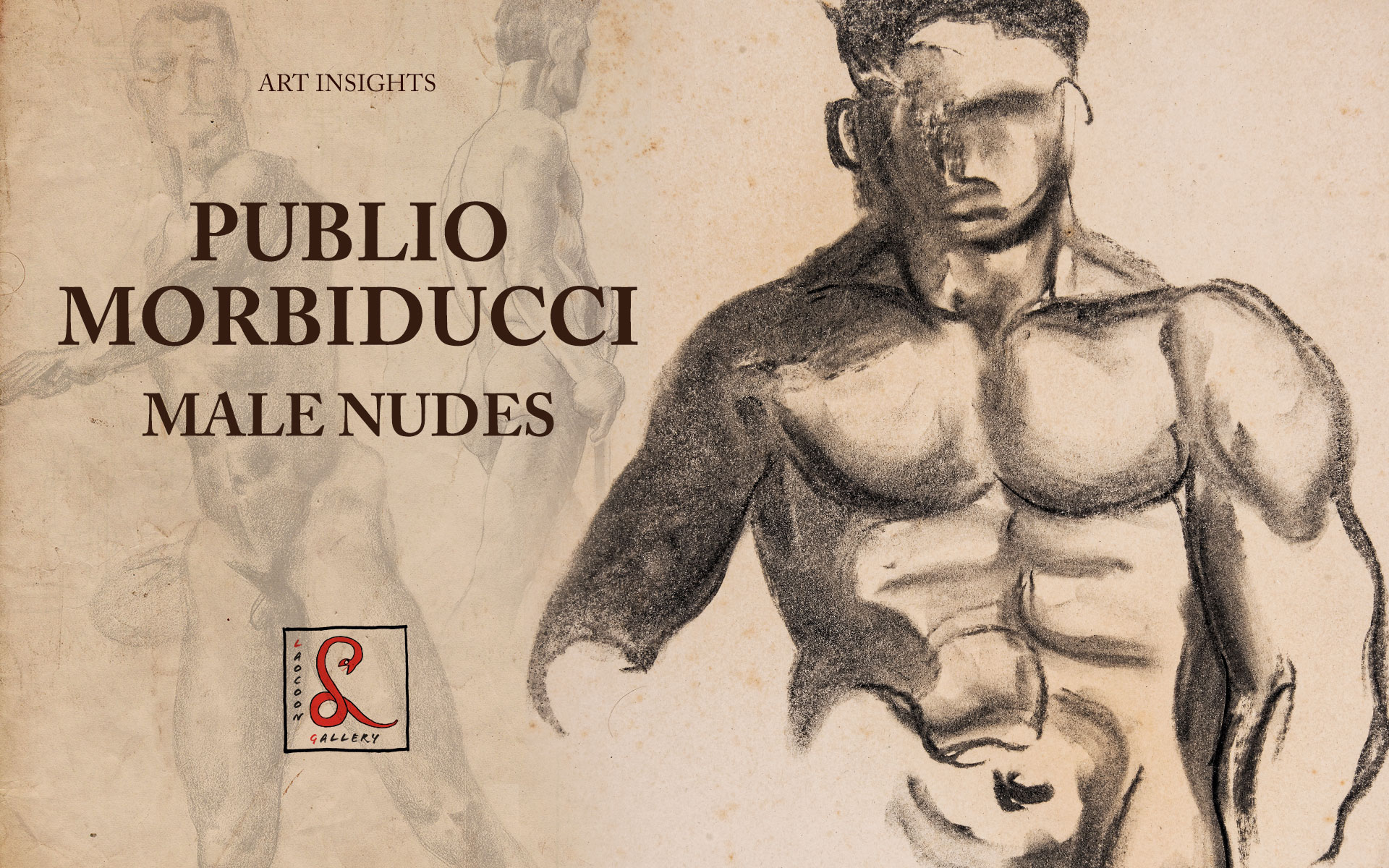
Publio Morbiducci is a Roman artist who showed the same mastery as a painter, xylographer, medalist and sculptor of monumental works. His works are known by most as familiar with the urban landscape of Rome, even if the author’s name may escape them. Who doesn’t know that in front of Porta Pia lies the Monument to the Bersagliere? Who in the EUR district of Rome can ignore the Dioscuri couple and their soaring travertine horses which rear their heads to a height of over seven metres? Both are the work of Publio Morbiducci, an ancient Roman name which contrasts ironically with the hard masses of Tiburtine stone and Apuan marble that the sculptor’s chisel laboriously carved during his lifetime given that the direct translation of morbido is soft. He made his artistic debut as a painter, one of the most extraordinary among those of the Roman Secession, which took place on the eve of the First World War, equal in expressionistic intensity to the greatest artists in European painting of the time. But this extraordinary debut was soon abandoned due to the influence of his master Duilio Cambellotti, who convinced Morbiducci to follow the path of tradition, devoting himself to xylography and medals, then seen as ancillary arts to painting and sculpture, which at that time were inspired by the synthetic and classic forms of ancient Italian Renaissance tradition. The medals, minted for events of all kinds – aeronautical records, cruises, fairs, public works – were an integral part of the fascist regime’s propaganda, and it was with these that Morbiducci achieved unquestionable perfection.
 As far as monumental sculpture is concerned, he was entrusted with the commission for the Italian Pavilion at the Universal Exhibition of New York in 1939, this included the Golden Fascist Italy which was prominent on the facade of the building and celebrated the achievements of the regime as well as predicting future glories (that would never be realised). He was also commissioned to create the bas-relief at the entrance to Palazzo Uffici for E42, the Rome Universal Exhibition, competing to overcome in magnificence a New York exhibition which had coincided with the outbreak of the Second World War. It was in the same triumphalist and celebratory style, in anticipation of future Olympics that would ultimately not take place until much later, that the Foro Italico was built, a set of sports complexes and monumental spaces which included the Stadio dei Marmi and the Stadio del Tennis: comprising sixty-four statues of athletes at the former and eighteen at the latter, each four meters high, each paid for by a province of Italy. All were in Carrara marble, as the complex was designed by Renato Ricci, a politician from Carrara who was also president of the Opera Nazionale Balilla. Ricci cared more about the miners and carvers of Carrara than the quarry owners, who would end up in the hands of the banks after the crisis of 1929.
On paper Morbiducci’s only work at the complex was Discobolo in riposo, one of the last statues to be placed in the Stadio dei Marmi, in 1938, a full six years after its official inauguration and in conjunction with the decennial of fascism. In reality he had participated in the initial competition, in which sculptors from all regions of Italy submitted 127 sketches, but his most significant involvement was with the creation of the statues originally commissioned to Eugenio Baroni (1880-1935) – one fisherman with a harpoon and the other with a net, for the Tennis Stadium, works for which it could be said that he was both heir and executor of the will. Indeed, it was also Morbiducci who built the Monument to the Duke of Aosta at Piazza Castello in Turin, for which Baroni had won the competition but could not finish the works because he fell morbidly ill, leaving the baton to Morbiducci before his death.
As a result of these great assignments, Morbiducci spent the vast majority of the thirties drawing bodies in athletic poses, looking for that synthesis between real and ideal which had been the ancient and distant secret of Greek beauty, where victorious athletes, real people with a name and a homeland, had been transfigured by art into idealistic archetypes, and had subsequently become a synthesis of impersonal, youthful beauty. As models he would either use his nephew or people from the squares of the Testaccio close to his studio. These bodies were strengthened by the physical nature of their jobs, from unloading boxes for the market to labouring at the workshop, rather than by the gymnastic exercises of the Olympians. In short, they are quintessentially Italian. Almost all of the bronze originals have been lost, and along with them the names of the athletes depicted, the year of their victory and their city of origin, which were once inscribed on the pedestal of each statue. It is only as a result of them having been copied in marble to satisfy the artistic ambitions of the Roman conquerors that they were preserved for current generations, perpetuating the Greek ideal until the 20th century Olympics. In pencil and charcoal Morbiducci works to transform the individuality of his models into perfect forms, in search of an Italian beauty that is always tempered by the classical ideal.
In 1860, the experiments of passionate liquorist Gaspare Campari culminated with the invention of a striking new red beverage with a distinctive bitter flavour and a secret recipe. The aperitive was called Campari, and following great success in the coming years a close relationship was forged between the company and prominent artists of the early twentieth century. From that moment on the greatest artists of the period have contributed to the brand, expressing the soul of Campari with their artworks.
The first work under the spotlight this week features an elegant female figure dressed in Turkish garments on a dark background. She has been drawn by the artist with confident strokes which are characteristic of consummate expertise in both graphics and women’s fashion, with a turban on her head and a wide band around her waist to keep the ample fabric of her robe in place. The tempera, which has been heavily diluted, is applied with light brushstrokes to the figure. The light and dark yellow, the green and red together with the hue of the white lead, used to generate the effect of light coming from the left, enrich and elevate the pencil drawn model. The Turkish woman is caught in the act of spritzing seltzer water into a chalice containing an orange drink, which brings to mind the beverage invented in 1919 by the Barbieri brothers, Silvio and Luigi, and later subsumed by Campari Group, known as Aperol Spritz. Since its birth the orange colour has been Aperol’s chromatic signature, and even if the marketing materials have changed considerably, with provocative women taking the place of those elegant and moderate female figures employed to advertise the brand in the 1950s, the same orange colour continues to identify this drink. The identification of the liquid as Aperol remains in any case a hypothesis, even if plausible, due to the lack of an inscription on the sketch stating the brand of the product.
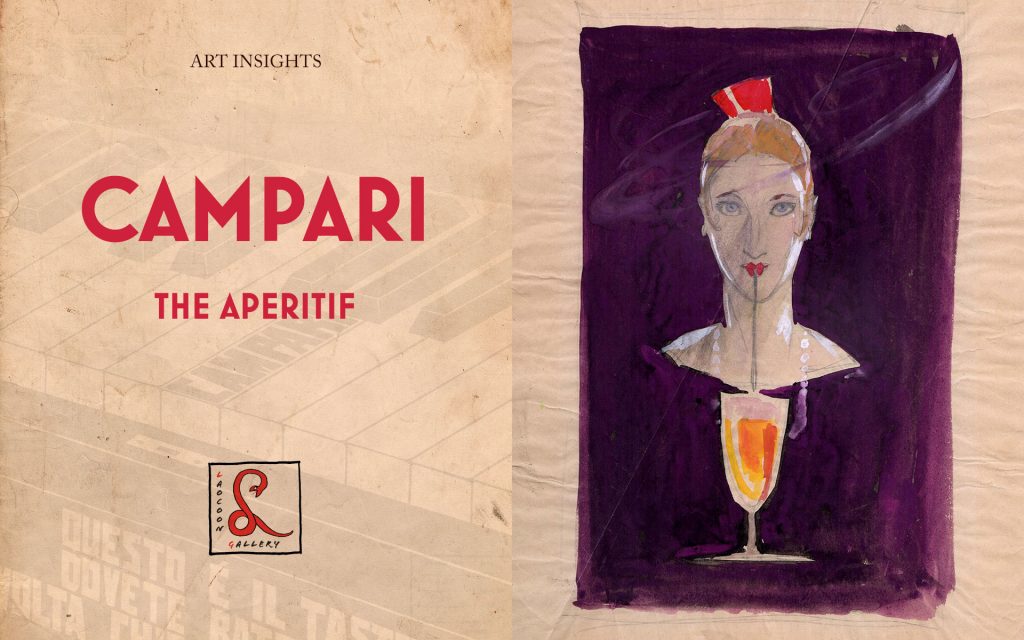
The second piece we focus on is similar to the first not only in its dark violet background, with heavily diluted tempera, but also and most importantly for the presence of the same chalice filled with the orange liquid. At the centre of the sheet lies a beautiful female face, framed by touches of white lead which brighten up and enhance her contours. Her blond hair is styled in the fashion of the Roaring Twenties, with charming lovelocks curled on the cheekbones and a wide comb of an intense orange colour. This is probably the peineta, a typical Spanish female ornament which was used by many divas of the time like Paola Negri, companion of Rodolfo Valentino, who excelled at playing the role of the gypsy and of the Andalusian. With her pretty orange mouth in the shape of a heart, Brunelleschi’s figure drinks with a straw the beverage from a chalice whilst floating in the darkness of the paper.
 The unique relationship between Fortunato Depero and Davide Campari, owner of the Campari Group, began in 1924-25 and would yield its first public showing at the 1926 Venice Biennale through the exhibition of large oil painting Squisito al Seltz, Quadro Pubblicitario – Non cartello. The work depicted two customers at the bar under the sign ‘Campari’. From that moment on the artist created a great number of sketches for posters, typographic alerts and advertising sculptures. Through these adverts Davide Campari partly financed the famous “bolt-bound” book entitled Depero Futurista in 1927 and also facilitated the departure of the artist to New York in 1928. Upon his return to Italy in 1931, Depero published ‘Numero Unico Futurista Campari’ in which also appeared his extraordinary design for an exhibition pavilion for the company, with the letters of the brand Campari, Bitter and Cordial forming an integral part of the proposed structure. In 1932 Depero would design the famous conical bottle, in printed glass without a label, with which the new product called Campari Soda was launched. This piece is the first idea for a black and white advert that was published in newspapers and magazines with the addition of the writing “Evviva!”. The elemental male, typical of Depero’s style, forms with his arms and legs the shape of an X, a form which is echoed in the hourglass shape of a chalice formed by two cones. It was from this upside-down chalice shape that Depero would conceive his design for the bottle of Campari Soda. Here, at the centre of the joyous man is cut a heart, white like the contents of the glass, showing the affectionate relationship between man and liquor. It was not by chance that, when the artist repeated the composition, this time as a coloured preparatory collage for a poster never made, he assigned it to the Cordial and not the Bitter, choosing the same colour for both the heart and cordial out of semantic respect for the fact that the two names derive from each other.
The final piece included in this week’s Art Insights is a preparatory work for Campari Bitter by Gino Giuseppe Soggetti, an artist with a bold and impetuous temperament, who worked predominantly in Milan during the nineteen twenties. He was initially an enthusiastic supporter of the Futurist movement, and a firm believer that it would bring improvements to both the culture and the lifestyle of Italy. This Indian ink drawing advertises Campari Bitter, a non-alcoholic beverage obtained from the infusion of aromatic plants and fruit in a mixture of water and alcohol. The inventor of this drink was Gaspare Campari, the forefather of the family from which this famous brand derives. The artist plays here with the juxtaposition of black and white, placing the name Campari at the top of the composition in white letters on a black background, then again in the middle in black letters on a white background and finally at the bottom where he writes: “ THIS IS THE KEY TO PLAY WHENEVER YOU ASK FOR A CAMPARI BITTER”, referring to the central key of the piano, which is represented by the SOL in syllabic musical notation. This piece is similar, in both its use of black and white and the technique employed in the writing of the letters, from small to large, to the poster that Fortunato Depero created in 1927 for Campari Bitter, in which a funny male figure is holding an umbrella upside down as if it were a chalice, saying “IF ONLY THE RAIN COULD BE CAMPARI BITTER”. Soggetti’s work here is a unique exemplar in the production of the artist. A corpus which was limited by the brevity of his dedication to graphics and art in general as a result of his disappointment with the conservative, ceremonial and Roman Catholic tendencies of the Futurist movement. He soon found himself isolated in his own version of Futurism, subsequently abandoning both the political and artistic scenes by the end of the nineteen-thirties.

Online Exhibition
XX: THE FEMALE GENDER IN XXth CENTURY ITALIAN ART is the latest in a series of meaningful exhibitions by curator Monica Cardarelli, and is the first exhibition to be made available online by Laocoon Gallery following its successful inauguration in Florence and subsequent displays in Rome, Milan and London.
The complete exhibition comprised around one hundred works, with techniques ranging between paintings, drawings, pastels, bronzes, terracotta and ceramics, of Italian artists from the 20th Century who represented as many female figures. Wives or lovers, virgins or prostitutes, holy mothers like the Madonna or man-eating she-devils. Chaste teenagers or mature Magdalenes, but also goddesses, nymphs, legendary personifications of Spring or Italy, imposing and shapely figures wearing crowns of turreted walls.
The title of the exhibition uses “XX” as both chromosomes and Roman numerals in order to represent not only the genes that determine a woman’s sex but also the 20th Century, an era which saw unprecedented change in the role, status, appearance and condition of women.
Exhibition curator, gallery director and strong advocate of women’s rights Monica Cardarelli, who has researched and brought together this astonishing selection of art portraying the female gender in its many representations and transfigurations, says of the exhibition, “In a single image we can find a myriad of stories and destinies that intertwine and overlap, and this is also the case for each of the other images that make up this exhibition. Each contains stories that oscillate between past and present, leading to a series of reflections, to which are added those generated by their being together, by the dialogue that inevitably they entertain while standing side by side.”

Lucrezia Romana, c.1940
Oil on canvas, 60 x50 cm
£30,000.00

Ugo and Parisina, 1934
Pastel on mounted paper, 93 x 72 cm
P.O.A

Aurelia, the actress Jenny Colon, 1934
Watercolour on paper, 30 x 21.1 cm
£15,000.00

Portrait of Marcella Giulini, 1949
Oil on panel, 30.3 x 40.5 cm
P.O.A

Postribolo, 1945
Oil on canvas, 23 x 26 cm
£18,000.00

Female nude with a fan, 1958
Oil on canvas, 170 x 90 cm
P.O.A

Amaca Zanardo, 1954
Terracotta, 35 x 12 x 33 cm
£10,000.00

Girl with a bird, 1939
Tuff, 46 x 48 x 27 cm
£16,000.00

Leda and the swan, 1959
Glazed ceramic, 80 x 52 x 27 cm
P.O.A

Joachim Murat & Caroline Bonaparte, 1813
Plaster, 66 x 26 x27 – 58.5 x 26 x 27 cm
P.O.A

Female figure, c.1915
Charcoal and pastel on paper, 41 x 27 cm
£8,500.00

Portrait of Valentina, 1951
Oil on canvas, 150 x 100 cm
£28,000.00

Study for the finding of Moses
Oil on canvas, 70 x 57.5 cm
£26,000.00

The Harem, 1958
Pastel on paper, 29.2 x 39.5 cm
£20,000.00

Study for Terrace by the sea, 1949
Pencil on paper, 96 x 123 cm
£25,000.00

Female nude, c.1945
Indian ink on paper, 27 x 21 cm
£6,000.00

Female nude, c.1945
Indian ink on paper, 27 x 21 cm
£6,000.00

Fashion and women, 1913
Tempera pouchoir, 32.5 x 24 cm
£5,000.00

Fashion and women
Tempera pouchoir, 32.4 x 24 cm
£5,000.00

Portrait of Eleonora Duse, c.1910
Tempera pouchoir, 35 x 26 cm
£7,000.00

Figure of the Merry go round, 1936
Oil on canvas, 50 x 42 cm
£16,000.00

Naked girl, 1936
Oil on canvas, 74 x 52 cm
£40,000.00

Reading woman, 1891
Pastel on paper, 85 x 48 cm
£40,000.00

Laocoon Mother, 2015
Bronze, 79 x 66 x 27.5 cm
£40,000.00

Venus Fortune, 1928-31
Bronze, 78 x 25 x 15 cm
P.O.A

Sketch for the costume of Maria Callas in La Traviata, 1955
Indian ink and watercolour on grey paper, 24.5 x 18 cm
£10,000.00

Female figure with a child in a high chair, 1963
Mix media on paper, 27.5 x 21.5 cm
£7,000.00

Bread bearers (from Il Grano triptych), 1940
Pastel on mounted paper, 230 x 140 cm
P.O.A

Farmers of Anticoli Corrado (from Il Grano triptych), 1940
Pastel on mounted paper, 230 x 140 cm
P.O.A

Medusa, 1985
Indian ink and watercolour on paper, 40.5 x 41.5 cm
£16,000.00

Portrait of Anna Maria Passarella, 1954
Oil on canvas, 150 x 90 cm
£35,000.00

Manekinos, 1922
Pencil and tempera on paper, 20 x 13 cm
£8,000.00

Portrait of his wife Adele Leone, 1923-24
Pencil on paper, 70 x 58 cm
£25,000.00

America goddess of war, c.1935
Tempera and pencil on paper, 33 x 25 cm
£7,000.00

United States Army Red Cross nurse, c.1935
Tempera and pencil on paper, 35 x 25 cm
£7,000.00

Online Exhibition
XX: THE FEMALE GENDER IN XXth CENTURY ITALIAN ART is the latest in a series of meaningful exhibitions by curator Monica Cardarelli, and is the first exhibition to be made available online by Laocoon Gallery following its successful inauguration in Florence and subsequent displays in Rome, Milan and London.
The complete exhibition comprised around one hundred works, with techniques ranging between paintings, drawings, pastels, bronzes, terracotta and ceramics, of Italian artists from the 20th Century who represented as many female figures. Wives or lovers, virgins or prostitutes, holy mothers like the Madonna or man-eating she-devils. Chaste teenagers or mature Magdalenes, but also goddesses, nymphs, legendary personifications of Spring or Italy, imposing and shapely figures wearing crowns of turreted walls.
The title of the exhibition uses “XX” as both chromosomes and Roman numerals in order to represent not only the genes that determine a woman’s sex but also the 20th Century, an era which saw unprecedented change in the role, status, appearance and condition of women.
Exhibition curator, gallery director and strong advocate of women’s rights Monica Cardarelli, who has researched and brought together this astonishing selection of art portraying the female gender in its many representations and transfigurations, says of the exhibition, “In a single image we can find a myriad of stories and destinies that intertwine and overlap, and this is also the case for each of the other images that make up this exhibition. Each contains stories that oscillate between past and present, leading to a series of reflections, to which are added those generated by their being together, by the dialogue that inevitably they entertain while standing side by side.”
Lucrezia Romana, c.1940
Oil on canvas, 60 x50 cm
£30,000.00
Ugo and Parisina, 1934
Pastel on mounted paper, 93 x 72 cm
P.O.A
Aurelia, the actress Jenny Colon, 1934
Watercolour on paper, 30 x 21.1 cm
£15,000.00
Portrait of Marcella Giulini, 1949
Oil on panel, 30.3 x 40.5 cm
P.O.A
Postribolo, 1945
Oil on canvas, 23 x 26 cm
£18,000.00
Female nude with a fan, 1958
Oil on canvas, 170 x 90 cm
P.O.A
Amaca Zanardo, 1954
Terracotta, 35 x 12 x 33 cm
£10,000.00
Girl with a bird, 1939
Tuff, 46 x 48 x 27 cm
£16,000.00
Leda and the swan, 1959
Glazed ceramic, 80 x 52 x 27 cm
P.O.A
Joachim Murat & Caroline Bonaparte, 1813
Plaster, 66 x 26 x27 – 58.5 x 26 x 27 cm
P.O.A
Female figure, c.1915
Charcoal and pastel on paper, 41 x 27 cm
£8,500.00
Portrait of Valentina, 1951
Oil on canvas, 150 x 100 cm
£28,000.00
Study for the finding of Moses
Oil on canvas, 70 x 57.5 cm
£26,000.00
The Harem, 1958
Pastel on paper, 29.2 x 39.5 cm
£20,000.00
Study for Terrace by the sea, 1949
Pencil on paper, 96 x 123 cm
£25,000.00
Female nude, c.1945
Indian ink on paper, 27 x 21 cm
£6,000.00
Female nude, c.1945
Indian ink on paper, 27 x 21 cm
£6,000.00
Fashion and women, 1913
Tempera pouchoir, 32.5 x 24 cm
£5,000.00
Fashion and women
Tempera pouchoir, 32.4 x 24 cm
£5,000.00
Portrait of Eleonora Duse, c.1910
Tempera pouchoir, 35 x 26 cm
£7,000.00
Figure of the Merry go round, 1936
Oil on canvas, 50 x 42 cm
£16,000.00
Naked girl, 1936
Oil on canvas, 74 x 52 cm
£40,000.00
Reading woman, 1891
Pastel on paper, 85 x 48 cm
£40,000.00
Laocoon Mother, 2015
Bronze, 79 x 66 x 27.5 cm
£40,000.00
Venus Fortune, 1928-31
Bronze, 78 x 25 x 15 cm
P.O.A
Sketch for the costume of Maria Callas in La Traviata, 1955
Indian ink and watercolour on grey paper, 24.5 x 18 cm
£10,000.00
Female figure with a child in a high chair, 1963
Mix media on paper, 27.5 x 21.5 cm
£7,000.00

Self-portrait, 1930
Oil on panel, 44 x 51 cm
£13,000.00
Bread bearers (from Il Grano triptych), 1940
Pastel on mounted paper, 230 x 140 cm
P.O.A
Farmers of Anticoli Corrado (from Il Grano triptych), 1940
Pastel on mounted paper, 230 x 140 cm
P.O.A
Medusa, 1985
Indian ink and watercolour on paper, 40.5 x 41.5 cm
£16,000.00
Portrait of Anna Maria Passarella, 1954
Oil on canvas, 150 x 90 cm
£35,000.00
Manekinos, 1922
Pencil and tempera on paper, 20 x 13 cm
£8,000.00
Portrait of his wife Adele Leone, 1923-24
Pencil on paper, 70 x 58 cm
£25,000.00
America goddess of war, c.1935
Tempera and pencil on paper, 33 x 25 cm
£7,000.00
United States Army Red Cross nurse, c.1935
Tempera and pencil on paper, 35 x 25 cm
£7,000.00
There are few locations in Italy’s capital that give a better insight into the architectural style adopted during this epoch than the famous Foro Italico sports complex, originally constructed as part of a bid to hold the ill-fated 1940 Olympic Games, and Palazzo degli Uffici, the imposing inaugural building of the new district of EUR, which was created in the build up to the eventually cancelled 1942 World Fair.
Gino Severini, as a highly revered painter and leading member of the Futurist movement, was commissioned to design scenes which were used in a number of important mosaics executed during this period.
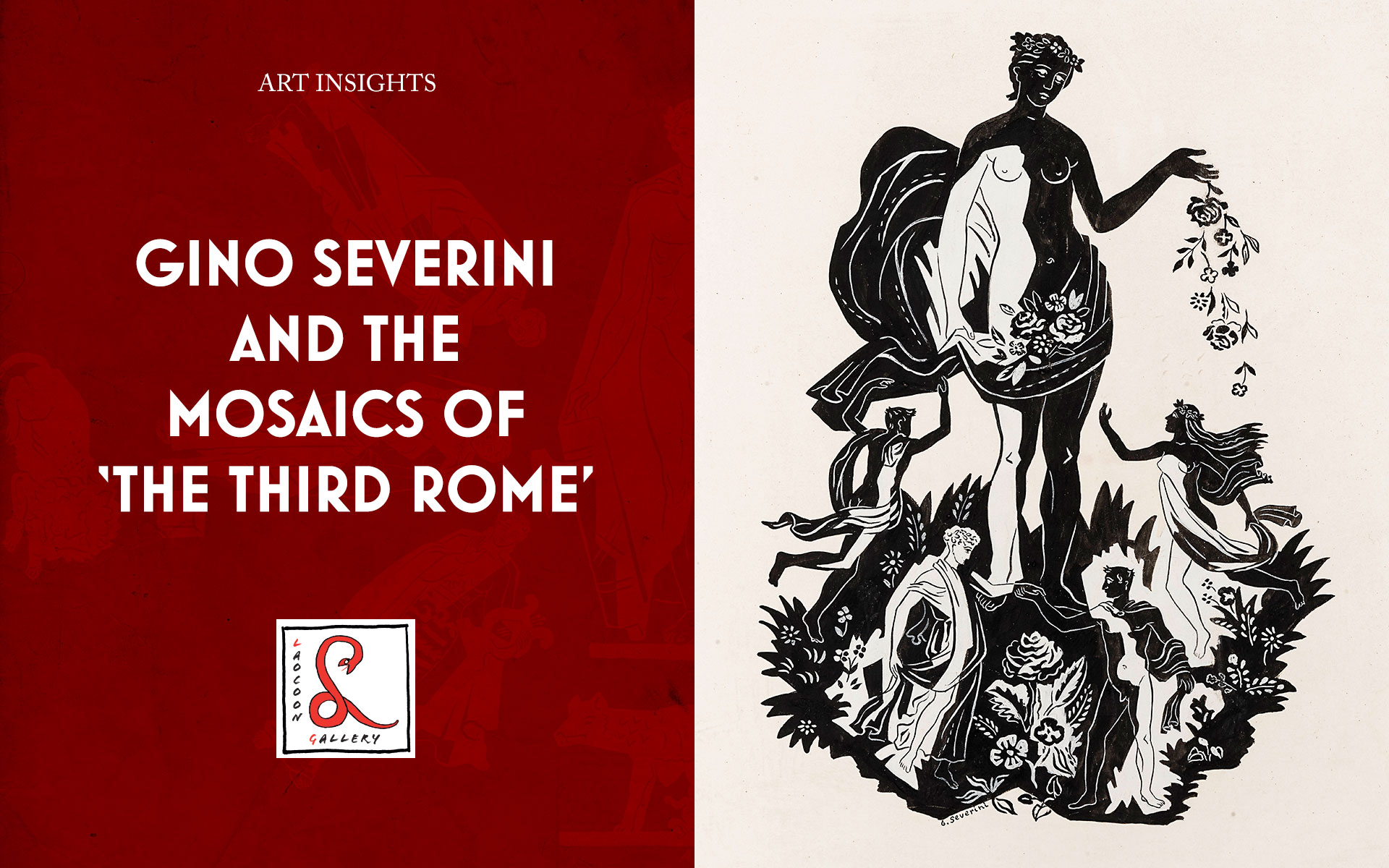
The largest of these mosaics is a walkway covering in excess of 7,000 square metres and containing more than 50 million polychromic tesserae of the same marble used by the ancient Romans. The avenue, which leads to a 300 tonne Carrara marble obelisk, is named Viale del Monolite, and depicts figurative motifs intended to represent both the history of Rome and fascist life.
Severini’s production for this assemblage contains a disaggregated group of symbolic figures, at the centre of which is a male heroic nude leaning against a littoral beam, surrounded by the symbols of the arts and sciences as well as by those of strength (the lion), the empire (the eagle), and Rome (the wolf). The male figure, also interpreted by historians as Romulus or Augustus, almost certainly represents Fascism or The Empire. It is a composition ideally inscribed in a circle, whose figures are spread as in ancient rosettes; with the usual discretion the Fasces, which characterises the male figure, camouflages itself with the folds of his mantle, while particular attention has been paid to the details and attributes of the symbolic figures surrounding the central character. Severini clearly tries to escape the rhetoric of the theme by proposing a decoration in which the rhythmic alternation of black and white scores works, and classicism is repurposed between Cubist allusions, like a world once dreamed and now lost.
A large scale second drawing by Severini refers to a mosaic executed at the Duce gym of the same complex under the direction of architect Luigi Moretti. The environment, conceived by perhaps the most original architect of his generation, is a classical room with elongated proportions that are completely covered in marble. Severini’s mosaics, featuring black figures on a white background, distributed in different places on the floor and walls, counterpoint this rarefied space (in which apparently the Duce never went) without affecting the space conceived by the architect. At the entrance there is a kind of ‘carpet’ with the symbolic figure of fascist Italy juxtaposed with a fallen Icarus and topped by a roaring Lion, the symbol of Mussolini’s zodiac sign; it is a discreet introibo, evocative of the Renaissance virtues of the new Prince, to the superb epiphany of the Morettian chamber, cadenzad by just three plastic elements, a spiral staircase ascending through the hall and two beautiful golden sculptures from Silvio Canevari (The Archer, The Fromboliere). At the bottom on the left, behind a marble septum, a Cubist still life on the ground introduces the elongated wall of the dressing room, upon which the rest of the athletes and the theme of the hunt are described; the remaining figure of the archer can be seen from the entrance behind the bronzes of Canevari. Severini’s composition is characterized by the paratactic rhythm with which the figures appear and loom on the wall. There is no narrative bond that unites them. From the two male nudes on the left, playing with birds, to the isolated figure of the hunter, arched on the ground, and the prey surrounded by pigeons and roosters. At the top a flock of birds wheel and circle and, out of symmetry, one of the artist’s characteristic still lifes. Finally, a pencil stroke behind the athletes on the left reveals the suggestion that the author had once placed a leafy tree in the background, later removing it.
The mosaic panel for which Severini, along with his contemporaries, provided detailed drawings intended to guide the mosaicists in charge of the works at the monumental fountain at the entrance of Palazzo degli Uffici give further insight into the brilliance of the artist. Like many other public works, the history of this assignment was thwarted. It was a commission that the artist considered minor at the time, having hoped to receive that of the decoration of the Salone di Libera for Palazzo dei Congressi. This assignment would have provided much higher prestige and visibility but was ultimately prohibited by his appointment as commissioner in the jury of the competition. The fountain, whose design history has been dutifully reconstructed by A. Greco [E42 : utopia e scenario del regime…,cit., pp. 310-314], was conceived by the architect Gaetano Minnucci and consists of three basins in sequence. The sides were designed by Giulio Rosso and Giovanni Guerrini, while for the central basin Severini conceived six panels inspired by the glorification of the origins of the Lazio region and Rome. The style relates intimately to his experience with the recently completed mosaics for the Foro Italico; it is a polite reinterpretation of Roman and Pompeian motifs that is more inclined to confront the bucolic themes of the Virgilian lyric than the triumphalist subject matter preferred by the regime.
For the panel of Romulus, who governs on a prosperous forest surrounded by six horses (which in the final creation became eight) the artist performed two different versions, essentially very similar, one more naturalistic, the other – as shown here – a more geometric form, which was ultimately discarded. The geometrical cuts in white of the black fields and figures are of clear Cubist memory, and they give a lively rhythm to the composition, removing it from the illustrative anecdote.
The presence in the archive of Romana Severini of several dictionaries of ancient mythology, belonging to the artist and bearing many annotations by his own hand, explains the accuracy with which the artist intended to respond to the requests of his client. It is likely that the iconographic indications were quite generic. The artist, however, determined to build an iconographic tale allusive to the celebration of The Third Rome and its rebirth under the new emperor that transferred, via the technique of mosaic, forms taken from the Roman decorative repertoire as long ago as the early imperial age and beyond. Furthermore, there is an interesting turning point in these works in comparison to the compositional modules experimented with in the great secular compositions of the second half of the 1930s. The encounter with classical iconography induces Severini to abandon those highly geometric pyramidal constructions as seen in his panels for the exhibition of Dopolavoro in 1938, or of Neo-Byzantine taste like those in the mosaics of the Palace of Justice in Milan, for a much more fluid composition, free and rich in imagination and allowing him to give space to many decorative details which were previously sacrificed.
The figure of Flora, allusive to the richness and fruitfulness guaranteed by new times, demonstrates this perfectly. Instead of standing isolated at the bottom, she is clung to by a group of minor figures who are of pure invention, but in which it is even possible to trace some motifs already present in the Cubist era.
The third drawing depicts an ancient Roman deity who presided over the wilds, akin to Faunus. Silvano was considered the god of the woods and the countryside, protector of flocks and property. Severini depicts him according to the Roman iconography, sickle in hand and dog beside him, surrounded by an abundant harvest of fruits. The panel is, in the arrangement designed for the fountain, the counterpart of Flora; with one placed on either side of the central scene which faces the palace, where Time, or Saturn, is shown, a male figure winged with scythe and hourglass, placed in the middle of the four seasons. As is the case with Flora, the author takes advantage of the countryside theme to set up, largely at the feet of the male nude, a still life full of details and hunting trophies that directly refer to his long pictorial exercise of the fourth decade, in which classically inspired still lifes – sometimes associated with masks and ancient female statues – predominated over any other subject. These bucolic and pastoral motifs were evidently very welcome in the society of the time, as displayed by Gio Ponti in Paris, in 1937, with his adornment of a dining room for the International Exhibition of Decorative Art, and later, in 1940, in the panels executed for Villa Innocenti in Frascati, with its figures of Pomona and Vertunno very close to the mosaics of the EUR.
Of all the figurations performed for the fountain, the panels of Flora and Silvano certainly appear to be the happiest and the least constricted by the need to adhere, albeit in Gino Severini’s trademark sober manner, to the celebratory spirit that animated the entire conception of the work conceived by the architect Minnucci. Although the letters preserved in the archives record the artist’s substantial dissatisfaction with the limited scope of the assignment, he certainly did not object to the revival, in a contemporary key, of the ancient technique of bichrome mosaic. A method that presented an abundance of conceptual affinities with the graphic synthesis elaborated by Cubism.
In 2013 art historians Monica Cardarelli and Marco Fabio Apolloni carried out a survey during their research for a solo exhibition on the artist which confirmed that, of the important cycle of frescoes made in the summer of 1938, there is now nothing but bare walls in place of this masterful creation by the artistic genius of Pietro Gaudenzi.
This discovery gave great significance to the exhibition that followed, which was inaugurated at the headquarters of Galleria del Laocoonte in Rome in 2014 and subsequently shown at the Museum of Modern and Contemporary Art of Anticoli Corrado in 2015.
 The exhibition assembled a number of preparatory pieces for the frescoes which included drawings, sketches, oil on panel and cartoons, all precursory to the monumental lost works of the artist. This nucleus, significantly brought together by curators Marco Fabio Apolloni and Monica Cardarelli, is the last surviving testimony of the murals that occupied two rooms, the Bread Hall and the Family Hall, of the monumental 14th century Castle of the Grand Master of the Knights in Rhodes, which was rebuilt by the Italians between 1936 and 1940 following its devastation by an ammunition explosion in 1856.
The pastel cartoons, extraordinary for their delicacy of touch, served to create the frescoes. These portray the imperturbable peasant women of Anticoli Corrado, a village near Rome, in their long black dresses and shawls, bearing enormous trays of bread on their heads in age old customs. When looking at The Mill of Anticoli Corrado, The Seeding, The Reaping, The bread bearers, Woman with a loaf of bread, or Young woman with a bundle of corn, one cannot fail to summon into mind the Mussolinian rhetoric of the Battle for Grain. These figures of Gaudenzi, painted in a triptych which echoed the frescoes of Rhodes and won the artist the Cremona Prize in 1940, seem untroubled, in the fixity of their ancient and immutable customs, by their triumphalist political backdrop.
These are the works of a bashful, taciturn artist who is the creator of an enchanted world and humanity in which the peasant models, portrayed by him in the village of Anticoli Corrado, which he elected as his personal Arcadia, are transfigured by poetic grace, so that line between human and divine becomes blurred: so in Gaudenzi’s works a Holy Family becomes a family, a divine visitation becomes a visit between merry wives or a Sacred Wedding Ceremony a simple wedding banquet, without the sense of the sacred being diminished but also without betraying the sense of truth.
It is the beauty of the humility of the Christian legend, so often wonderfully dressed in painting, which Gaudenzi has been able to bring back as a purist declination of the Italian twentieth century, with simplicity and sincere finesse.
Even though our doors are temporarily closed to the general public, in an attempt to protect our local community from the spread of COVID-19, Laocoon Gallery remains operational in all other respects.
Our recently unveiled Art Insights programme will present a carefully selected group of works to our audience. Paintings and sculptures that tell stories, which are representative of the life and works of important artists of the 20th Century and that will allow you to understand our artistic mission.

Maria Morino Savinio was born in Rome in 1899, and began embroidering from a young age, but it was only during the period she spent in Paris in the 1920s that she made her first embroidery on canvas, from a drawing made by brother-in-law, Giorgio De Chirico.
Whilst in Rome, Maria was a successful stage actress, and as well as working in the same company as Eleonora Duse, was used to socialising with middle-class families. However, when she moved to the French capital with her husband, artist Alberto Savinio, the pair had practically no funds. Although she had not made a career out of her passion for embroidery until that point, in Paris the opportunity arose for her to make a virtue out of necessity. Later, when Alberto started to be successful, Maria took the decision to fully dedicate her time to their children. She began embroidering again only after the death of her husband, and in 1954 held an exhibition of the works that she had created over a two-year period. These works were all faithfully derived from paintings by De Chirico and more notably her husband, of whom she poignantly wrote that this was, “another way to stay close to him”.
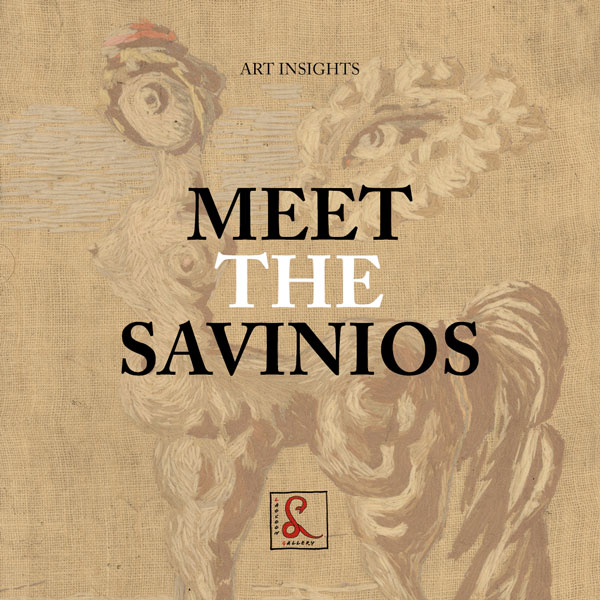
The three tapestries shown here are based on three well-known paintings by Alberto Savinio: The return of the goddess to the temple (1944), Centaurina (1950) and Orpheus the widower (1950). These three subjects are taken from Greek mythology and translated into visual imagery through the artist’s creative power of invention. The tapestries depict the goddess Athena with the head of an owl, a feminised centaur and Orpheus with a zither in place of his head. Maria faithfully reproduced the colours of the artist’s palette through expertly mixing together a dense weave of wool and artificial silk threads. She recreated the effects of light and shadow as well as shade and volume, all the while paying close attention to the dimensions of the original work, in order to create true copies of these works woven on canvas.
Alberto Savinio was a gifted pianist, composer, musicologist, critic, writer, and painter. As the younger brother of Giorgio de Chirico, Savinio’s career was often overshadowed by the mainstream success of his accomplished sibling; however his genius has been widely and internationally recognised by critics, collectors and fellow artists alike.
The four works shown here give an insight into both the virtuosity and multiplicity of the artist, differing in both their subject matter and the techniques used.
“I die innocent of all the crimes imputed to me. I pardon the authors of my death, and pray God that the blood you are about to shed will never fall upon France” – Louis XVI
In Louis XVI, Savinio describes in fine pastel the faces of the French king and his wife Marie Antoinette moments after their execution. The pair are found at the centre of the composition, with both the husband and his obscured wife seemingly smiling as they pose. Behind them is a square which at first glance could be taken for a picture frame, but in reality is a guillotine, with its deadly blade concealed by the image of a Phrygian cap, an important symbol of the French revolution.
Souvenir of a family sees the artist, whose real name was Andrea De Chirico, using an old photograph from his family album as the subject of a beautiful watercolour. In it he portrays older brother Georgio De Chirico alongside his sister Adele and their mother Gemma.
The skill of Alberto Savinio in oil painting can be seen clearly in Portrait of Marcella Giulini, where he portrays the face of Marcella De Girolami (Rome 1921 – Milan 1995), wife of the well-known conductor Carlo Maria Giulini (Barletta 1914 – Brescia 2005), who was a great friend of the artist. The portrait was created and presented as a gift to the couple.
And finally, in a piece which is particularly characteristic of the artist, Alberto Savinio uses his distinctive form of irony to translate a biblical theme into the domestic domain. Departure of the prodigal son is a drawing which relates to the homonymous painting by this multifaceted creative genius. The work represents the protagonists of the religious story in the zoomorphic transformation typical of Alberto Savinio.
For more information on these pieces, please contact info@laocoongallery.co.uk

Giuseppe Piattoli the Younger was born in 1748. He was a painter and engraver active mainly in Florence. He specialised in depicting scenes from both the Old and New Testament, as well as from classical mythology.
His father, Giuseppe Piattoli the Elder, was an engraver from Sardinia. Both his mother, Anna Bacherini Piattoli, and his brother Gaetano were painters. He died in 1834.
In 2006, the record price for the artist’s work was achieved at auction. The work in question, was a thirty-six page album of compositional and academic studies which sold at Christie’s London for $20,138 USD.

Lea Monetti is an artist who works in many different mediums, she is an adept painter who often works in the ancient technique of fresco and a sculptor who specialises in the medium of bronze. In the 1970s, she attended courses at the Accademia di Firenze and at the Scula della Realtà in Florence. Later, she worked on the restoration of damaged frescoes in B. Saetti’s office in Montepiano.
Since 1972, she has worked as an independent artist with the ‘Aldobrandeschi Gallery’. She has also worked for ‘Galleria 38’ in Grosseto, the ‘Cour du Cigne’ Gallery in Geneva, ‘900 Arte Italiana’ and ‘Art Club 2’ in Rome. Her works have been shown in several solo exhibitions internationally – in Italy, Switzerland and Germany. She famously hosted an exhibition of recovered frescoes from Cairo, which was sponsored by the Italian Ministry of Foreign Affairs, who subsequently promoted an exhibition of her works in Wolfsburg.
In 1988, she signed an exclusive contract of management with G.B. Remo Bianco, an esteemed expert of contemporary painting. Since this time, she has been represented in international art events along with: the Bueno brothers, R. Squillantini, L. Alinari and E. Bandelli.
She spent the following decade exhibiting in solo exhibitions in northern Europe with great success. After this period, she returned to Italy in order to create sculptures for the ‘900 Arte Italiana’, the ‘Eldek’ and ‘Art Club 2’. In 2000, she suspended her artistic activity in order to restore a farmhouse in Maremma and to then set up a business there. Since then, her works has been displayed in prestigious exhibitions and in both public and private museums, alongside the works of distinguished artist’s such as Cesetti, Gentilini and Ligabue. In 2011, she resumed exhibiting in Florence.
Her works are currently represented in ‘Art Club 2’ in Rome, ‘Galleria Dei Fossi’ in
Florence, ‘Interior Design’ in Brescia and ‘Galleria La Ducale’ in Milan.

Umberto Brunelleschi was born in Monterulo in 1879. He studied at the Academy of Fine Arts in Florence. He moved to Paris in 1900 where he found success as a painter, illustrator and designer.
Under the pseudonym of Aron-al-Raxid or Aron-al-Rascid he worked as a caricaturist at the magazine ‘Le Rie’, as well as magazines such as the ‘Journal des Dames et des Modes’, ‘La Vie Parissienne’ and ‘Gazette du Bon Ton’. He was forced to interrupt his stay in Paris during World War I to go to the front line. In 1920, back in France, he worked on costumes for the ‘Folies Bergère’, at the Casino de Paris, Theatre du Chatelet.
He also began to work for theatres in New York, Germany and at ‘La Scala’ in Milan. He was very well known among collectors of books for illustrating the works of Voltaire (Candide, 1933), Charles Perrault (Contes du Temp Jadis), Musset (La Nuit Valentienne) and Goethe (Les Bijoux Indiscrets).
He died in Paris in 1949.

Ubaldo Oppi was born in Bologna in 1889. He was a painter and one of the founders of the Novecento Italiano in Milan. He painted in a neo-quattrocento realist style. His father, a shoe salesman, sent him north to Germany to learn the shoe trade. However, he elected to stay in Vienna between 1907-1909 and study under Gustav Klimt.
He returned to Italy and was drafted into the military for a year. He then travelled to Paris, where he became a member of modern artistic circles. In 1913, he exhibited at the Cà Pesaro in Venice along with Casorati, Martini, and Gino Rossi. In 1915, he joined the army again. Near the end of the First World War, he was captured and imprisoned at Mauthausen by the Austrians. After the war he returned to Paris, exhibiting at the Salon des Indipendants of 1921.
In 1922, he was one of the founders of the Novecento Italiano, patronised by Margherita Sarfatti and the fascist party. In 1924, he exhibited at the Venice Biennale. In that same year he won second prize at the Mostra Mondiale of Pittsburgh. During this time, he frequently exhibited outside of Italy, in places such as Monaco, Dresden and Vienna. He left the Novecento Italiano group a few years after joining, and did not exhibit with them in the 1926 Venice Biennale. In the late 1920s Oppi became more religious, and many of his later works included altarpieces. In 1926-28, he frescoed the Chapel of San Francesco in the Basilica of St Anthony in Padua, and in 1932, for the church of Bolzano Vicentino. He served as a lieutenant colonel during the Second World War.
He died in Vicenza in 1942.

Roberto Melli was born in Ferrara in 1885. He was a painter and sculptor of the Scuola Romana. He was from a family of Jewish traders. In his twenties, he moved to Genoa to start an apprenticeship as an engraver. In 1910, he moved to Rome, where he shared a studio with the sculptor Giovanni Prini.
In 1913, he participated in the first exhibition of the Scuola Romana, and subsequently exhibited his work at various shows organised by the Futurism movement. However, from this point on Melli pursued his own unique style and technique of painting. In 1915, together with artists Vittorio Costantini, Cipriano Efisio Oppo and Guglielmo Pizzirani, Melli formed the ‘Gruppo Moderno Italiano’ (Modern Italian Group). In 1918, he contributed to the creation of the magazine Valori Plastici. He became friends with Giuseppe Capogrossi and Emanuele Cavalli, and undersigned the ‘Manifesto del Primordialismo Plastico’. After a solo exhibition in 1936, his public activity was compromised by the Fascist antisemitic laws, which prohibited any Jewish artists to exhibit in public galleries or teach in schools. After the Second World War, Melli returned to his artistic practice.
Each week at his flat in Rome, he hosted a group of young painters which included Renato Guttuso, Enrico Accatino, and Fausto Pirandello. From 1945 he taught at the Accademia di Belle Arti of Rome and participated in several personal and collective exhibitions. In this period, Melli was considered one of the major representatives of the Scuola Romana. In 1950, he was invited to exhibit at the Biennale di Venezia, which honoured him with a ‘personale’. In his last years, Melli continued a parallel activity of painter and art critic. In 1957 he published a book of poetry, Lunga favolosa notte (The Fabulous Long Night), and in 1958 the Galleria Nazionale d’Arte Moderna in Rome opened a retrospective exhibition of his work, organised by curators Nello Ponente and Palma Bucarelli. Melli died in Rome in 1958.

Renato Guttuso was born in Bagheria, near Palermo in Sicily, in 1911. He was a painter, set and costume designer and illustrator. He was a fierce anti-fascist who ‘developed out of Expressionism and the harsh light of his native land to paint landscapes and social commentary’ (Adrian Hamilton, “Past masters of Futurism”).
He began painting at an early age, and began signing and dating his works at thirteen. He went to school and university in Palermo, where he was influenced by European figurative artists such as Courbet, Van Gogh and Picasso. In the early 1930s, he frequently visited the studio of one of the most prolific futurist painters, Pippo Rizzo. In 1931, he participated in the Rome Quadriennale and joined a collective of six Sicilian painters. He later became a member of the artistic movement ‘Corrente’, which stood in opposition to official culture and was strongly anti-fascist in its thematic choices through the years of the Spanish Civil War (1936-1939). Within this group he developed his ‘social’ art, his moral and political commitment is visible in paintings such as Fucilazione in Campagna (1938), which is dedicated to the writer García Lorca. He moved to Rome in 1937 and joined the banned Italian Communist Party (PCI).
He became a renowned artist during the war and won a prestigious prize in 1941. Some of his best-known works are from this period, which include Flight from Etna (1938-39) and Crucifixion (1941). In 1945 Guttuso, along with artists Birolli, Marchiori, Vedova and others, founded the ‘Fronte Nuovo delle Arti’ (New Front of the Arts) which promoted the work of those artists who had previously been suppressed by fascist rule. During this time, he met Pablo Picasso, who would remain Guttuso’s close friend until his death in 1973. Socio-political themes dominated his work during this period, where he depicted the day-to-day lives of peasants and blue-collar workers. In 1950, he was given the World Council of Peace Prize in Warsaw. He later received the Lenin Peace Prize in 1972. In 1976 he was elected to the Italian Senate as a PCI representative for the Sicilian constituency of Sciacca. He died in Rome in 1987.

Pietro Gaudenzi was born in Genoa in 1880. He was a painter, whose initial training was under Francesco Del Santo. He later studied at the Accademia Linguistica in Genoa, under Cesare Viazzi. In 1899, he worked as an artist for the Genovese newspaper Il Lavoro. In 1903, he won a scholarship to study in Rome for five years in the studio of Francesco Carena. Among his most frequent subjects during this time were maternal genre scenes. In 1910, his final work at the end of his scholarship, a painting entitled I Priori was awarded a gold medal at an exhibition in Milan. The painting now resides at Galleria Nazionale d’Arte Moderna in Rome.
In 1913, he was awarded another gold medal for the Torso of a Young Woman at an Exposition in Munich, Bavaria. In 1915, he won the Principe Umberto prize for a painting of The Deposition. He painted portraits of Signora Albanese (Gold medal in 1924, Monza), Wally Toscanini, Padre Giovanni Semeria, cleric Saule Radaelli, and Maresciallo Enrico Caviglia. He had been named professor emeritus for the Academies of Genoa and Parma. He became a professor of painting at the Brera Academy. After the 1920s, the subject matter of his paintings shifted focus to patriotic celebrations of work and duty, which were favoured by Fascist authorities. He gained many prestigious appointments in the 1930s, including a professorship at the Academy of Fine Arts of Naples, the Mussolini prize for arts in 1936, and was nominated to be a member of the Accademia dei Virtuosi at the Pantheon, and to the Accademia di San Luca in Rome. He was president of the latter in 1937-38.
In 1940, the Ministry of National Education awarded him a gold medal. After the War, he lost most of his official positions. He took a job directing the Vatican School of Mosaics in 1951.
He died in Anticoli Corrado, near Rome, in 1955.

Pier Leone Ghezzi was born in Rome in 1674. He was a Rococo painter and caricaturist. He trained under his father, Giuseppe Ghezzi (1634 – 1721), who was secretary of the Roman Accademia di San Luca.
In 1705, he joined the Academy and painted for various churches including the Cappuccini of Frascati and San Onofrio of Urbino. He also painted frescoes in the Villa Falconieri of Frascati.
Ghezzi is most renowned and admired for his caricatures. He produced thousands of portrait drawings and was highly skilled at capturing the essence of his subject with a few rapid strokes of his pen. He made many caricatures of members of the Papal and Jacobite courts, who are often depicted in a satirical fashion.
He died in Rome in 1755.

Margherita Vanarelli was born in Rome in 1916. She was an entirely self-taught artist who dedicated her life completely to her work. She began as a fashion designer at the Fontana sisters’ studio, and later became an assistant to her elder brother Augustus who was a painter, sculptor and designer. In the early 1950s, he had opened the Antea art gallery in Via del Babuino, Rome.
She worked as a secretary and caretaker in her brother’s gallery, and as a result she knew all the artists who passed through its doors during the fifties and sixties. Artists such as Giorgio De Chirico, Renato Guttuso, Pericle Fazzini, Giulio Turcato and many others. During this time, she never stopped her own artistic practice.
She portrayed Ava Gardner on the set of the film The Barefoot Contessa (1954) and designed the bas-relief decoration for Termini Station. While working in the gallery she drew swarms of tiny children in aprons that recall the humorous drawings of the cartoonist Sempé, as well as numerous self-portraits in pen or pencil. She also created small stages upon which she set up stories of everyday life, where she emphasised it’s ridiculous and contradictory aspects. She died in Rome in 2005.

Marco Benefial was born in Rome in 1684. He was a proto-Neoclassical painter, best known for his 18th century decorative Rococo style. His paintings portrayed tangible human figures, with a complex treatment of space and a luminous, warm colour palette. His works exemplify his desire for a return to the classical foundations of Italian painting. He painted altarpieces, frescoes, as well as numerous portraits.
He was initially trained in Rome under Bonaventura Lambert, and assisted in the painting of the Chapel of the Sacrament in Saint Peter’s Basilica and in the Carmelite Convent of San Alberto. In 1716, he had painted a San Saturnino for the church of Santi Giovanni e Paolo (Rome). His 1718 papal commission for a Jonah, painted for Basilica of St. John Lateran, was rewarded also by the papacy with the title of Cavaliere.
In 1720, he protested against the Accademia di San Luca’s decree that only members or those meeting the approval of the painter’s guild could teach drawing. His appeal to the councils of Pope Clement XI succeeded in having the ruling revoked. During 1720-27, he completed painting on the Story of San Lorenzo for the Duomo of Viterbo. In 1721, he completed a Pietà with angels & symbols of the passion for the church in the monastery of Santa Maria dei Sette Dolori. He painted for the church of Santa Maria alle Fornaci, two lunettes on the story of John the Baptist. From 1722-1727, he completed four canvases for the Crocifisso alla Collegiata in Monreale. In 1729-1732, he painted two canvases of Santa Margherita da Cortona for the church of Santa Maria in Aracoeli, as commissioned by cardinal Pietro Marcello Corradini. At the age of 57, he was finally elected into the Accademia di San Luca.
Shortly after his election he denounced his fellow members and was expelled in 1755. He died in Rome in 1764.

Lila De Nobili was born in Castagnola, Lugano, in 1916 and was one of the most gifted scenographers and costume designers of the twentieth century. She was the daughter of Prospero De Nobili and Dola Vertes, and sister of the renowned painter and costume designer Marcel Vertes. In the 1930s, she studied under the artist Ferruccio Ferrazzi at the Academy of Fine Arts in Rome.
In 1943, she moved to Paris, where she began executing fashion illustrations for the haute couture collections of various magazines, as well as creating illustrations for high end advertisements and publicity drawings of celebrities. Her uncle, Marcel Vertes, introduced her to Vogue in the 1940s and shortly after she began designing costumes for opera and ballet. She created costumes for Rouleau’s works including Angel Pavement (1947), Le voleur d’enfants (1948), A Streetcar Named Desire (1949), La Petite Lili (1951), Anna Karenina (1951), Gigi (1951), Cyrano de Bergerac (1953), The Country Girl (1954), The Crucible (1954), La Plume de Ma Tante (1958), L’Arlésienne (1958), Carmen (1959) and The Aspern Papers (1961). She went on to work with composers and directors such as Giancarlo Menotti and Luchino Visconti on ballets, operas and plays. With Visconti at La Scala opera house in Milan, she designed sets and costumes for his definitive La Traviata (1955), including Maria Callas’ iconic costume for Violetta.
In the late 1950s and 1960s, De Nobili designed seven Shakespeare comedies and late plays for Hall at the Royal Shakespeare Company at Stratford-upon-Avon and the Aldwych Theatre, London. She also designed many ballets and operas at The Royal Opera House of Covent Garden during this time. In France and Italy during the 1950s and 1960s she continued to be a prolific costume designer for film, ballet and opera. Her projects during this period include Jean Babilée’s Sable (1956), Franco Zeffirelli’s Mignon (1957), and Orphée (1958), Raymond Rousseau’s Ruy Blas (1960), Menotti’s La Bohème (1960), Zeffirelli’s Falstaff (1961), Aida (1962) and Rigoletto (1963) and Jean Babilee’s Le Roi des Gourmets (1964). She died in Paris in 2002.
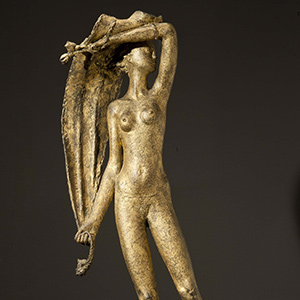
Libero Andreotti was born in Pescia in 1875. He worked as a blacksmith until the age of seventeen, when he moved to Lucca and met Giovanni Pascoli who introduced him to art. With the support of his uncle he found a job at the publisher Sandron in Palermo, where he worked as illustrator of the socialist weekly La Battaglia.
In 1899, dissatisfied with his new environment, he returned to Florence where he worked as a typographer. Andreotti came to sculpture relatively late. It wasn’t until 1902 that he began sculpting after being encouraged by friends Galileo Chini, Oscar Ghiglia and Adolfo De Carolis. Shortly after, he moved to Milan, where he met Vittore Grubicy.
Grubicy recognised his talent and took him to participate at the seventh International Exhibition of Art at the Biennale di Venezia. In 1906, in Milan, he joined the Divisionisti group. From 1907 to 1914 he lived in Paris where he was influenced by Bourdelle and J. Bernard. In 1911 he held a personal exhibition at the Bernheim Jeune gallery, which achieved considerable success. Following the outbreak of the First World War he was forced to return to Italy.
Once back in his homeland his research shifted to the monumental, he began referencing both Romanesque sculpture and the art of fifteenth-century Florence. Works belonging to this period include the war memorials of Roncade (1922) and Saronno (1924); the Pietà and the reliefs in the Chapel of the Italian Mother in Santa Croce, Florence (1924-1925) and the risen Christ in the Victory monument in Bolzano (1928). He died in Florence on 4 April 1933.

Ferruccio Ferrazzi was born in Rome in 1891. He was a painter and sculptor, and also a professor at the Accadamia Di Belle Arti in Rome. He was the eldest son of the sculptor Stanislao Ferrazzi.
In 1904 he trained in the studio of Francesco Bergamini and the following year he studied at the Scuola Libera del Nudo and at the Accademia di Francia. Ferrazzi’s work was first exhibited in 1907, at the LXXVII Esposizione Internazionale di Belle Arti in Rome.
In 1910, he received a scholarship to the Pio Instituto Catel. In 1913 he was granted the national art pension which gave him financial security and allowed him to set up a studio in Via Ripetta. In 1926, he became a professor at the Accademia di San Luca. The same year he was the first Italian to win the Carnegie Prize.
In the spring of 1933, he was elected to the Italian Academy. After the war, he created mainly religious works, both paintings and sculptures. During the 1950s he spent most of his time at Casa di Santo Stefano in Monte Argentario, where he created his ambient sculpture Il Teatro della Vita (The Theatre of Life). After taking an early interest in Futurism, Ferrazzi finally moved back to Neoclassicism. He is remembered in particular for his interest in encaustic painting, which he used in his murals.
He died in Rome in 1978.

Ernesto Michaelles was born in Florence in 1893. He was a Futurist artist and designer, who was known by his pseudonym – Thayaht.
He studied painting at the Académie Ranson in Paris, as well as scientific dyes and dynamic structure at Harvard University.
In 1919, Michaelles started designing his most famous piece. The TuTa, which the artist described as ‘the most innovative, futuristic garment ever produced in the history of Italian fashion’ was an early example of what we now call coveralls.
He intended to revolutionise fashion by creating a distinctly modern and Italic style. Initially intended as a practical item of clothing for all, it was instead adopted almost exclusively by members of high society in Florence. From 1919 to 1925, Thayaht worked as a designer in collaboration with Madeleine Vionnet, the couturière credited with introducing the bias-cut to Parisian fashion. He returned to Italy in the late 1920s and continued his career in the applied arts.
He was a pioneer of Industrial Design, exhibiting fabric and clothing samples, as well as furnishings and furniture at the 1923 and 1927 Esposizione Internazionale d’Arti Decorative di Monza. These designs were again intended for mass distribution. During the 1930s he exhibited at the first Roman Quadrennial (1931), organized the Futurist Exhibition of Painting, Sculpture, Paintings of Airplanes and Decorative Arts at the Galleria d’Arte in Florence, exhibiting at the Venice Biennale from 1932 to 1936 and at the Milan Triennale in 1933 and 1936.
In the mid-1930s he retired to Marina di Pietrasanta, where he turned his attentions towards scientific study and astronomy. After the end of the Second World War, he founded the CIRNOS (independent station for the recording of space information), which aimed to record evidence of UFOs. He died in Florence in 1959.

Enrico Sacchetti was born in Rome in 1877. He was an illustrator and fashion designer, who made his fortune in Paris. He created sharp faced, angular depictions of the ‘new woman’ – who was a modern, economically independent and cosmopolitan figure. The refined aesthetic of this elegant ‘new woman’ was expertly captured by the artist’s hand. At the outbreak of the First World War, he returned to Italy, where he worked as a propaganda artist. He died in Settignano in 1967.

Enrico Prampolini was born in Modena in 1894. He was a Futurist painter, sculptor, scenographer and architect.
He studied in Lucca and Turin, and briefly attended the Accademia di Belle Arti in Rome, studying under Duilio Cambellotti. In 1912 he joined the studio of Giacomo Balla and became a member of a Futurist art collective, through which he met the leaders of the movement, including Umberto Boccioni, Carlo Carrà, and Gino Severini. He exhibited with other Futurists at the Galleria Sprovieri in Rome in April and May of 1914 and, shortly afterwards, in Prague.
In 1913 he wrote the manifesto Cromofonia: Il colore dei suoni (Chromophony: The Colours of Sounds), in which he adopted the principles of Vasily Kandinsky. He later critiqued those principles in his works Pittura Pura (Pure Painting) and Un’arte nuova? Costruzione assoluta di moto-rumore (A New Art?: The Absolute Construction of Sound in Motion) in 1915. In subsequent years, he became a key link between Italian artists and the international avant-garde. He met the poet Tristan Tzara in Rome in 1916 and took part in the international Dadaist exhibition of Zurich in the same year. His international networks continued to expand as he founded and wrote for a succession of publications, including Avanscoperta (1916), Noi (1917), and Sic (1919), and organised exhibitions featuring his own work along with that of other Futurists and international avant-garde artists. In 1918, he exhibited at the Galleria dell’Epoca in Rome, alongside Carrà, Giorgio de Chirico, and Ardengo Soffici.
After extensive travel abroad in the early 1920s and an ongoing exchange of ideas with artists including Alexander Archipenko, Jean Arp, Marc Chagall, Albert Gleizes, and Vasily Kandinsky, he moved to Paris. He lived there from 1925 to 1937, associating with members of various artists’ groups, including Der Sturm (The Storm) and the Section d’Or (Golden Section), as well as artists connected to the Bauhaus. In 1926 he exhibited at the Venice Biennale with the group Die Abstrakten (The Abstract Artists), and in 1930 he joined the Parisian group Cercle et Carré (Circle and Square). Shortly afterward he founded Gruppo 40 (Group 40) and became associated with Abstraction-Création (Abstraction-Creation), a movement formed to counteract the influence of Surrealism.
Prampolini continued to paint and exhibit, while simultaneously exploring theatre, dance, cinematography, and architecture. In 1925 he founded the dance company Teatro della Pantomima Futurista (Theatre of Futurist Pantomine), where he acted as both set and costume designer. Among his building designs were pavilions in Turin (1928) and Milan (for the Milan Triennial, 1933), and in 1934 he founded the architecturally focused magazine Stile Futurista. Towards the end of his life, Prampolini expanded into decorative work, including stained glass and mosaics for the Museo Nazionale delle Arti e Tradizioni Popolari, Rome, between 1940 and 1941, and for the Milan Triennial in 1954. During his lifetime he was the subject of a monographic exhibition at Galleria di Roma (1941), and posthumous exhibitions of his work have been presented by Galleria Narciso, Turin (1963); Galleria Civica, Modena, Italy (1978); Palazzo Comunale, Todi, Italy (1983); and Palazzo delle Esposizioni, Rome (1992). He died in Rome in 1956.

Elica Balla was born in Rome in 1904. She led a sheltered life, beside her father, the famous futurist artist Giacomo Balla (Turin 1871 – Rome 1958). Instead of going to school, she was taught at home by private tutors and from a very young age was made, along with her sister Luce, to translate their father’s works into tapestries. During the war, she devoted herself to painting outside in nature, as well as creating intimate portraits of herself and her family. She participated in some futurist exhibitions in Venice, Milan and Trieste, but aside from this her life was devoted to perpetuating her father’s fame. She died in Rome in 1994.

Dino Buzzati was born in San Pellegrino di Belluno in 1906. As well as being a painter, he was a novelist, poet, writer of short stories and a journalist for Corriere della Sera. Following his father, who was a professor of international law, he enrolled in the law faculty of the University of Milan in 1924. At the age of 22, he was hired by the Milanese newspaper Corriere della Sera, where he remained until his death. For this publication he worked in a diverse variety of roles – as a reporter, special correspondent, essayist, editor and art critic. He began writing fiction in 1933, producing a total of five novels as well as numerous books of short stories and poetry. During the Second World War, he served in Africa, as a journalist attached to the Regina Marina. Following the end of the war he published The Tartar Steppe, his most famous novel, which tells the story of a military outpost that awaits a Tartar invasion. In its sentiment and conclusions, it has been compared to notable existentialist works, particularly Albert Camus’s The Myth of Sisyphus. He was also an acclaimed and exhibited artist, who combined his artistic and literary talents into the creation of a comic book based on the myth of Orpheus, Poem Strip. The illustrations for Poem Strip have been highly praised for their bold, sensual power. Richard Rayner of the Los Angeles Times wrote in 2009: ‘The images are surreal, sexy and frightening, and the text is both compelling and poetic.’ In 1966 he married Almerina Antoniazzi, the year which marked the release of his last novel, Un amore. He died in Milan in 1972.
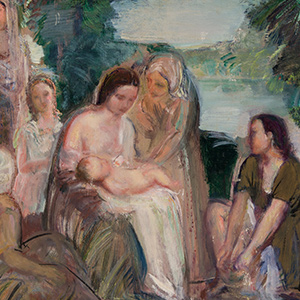
Armando Spadini was born in Florence in 1883. He was a painter and ceramist. He studied at the Academy of Fine Arts in Florence. Here he met the writer, painter and sculptor Ardengo Soffici, who introduced him to the Symbolist magazine Leonardo in 1902. In 1906, he took part in the 59th Esposizione Annuale della Società delle Belle Arti di Firenze. He moved to Rome in 1910, where he specialised in portraits and city views. He contributed to the four Roman Secession exhibitions between 1913-1916. Following the First World War he went through a difficult period after being branded a conservative by the magazine Valori Plastici. However, in 1924 the Venice Biennale devoted an entire room to Spadini’s work at the 14th Esposizione Internazionale d’Arte della Città di Venezia. This marked the end of hostility towards the artist and demonstrated the definitive success of his career. He died in Rome in 1925.

Antonio Scordia was born in Santa Fe, Argentina, in 1918. In 1931, he moved to Rome with his parents at the age of thirteen. Between 1936 and 1944 he attended the Free School of the Academy of France. He began exhibiting in Rome in 1945, and his style adhered to that of the Scuola Romana in its strong expressionism. He collaborated with Federico Fellini in the scenery for the film Satyricon (1969). He died in 1988.

Antonio Mancini was born in 1852 in Rome. From an early age he showed signs of great artistic ability, and at the age of 12 was admitted to the Institute of Fine Arts in Naples. It was there that he was taught by Domenico Morelli, who favoured dramatic chiaroscuro and vigorous brushwork. Under his tutelage Mancini developed his talents rapidly, and in 1872, he exhibited two paintings at the Paris Salon. Mancini was at the forefront of the Verismo movement, which is defined by the practice of Realist painting during the 19th Century in Italy. His subjects included the children of the poor, young circus performers, and the musicians that he observed on the streets of Naples. He lived in Paris in the 1970s, where he befriended fellow painters Edgar Degas, Édouard Manet and John Singer Sargent. Mancini’s works in this period are brightened in palette and realised in a distinctive impasto technique. In 1883, he moved to Rome, where he stayed for twenty years. During this period, he was often destitute and relied upon friends and art buyers to survive. However, after the First World War, his living situation became more stable. He died in Rome in 1930.

Antonio Canova was born in 1757 in Possagno, in the Venetian Republic. He is regarded as one of the greatest Neoclassical artists and famed in particular for his sculptural works in marble. His father was a stonecutter, and after his death in 1762, Canova was placed in the care of his paternal grandfather Pasino Canova. Pasino was a stonemason, owner of a quarry and a sculptor who specialised in altar statues and low reliefs which he executed in a late Baroque style. Canova’s grandfather introduced him to sculpting, which Canova showed a talent for from a young age – executing two shrines in marble at the age of nine. In 1770, Canova began work as an apprentice to Giuseppe Bernardi, followed by Giovanni Ferrari, where he worked until he attended the Accademia di Belle Arti di Venezia. At the Accademia, he won several awards. Following this he secured many important commissions, sculptures which he realised in the late Rococo style. These commissioned works were widely praised and Canova became a favourite of the Venetian elite. In 1779, Canova opened his own studio at Calle Del Traghetto at S. Maurizio. During this time, Canova received his first commission for a marble statue. The statue, which depicted Daedalus and Icarus, inspired great admiration and Canova was paid 100 gold zecchini on the completion of the work. In 1780 Canova travelled to Rome, the following year the Venetian ambassador at Rome hired him to sculpt Theseus and the Minotaur (now in the collection of the Victoria & Albert Museum, London). Between 1783 – 1787, Canova designed and sculpted a funerary monument dedicated to Clement XIV for the Church of Santi Apostoli. This work secured Canova’s reputation as the preeminent artist of his generation. In 1792, he completed another cenotaph, this time commemorating Clement XIII for St. Peter’s Basilica. The following decade was extremely productive for Canova, during which he began works such as Hercules and Lichas, Cupid and Psyche, Hebe, Tomb of Duchess Maria Christina of Saxony-Teschen, and The Penitent Magdalene. By 1800, Canova was the most celebrated artist in Europe. His reputation attracted patrons from France, England, Russia, Poland, Austria and Holland, as well as several members from different royal lineages. Among his list of patrons were Napoleon and his family, for whom Canova produced several depictions between 1803 and 1809. In 1802, Canova was assigned the post of ‘Inspector-General of Antiquities and Fine Art of the Papal State’, a position formerly held by Raphael. In 1814, he began his most famous work The Three Graces. In 1815, Canova was named ‘Minister Plenipotentiary of the Pope’, his role being to recover various works of art that were taken to Paris by Napoleon. In 1816, Canova returned to Rome triumphant, with a selection of works that he recovered. He was rewarded with several marks of distinction: he was appointed President of the Accademia di San Luca, inscribed into the “Golden Book of Roman Nobles” by the Pope’s own hands, and given the title of Marquis of Ischia. Canova died in 1822 and his body was placed in the Tempio Canoviano. His memorial service was so grand that it rivalled the ceremony that the city of Florence held for Michelangelo in 1564.

Antonietta Raphaël (Antonietta Raphaël de Simon) was born to Jewish parents in Kaunas, Lithuania in 1895. She was the daughter of a Rabbi, and following her father’s death Raphaël and her mother moved to London. In London she often visited the British Museum and there she met Jacob Epstein and Ossip Zadkine, a renowned sculptor and member of the Expressionist movement. Raphaël’s principal concern during this period however was music, she studied at and eventually graduated from the Royal Academy of Music in piano. Following her mother’s death in 1919, she moved first to Paris and then in 1924 to Rome. In 1925 Raphaël attended the Accademia di Belle Arti where she befriended the artist Mario Mafai, with whom she would have three daughters. In 1927, Raphaël and Mafai moved to an apartment in via Cavour in Rome which quickly became a meeting point for literati including Giuseppe Ungaretti and Leonardo Sinisgalli, as well as young artists including Scipione, Renato Marino Mazzacurati, and Corrado Cagli. This was the birth of the Scuola Romana, a modern art movement characterised by Expressionism. In 1929, Raphaël exhibited her work for the first time at I Sindacale of Lazio. In 1930 she moved permanently to Rome and began working in the studio of sculptor Ettore Colla. Between 1936 and 1938 she again exhibited at the Sindacali. Due to the implementation of Fascist racial laws, Raphaël and her family escaped Rome and settled in Genoa. She stayed mostly in Genoa for the duration of World War II and worked alongside influential sculptors Edoardo Alfieri, Geovanni “Nanni” Servettaz, Raimondi, Camillo Maine, Lorenzo Garaventa, Sandro Cherchi, Agenore Fabbri, Roberto Bertagnin and Luigi Navone. In 1948, Raphaël exhibited at the Biennale di Venezia. In 1952 a selection of Raphaël’s works were exhibited at the Galleria dello Zodiaco in Rome, which garnered considerable praise from critics. In 1956 she travelled to China and exhibited her artwork in Beijing with a group of artists including Aligi Sassu, Agenore Fabbri and Giulio Turcato. She continued exhibiting throughout Europe, Asia and America in this period. The 8th Rome Quadriennale of 1959-1960 was dedicated to the Scuola Romana and many of Raphaël’s works were displayed, marking her as one of the key members of the movement. She died in Rome in 1975.

Andrea Spadini was born in Rome in 1913. He sculpted fantastical and highly imaginative Baroque figures, which he modelled in ceramic, terracotta and tuff stone. Until the age of twelve he was both a model and apprentice in his father’s studio, the painter Armando Spadini (Florence 1883 – Rome 1925). Andrea was depicted in 1913 by his father in the monumental painting Ritrovamento di Mosè (The Finding of Moses), which now resides in the Vatican. His father’s studio was in the Uccelliera and he grew up surrounded by the wonders of the Villa Borghese. The influence of the playful and whimsical works of Gian Lorenzo Bernini are apparent in Spadini’s works. He was also inspired by his teacher Libero Andreotti at the Liceo Artistico in Florence, and later by Arturo Martini who at the age of sixteen chose him as an assistant at the Industrial Institute of Monza. After the war, he began experimenting with shaping ceramics, which would become his greatest and most lucrative occupation, both in Italy and abroad. In 1961, he signed an exclusive contract with Tiffany & Co. which occupied him for many years. He created a beautiful and intricate window display for their shop on Fifth Avenue in New York, and during his stay he was commissioned to create the musical animals for the Central Park clock. He later worked on the decoration of Villa Cicogna in Venice together with Fabrizio Clerici. In the final phase of his career, he created numerous decorative works for Hollywood stars, Italian noble families and Italian celebrities. His clients ranged from Henry Fonda, Humphrey Bogart and Lauren Bacall – to the Countess Pecci Blunt, the Duchess Alliata, the Marchesa Pallavicini – as well as Mariella Lotti, Anna Magnani and Alberto Sordi. He died in 1983. The only monographic exhibition dedicated to the sculptor after his death dates back to 1989, until the most recent exhibition at Galleria del Laocoonte (Rome). Through the extensive archival research undertaken by Galleria del Laocoonte, the artist’s extraordinary body of work has finally been given the consideration and recognition that it deserves.

 Alberto Ziveri was born in Rome in 1908. He was a modernist painter of the Scuola Romana, an art movement which was defined by a group of Expressionist painters active in Rome between 1928 and 1945. Ziveri painted urban landscapes and realist narrative scenes. He used chiaroscuro painting techniques to explore everyday subject matter, which ranged from depicting piazzas and tram stops to the interior scenes of brothels. In 1943, Ziveri won the IV Premio Quadriennale di Roma art award, and in 1989 the literary prize Premio Viareggio-Rèpaci. He died in Rome in 1990.

Adriana Fabbri was born in 1881 in Ferrara, where she would meet her future husband, journalist Giannetto Bisi. Her father Aldo, after gambling away the family money at casinos, set sail for Rio – leaving his wife and three children destitute. Fabbri, unable to rely on familial wealth for her education was entirely self-taught. Deprived of a formal art education, she developed her own original and bold manner of painting. She developed a multifaceted practice, where – as well as painting – she worked as an illustrator and caricaturist, as well as designing fashion, costumes and stage sets. Fabbri spent much of her early life in Padua at the home of her aunt Cecilia Boccioni, mother of her first cousin Umberto. It was here that she formed an intimate friendship with Umberto’s sister, Amelia, who would later adopt the artist’s second child after the death of her husband. In 1905 she moved with her family to Milan where she drew inspiration from visiting the studios of Gaetano Previati and Luigi Conconi. In 1907, she moved with her husband to Bergamo and the following year she made her debut with two drawings at the 2nd Quadriennale in Turin. In 1911 she was invited by her cousin Umberto Boccioni to participate, with as many of her most “daring” works (as described by Boccioni) as she could provide, at the Prima Esposizione Libera in Milan. In June of the same year she took part in the Prima Esposizione Internationale di Umorismo at the Frigidarium of Rivoli, alongside the elite illustrators of the time – including Cappiello, Golia, and Sacchetti – she won a bronze medal. Her rejection of the “pupattola” woman, though never flaunted as the banner of a theatrical protest, can be seen in all of her works, both pictorial and graphic. The caricatures Generi femminili (Female genders), La pavonessa (The peacock), La civetta (The coquette), La lucertola (The Lizard), and those of the voluptuous and immodest Salomè – which offended the noble and bigoted sensibilities of the board for the Roman Lyceum when exhibited at Palazzo Torlonia in 1911 – are the most authentic expressions of innate nonconformism. This same attitude of non-conformism is clearly represented in the artist’s numerous self-portraits, where she often depicts herself dressed as a man.
Later that same year, she took part in the 1st Esposizione Libera organised in Milan by Boccioni and other Futurist intellectuals. In later years she participated in other group exhibitions, including those at the Ca’ Pesaro in Venice, the Famiglia Artistica and the Società per le Belle Arti ed Esposizione Permanente in Milan. In 1914, she became a member of the Nuove Tendenze group and organised a solo exhibition of 51 works at the Milan store of the Enrico Finzi company. She was also sought after as a portraitist and, during the First World War, many of her political caricatures were published in Il Popolo d’Italia; she also contributed to La Domenica Illustrata and created fashion plates for the couture house founded by Domenico Ventura.
She died in Travedona-Monate (Varese) in 1918.

Achille Virgilio Socrate Funi was born in Ferrara in 1890. He was a Neoclassical painter. His education began at the art school Dosso Dossi, after which he attended the Brera Academy of Fine Arts from 1906 to 1910. In 1914 he joined the Futurist movement and painted Cubo-Futurist works. At the outbreak of the First World War, he enlisted with the battalion ‘Lombardo Volontari Ciclisti’ alongside Boccioni. The post-war years were decisive for the evolution of his painting, and in 1920 he held his first exhibition at an art gallery in Milan. During this time, he became a champion of the ‘return to order’ and befriended Margherita Sarfatti, who promoted the techniques of Italian Renaissance painting. In addition to this, he studied Graeco-Roman statuary during this period and was also greatly influenced by De Chirico’s Metaphysical paintings. In 1922 Funi co-founded the Group ‘Sette Pittori del Novecento’, and in 1931 he participated in the first Quadriennale as a member of the School of Milan. In the 1930s, he created numerous frescoes and in 1933, along with Mario Sironi and other artists, he signed the Manifesto della Pittura Murale. Funi became one of the most esteemed artists during the Fascist regime, also teaching painting at the Brera Academy of Fine Arts throughout the 1940s. His pupils included Giuseppe Ajmone, Valerio Pilon and Oreste Carpi. In 1945, he began to teach painting at the ‘Accademia Carrara’ in Bergamo and subsequently became its director, succeeding Luigi Brignoli.
He died at Appiano Gentile in 1972.


Brafa Art Fair, Brussels
26 JAN – 2 FEB 2020, STAND 88D
Galleria del Laocoonte e Galleria W. Apolloni
Tour & Taxis, Avenue du Port 88, 1000 Brussels, Belgium
https://www.brafa.art/


Following great success at Galleria del Laocoonte and W. Apolloni in Rome, Laocoon Gallery now presents to London a fascinating collection of art by Alberto Martini (Oderzo 1876 – Milan 1954).

Exhibition dates: 1st – 28th November 2019
The show comprises a mixture of works including gloriously sinister illustrations in Indian ink for the tales of Edgar Allan Poe alongside a selection of works from Il Poema Delle Ombre (Poem of the Shadows), a mysterious collection which the artist produced in 1904 and continued in 1909.
The stimulus for these works is unknown, perhaps they were designed to illustrate a poem or theatrical text, the only clue to the puzzle is a condensed list comprising an enigmatic summary which in fact makes the function of the illustrations even more mysterious. A mute chorus of masks is watching us.
There is Venice and its carnival, but there are also masks of conspirators, perhaps of thieves and murderers, as well as voluptuous veiled female masks that make us think of conspiracies of another kind; of secret conferences and kisses between unknown lovers, of the streets of Venice by night, filled with intriguing characters, from the great Casanova to the devastating femme fatale Marchesa Casati.


